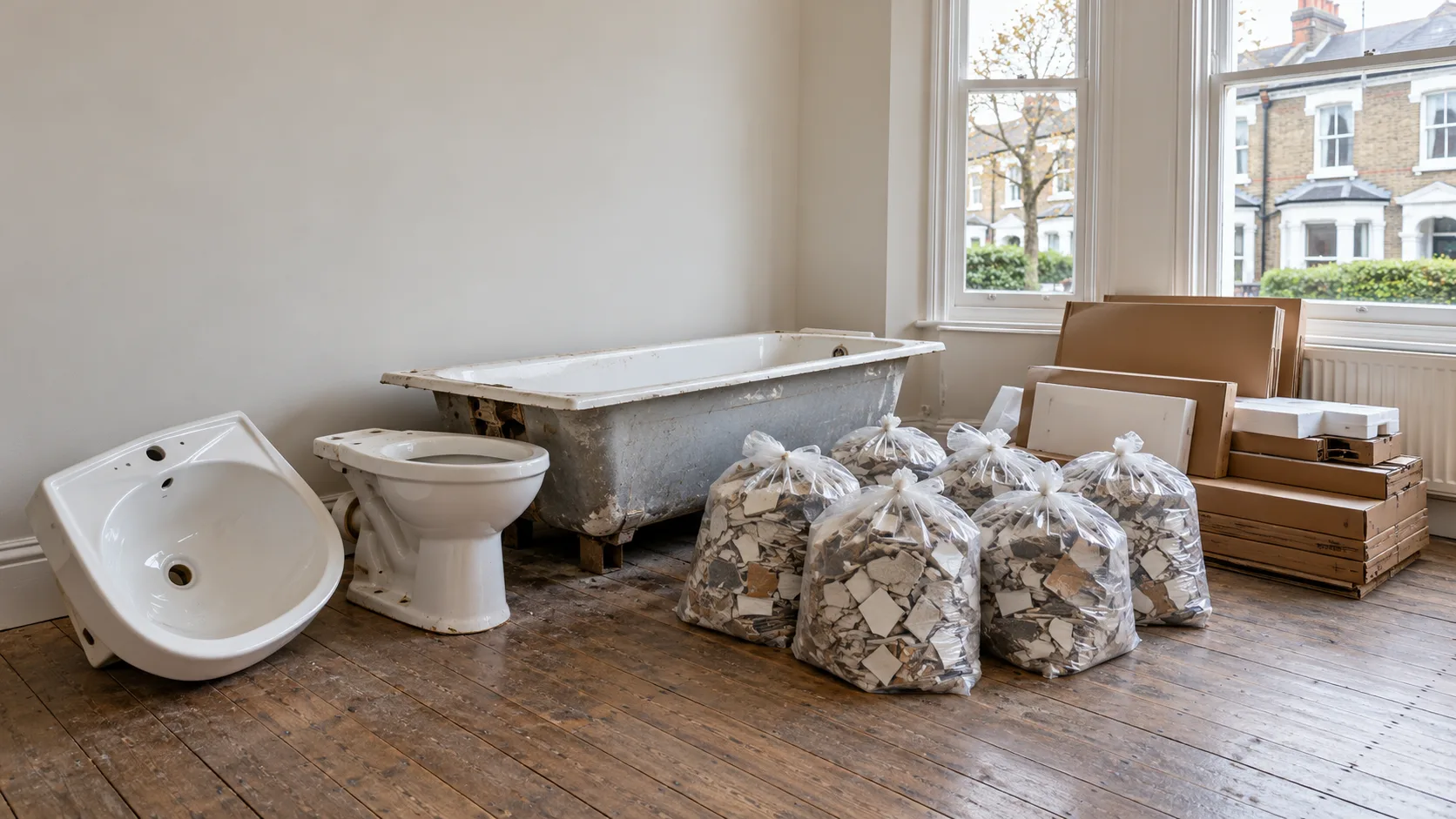
A bathroom refit can look like one small room of rubbish until the fixtures come out. A basin and toilet are awkward to carry; a few bags of broken tiles are unexpectedly heavy; removed wall board may need a separate route; and the new fittings arrive in cardboard, plastic film and foam. If everything is described as “one bathroom”, a collection team cannot judge the vehicle, labour or accepted materials accurately. A useful bathroom renovation waste checklist begins before demolition and ends only when each material has a documented destination.
This guide is for a London homeowner planning removal after a domestic bathroom project. It helps you prepare an inventory and questions for a collector, not identify unknown hazardous material or assign formal waste codes. If a tradesperson carries out the refit, agree in writing who removes the waste. GOV.UK explains that waste a hired tradesperson produces in construction or renovation is business waste and that the tradesperson is responsible for disposing of it correctly. A household recycling centre's small DIY allowance should not be assumed to cover that work.
Make a room-by-room inventory before removal starts
Photograph the bathroom while its fittings are still in place. Note the bath or shower tray, screen, toilet pan and cistern, basin and pedestal, vanity unit, mirror, radiator, flooring and any built-in cabinet. Count wall and floor tile areas separately if possible. This starting list helps distinguish the items you expect to remove from material discovered only after a wall or floor is opened. It also makes it easier to check whether the contractor's quotation includes waste removal.
Ask whether a fixture can remain in use. A sound, clean basin or cabinet may have reuse potential; cracked sanitaryware normally does not. Reuse depends on condition, fittings, demand and safe removal. Do not promise a second-hand recipient an item before the installer has confirmed that it can be disconnected intact. Photograph usable items separately, including dimensions and any chips, then decide whether to offer them for reuse before the clearance date. North London Waste Authority's DIY waste guidance also encourages considering reuse during a bathroom update.
Keep a simple four-column list: item or material, estimated quantity, condition, and likely route. “One ceramic toilet pan and cistern, both cracked” is more informative than “bathroom suite”. “Six partly filled bags of ceramic tile fragments” is more useful than “some rubble”. Add an uncertainty column if you do not yet know what is behind the old tiles. Our guide to photographing rubbish for a quote explains how a wide view and close detail can show both the size and composition of a pile.
The inventory should include removal work as well as visible objects. Will the team collect from inside the bathroom, from a protected hallway, or from bags already placed beside a loading area? Are there stairs, a narrow turn, a communal lift, a locked gate or a long carry to the van? The collection scope can change substantially while the amount of waste stays the same. Confirm the access route before anyone stacks heavy material in a place that blocks residents or tradespeople.
Separate sanitaryware, glass and metal fixtures
Ceramic toilet pans, basins and pedestals are bulky and brittle. A heavy bath may be acrylic, steel or cast iron; a shower tray may be ceramic, resin or another composite. Record the material where known and give a photograph where it is not. Do not describe every fixture as “porcelain” or “metal” simply because it has a shiny surface. This distinction helps the collector assess lifting, potential recycling and whether the item can travel with other materials.
Drain all disconnected fittings and let a competent installer cap or isolate plumbing. Bag small fixings and keep them from scratching reusable fixtures or piercing sacks. Broken ceramic edges can cut skin, and a whole toilet can be awkward on stairs. Use an appropriate carrying plan instead of trying to lift it alone. If you are not doing the plumbing work, do not disconnect a fixed fitting solely to make the waste pile appear ready.
A shower screen or large mirror needs a separate note. Glass can shatter during removal and may require containment and a different loading arrangement from ceramic fixtures. Mark whether it is whole, framed, toughened or already broken, if known. Wrap sharp edges or isolate broken pieces according to the collector's instructions; do not hide loose shards in an opaque mixed-waste bag. Our broken glass and mirror clearance guide explains how to describe breakage and access.
Metal taps, rails, radiators and pipe offcuts should be counted separately where practical. Their material and condition may permit a recovery route, but a radiator may still hold water and fixed plumbing may need professional disconnection. Keep small metal fittings together rather than letting screws scatter through rubble. If an old electrical towel rail or powered fan is involved, flag it as electrical equipment; do not assume it belongs in a metal scrap pile.
Count tiles, rubble and wall board as distinct streams
Wall tiles, floor tiles, mortar and broken concrete can produce a dense mineral load from a compact room. Use manageable bags and give the number and approximate fill level. A half-filled bag of tile fragments may already be difficult to lift. Photograph one open bag and the full group. If pieces are loose, estimate the heap dimensions and say whether it also contains adhesive, timber or packaging. The rubble versus mixed builders waste guide gives a fuller method for describing mineral material.
Keep broken tile and other mineral fragments away from plasterboard where feasible. Gypsum board requires a different disposal route from clean brick or ceramic material; it should not be hidden inside a “rubble” estimate. Record the number and size of offcuts, whether they are dry, and whether tiles, adhesive or insulation remain attached. Read our plasterboard separation guide before combining a board pile with anything else.
Removed timber battens, MDF cabinets, vinyl flooring, insulation and silicone-contaminated materials also make the load mixed. List them even if they occupy little space. The composition may matter more than the room where they came from. The collector may accept several streams on one visit while still needing to separate them during loading. Ask what it wants bagged, kept flat or left accessible. A collection company should be able to tell you what it cannot take as well as what it can.
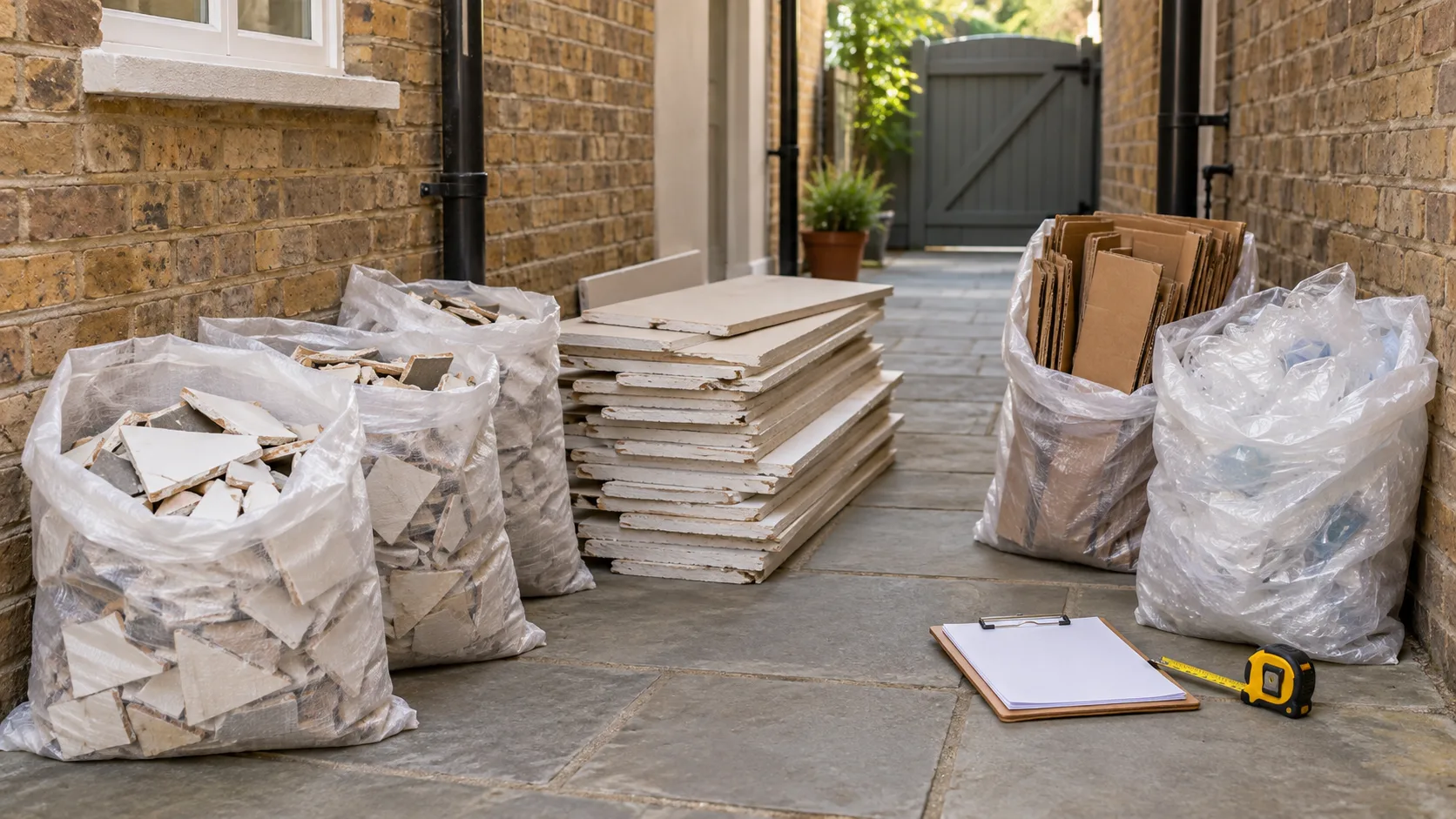
Do not infer that dust, old adhesive or board is harmless just from its appearance. Buildings of different ages can contain materials that require assessment before disturbance. If you uncover a suspicious board, coating, lagging or other unknown material, stop handling it and ask a competent professional for identification and a suitable removal plan. HSE's asbestos guidance is a starting point for recognising the risk and finding the right controls. A photograph sent to an ordinary rubbish collector is not a substitute for an appropriate survey or assessment.
Keep new-product packaging and hazardous leftovers visible
New fittings often generate a second pile after the old bathroom has been removed: cardboard boxes, plastic film, foam inserts, wooden pallets and protective wrap. Keep clean cardboard and packaging separate from dusty demolition waste where possible. Flatten boxes only after checking that parts, instructions or return labels are no longer needed. Record a rough volume or bag count. This lighter pile affects vehicle space even when the tile sacks account for most of the weight.
Paint, sealants, adhesives, solvents and cleaning chemicals need specific handling. Keep products in labelled original containers with lids secure; never pour them into a drain, mix them with each other or place them inside a bag of tiles. Ask the council or a specialist route what is accepted. The leftover paint tin guide explains how to distinguish empty packaging from a container with usable or hazardous contents. Tell the collection provider about every liquid or chemical before booking, even if the amount seems small.
Electrical items such as an extractor fan, illuminated mirror, electric shower component or powered towel rail also deserve their own inventory line. Disconnecting fixed electrical equipment is a job for an appropriate competent person. Keep the removed unit identifiable and ask about its electrical-waste route rather than burying it under general packaging. Remove accessible batteries only when the product's instructions make that safe. If a device remains connected or you are uncertain what it contains, say so in the booking enquiry.
Unused tiles and unopened products may be returnable, sellable or useful as spares. Hold back a modest matching tile reserve if it will help with future repairs, but label and store it rather than leaving it in the waste stack. Check the retailer's current return policy before counting on a refund. Reuse planning should happen early enough that the item stays clean and intact; a cabinet thrown into a pile of broken ceramics is unlikely to be attractive to another household.
Check who produced the waste and which site accepts it
The removal route depends on who generated the waste and where you live. A resident's own small DIY material may be accepted at a local household recycling centre within specific limits; a tradesperson's work is treated differently. For example, North London Waste Authority lists a restricted DIY allowance for qualifying north London households, while Newham's Jenkins Lane guidance requires prior authorisation for many bathroom items and building materials. These examples are local rules, not a London-wide guarantee. Check your own borough's current page, residency requirements, bookings, vehicle restrictions, quantities and material exclusions before travelling.
If an installer promises to remove everything, ask whether that includes the old suite, tile rubble, plasterboard, packaging and any special material discovered during the job. Ask how an extra load is priced and who will arrange specialist handling if needed. Write the agreement into the job scope. Otherwise you may finish with a working new bathroom and a heavy pile whose removal was never included. The guide to what a rubbish removal quote should include gives a checklist for comparing offers.
For a private household collection, describe every stream and check that the provider accepts each one. GOV.UK advises householders to make sure a person taking their waste is legally allowed to do so. Check the carrier's registration, keep the agreed scope and receipt, and ask what happens to excluded items. A registered carrier does not turn a hazardous or unidentified material into ordinary mixed rubbish. If part of the load needs a specialist route, plan that separately before the collection day.
There is no universal “one bathroom” price. Quantity, density, distance to the vehicle, stairs, dismantling, loading time and accepted material streams all matter. Send photographs and an inventory before requesting a firm scope. If the demolition exposes more layers, revise the list promptly. A quotation for one bath and a few tile bags cannot safely be assumed to cover a newly discovered stack of board, insulation and electrical equipment.
Prepare the collection day and check the handover
Once the installer has finished removing items, count the actual bags and large fixtures. Photograph each group and a wide view of the complete load. Make sure bags are closed or contained as agreed and can be lifted safely; split an overloaded tile sack. Leave fragile glass and potentially hazardous material identified, not concealed. Protect floors and shared spaces if the team will carry from inside. Check whether loading and parking are lawful at the agreed time. The London parking and loading guide helps you record restrictions and the distance from the property to the van.
Send a concise final message: “One acrylic bath, one ceramic basin, one toilet pan and cistern, one intact framed shower screen, eight partly filled tile bags, four dry plasterboard offcuts, two bags of clean packaging; second-floor flat, no lift, loading bay 30 metres away.” Change every detail to match reality. Mention any uncertain board, chemicals, powered equipment or additional bags separately. A clear description lets the provider confirm its accepted scope and request more photographs before arriving.
At handover, compare the agreed list with what is collected. If a stream is refused, ask why and record what remains; do not quietly put it in an ordinary household bin. Keep the receipt and carrier details. Sweep only when dust can be handled safely under the work plan, and check corners, cupboards and the route out for leftover fragments. A complete bathroom renovation waste collection is one where the old fixtures, heavy mineral material, boards, packaging and exceptions have each been accounted for. If you need a London collection for the accepted material, send Rubbish Please the inventory, photographs and access details for an assessed quotation.