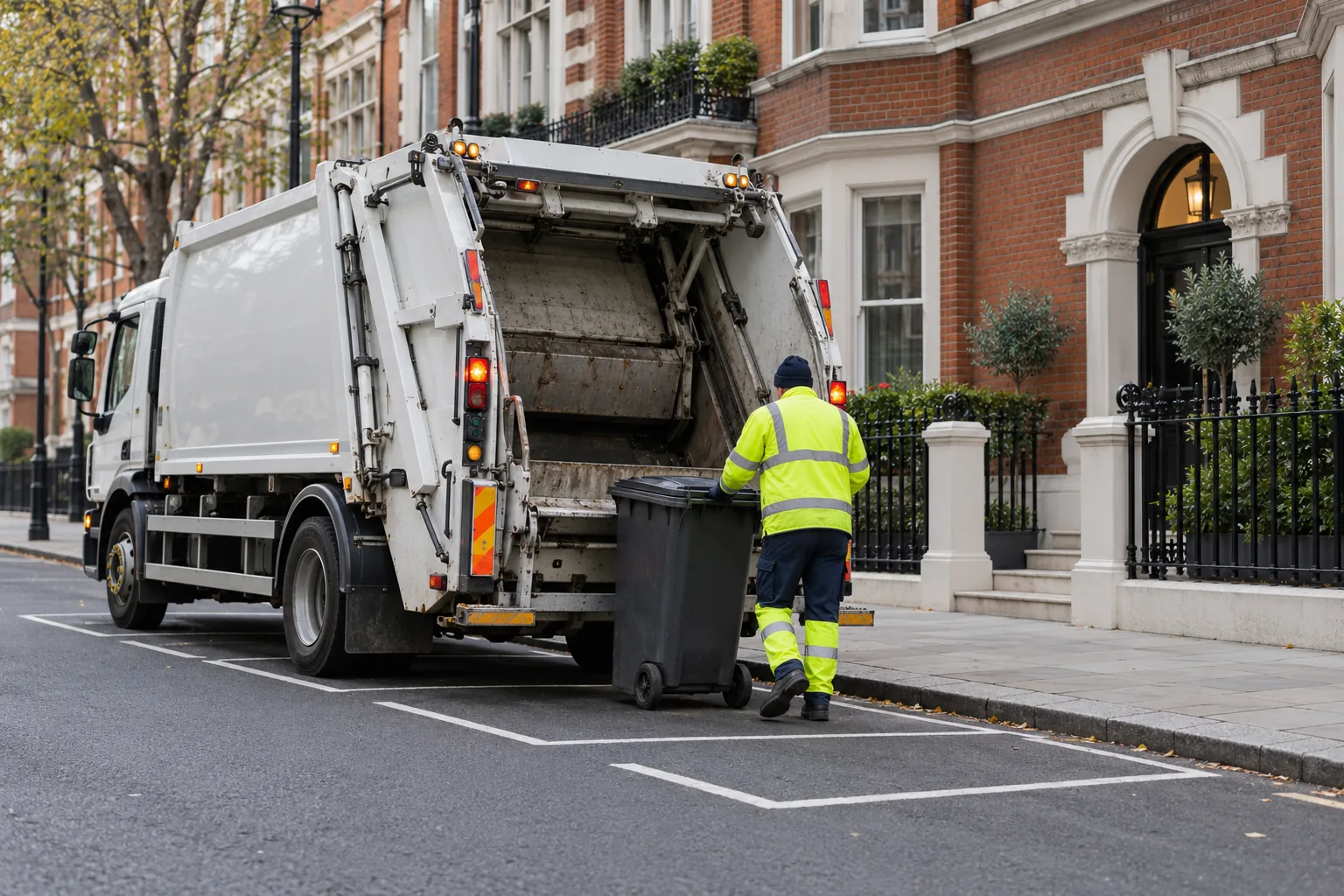
A rubbish collection can be well quoted and still run into trouble if the vehicle has nowhere lawful and practical to stop. In London, the closest space to a front door may be a residents' bay, a bus stop, a red route or a loading bay with a narrow time window. A long carry from the next suitable place changes the labour. A blocked gate or an unavailable lift can change it again. The collection plan needs to describe the actual route from each item to a legal vehicle stop.
You do not need to interpret every traffic rule yourself before asking for help. You do need to check the signs at the proposed location, tell the provider what you found, and avoid promising a bay you cannot reserve. This guide explains the information to gather and the questions to ask. It is a planning checklist, not a substitute for the current street signs or the relevant borough and Transport for London rules at the exact address.
Start at the loading point, then walk back to the waste
Stand at the building entrance and identify where a collection vehicle could realistically stop. Look for signed loading bays, permitted off-street areas or another lawful location that fits the vehicle and the expected duration. A small car space does not automatically accommodate a van, and an empty bay in a photograph may be occupied at the appointment time. Note the street name, side of the road and nearby junction so the provider can evaluate the location.
Then walk the carrying route from the proposed stop to the items. Count steps and stair flights. Note a steep slope, narrow doorway, gate, shared hallway, lift size or distance through a courtyard. A collection team needs to know whether it can use a trolley and whether bulky furniture can pass around corners. If the route crosses a managed estate or service yard, find out who grants access and when. This matters even when the rubbish pile itself is small.
Take a few clear photographs: the full pile, the building entrance, the vehicle stop and any difficult section of the route. Include the street sign that governs the proposed bay if it is safe to photograph. Do not share a gate code or a private resident's vehicle details in the initial images; provide necessary access instructions securely to the booked provider. Our photo checklist for a collection quote covers the broader job description.
Read the exact signs and markings for the time of the visit
Do not infer loading permission from a yellow line alone. The Highway Code's waiting and parking rules explain that loading may be permitted where waiting is restricted, but kerb marks and upright signs can prohibit it. The posted times and the controlled parking zone rules matter. Check what applies on the intended day and hour, including weekends and bank holidays if relevant.
Loading bays can have their own vehicle classes, time limits and hours. A bay labelled for goods vehicles may not be usable by every vehicle. A nearby meter or residents' bay is governed by its own signs, not by the rules of the next bay along. Photograph the exact sign and tell the collector if the markings are unclear. Do not try to settle ambiguity by assuming that a quick stop will be exempt. Ask the provider to choose a compliant plan or contact the relevant authority when needed.
Some London streets are managed by the borough, while red routes are managed by Transport for London. TfL explains that red-route signs and markings control when a vehicle may stop. A red line is not an invitation to pull up briefly for loading. A signed red-route loading bay may be usable only at specified times. The governing rule is at the particular spot, so a street-level check is more reliable than a general statement about London parking.
Build a fallback for a busy street
Even a valid loading bay may be occupied when the team arrives. Identify a second lawful stop if one exists, and tell the provider how much farther it is from the entrance. If the alternative adds a long carry or a busy crossing, the crew may need more time. Do not direct a van onto a pavement, across a cycle lane or into a prohibited stop simply to keep the original appointment short.
For a larger load, ask whether a loading bay, parking suspension, permit or building service bay booking is appropriate. The exact process depends on the road authority and building. Find out who makes the application and how much lead time it needs. A provider can often advise what vehicle and stopping duration the job requires, but the property owner or managing agent may have to secure private access. Put those responsibilities in the booking notes.
If the nearest suitable location is distant, consider whether the collection should be divided into smaller groups or timed for an available access window. The answer depends on the material, crew and site. A realistic quote should account for the distance and route you describe. Our guide to what a rubbish removal quote should include explains why access and carrying must be part of the scope rather than a surprise on arrival.
Prepare flats, estates and managed buildings
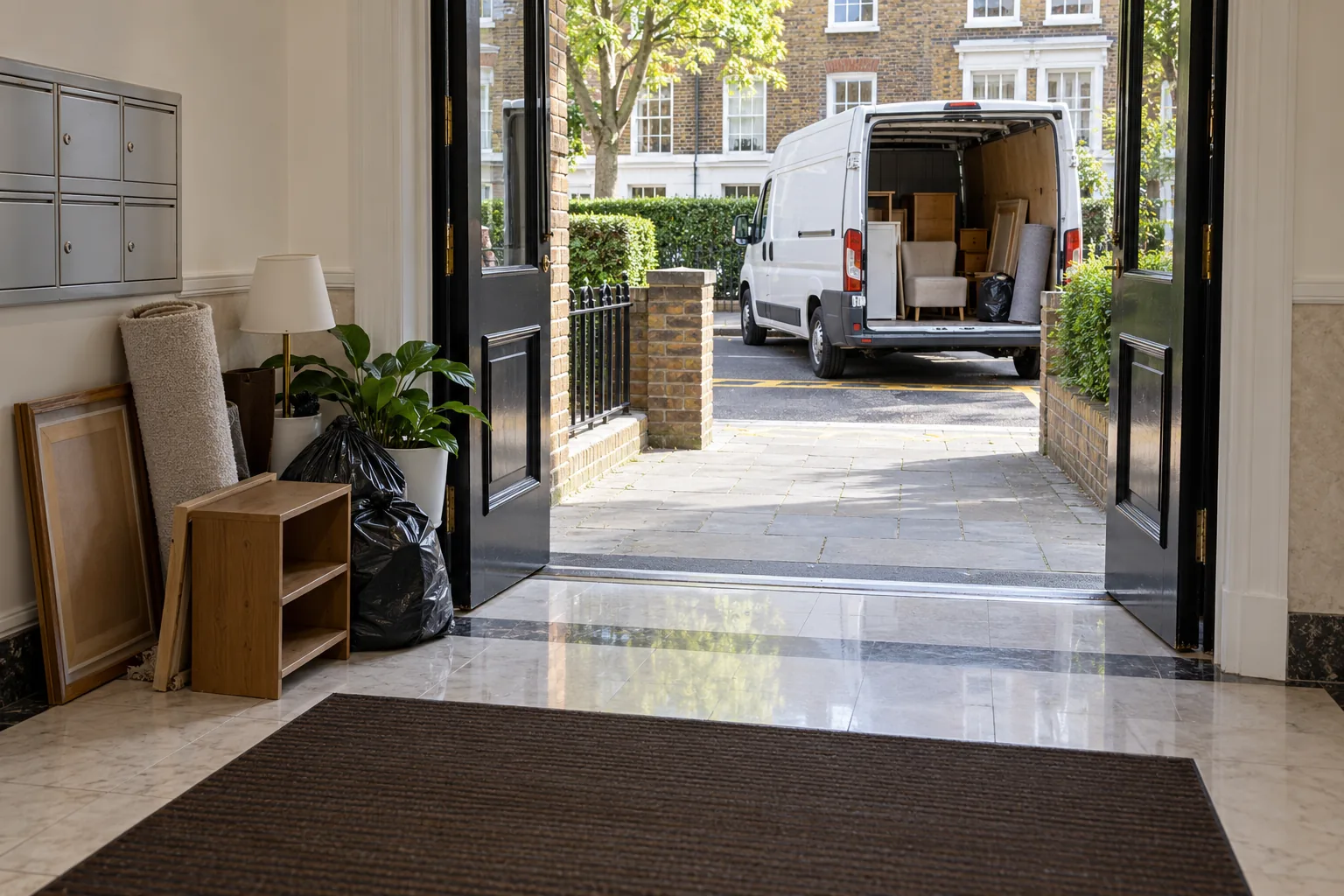
In a block of flats, check the building's rules before moving waste through communal space. A concierge may control a service entrance, a lift may need booking, or a loading area may be reserved for deliveries at certain times. Some doors use a fob and cannot be left open. Ask the manager what access is available to a collection crew and whether an escort is needed.
Describe the waste location accurately. “Outside the building” is different from “inside a fourth-floor flat, through a lift and a locked lobby”. If a bulky item cannot fit in the lift, measure it and the narrowest parts of the stairs. If the collection includes bags from several rooms, list those rooms. Do not leave the load in a corridor, fire exit or lift lobby to make access appear easier. Keep it in a safe place until the agreed handover.
Estate roads and private forecourts may look like ordinary streets but have separate ownership or access restrictions. Ask the site manager or owner before promising that the van can enter. A height barrier, weight limit, delivery window or turning restriction can change the vehicle plan. If entry is impossible, identify an approved stop outside and the full carrying distance. A photograph of the gate and a note about the height or opening procedure can prevent a wasted journey.
Match the vehicle and crew to the actual carrying work
The type and quantity of waste influence how long loading takes. A few bagged items near the door may be quick to transfer. A sofa, wardrobe and several heavy bags from upstairs take longer, and the team may need a different vehicle or more people. Tell the provider about dense material such as rubble, tiles or soil; the van's weight limit can matter before its load area looks full. Our heavy-waste quote guide explains that distinction.
Ask whether the estimate includes the stated carrying route, bagging, dismantling and any wait for access. If a loading window is short, the provider needs the load ready and the route clear before arrival. This does not mean moving dangerous material early. It means settling which items are leaving, clearing ordinary obstacles, and arranging access with the building. Tell the team if a lift is unreliable or a loading bay must be vacated at a fixed time.
Avoid a plan that relies on leaving the vehicle unattended where the restrictions do not allow it. The crew should decide how to staff loading and comply with the site rules. Your useful contribution is accurate information about signs, location, waste and access. If the legal stopping point is uncertain, raise that before confirming the collection rather than asking the driver to improvise on arrival.
Send a compact access brief with the booking
A good brief can fit in a few lines: collection address and entrance, item locations, approximate load, stair or lift details, proposed legal loading point, relevant sign times, distance to the entrance, and who will open any gate. Attach photographs of the pile, signs and route. State anything you have not confirmed, such as whether a bay can be reserved. Do not turn an uncertain assumption into a promise.
Confirm the date and time against the posted restrictions. If the road has a loading window in the morning, an afternoon appointment may need a different stop. If building access ends at a particular hour, account for loading and travel through the building, not just vehicle arrival. Ask the provider to confirm that the route and stopping plan are within its quote. If the load or access changes, send an update before the appointment.
For a one-room load or a property-wide clearance, the same planning principle applies. The crew must be able to reach the material safely and load from a lawful vehicle position. Rubbish Please waste removal covers general collections, while house clearance may suit a larger property job. In either case, tell the team about the actual London street and building access when you request an estimate.
Check again shortly before collection
Roadworks, temporary signs, building deliveries and parked vehicles can change the practical plan. Recheck the proposed stop and building access near the appointment. If the bay is blocked or a lift is out of service, contact the provider promptly. A lawful alternative may still work, but the distance, crew and timing should be agreed before loading begins. Keep the passageways clear and have the item list ready for the team to confirm.
A clear parking and loading plan does not require perfect certainty. It requires honest details, current sign checks and a workable fallback. That gives the collector a chance to choose the right vehicle and team, reduces delays at the kerb, and makes the quote reflect the real work between the waste pile and the van.