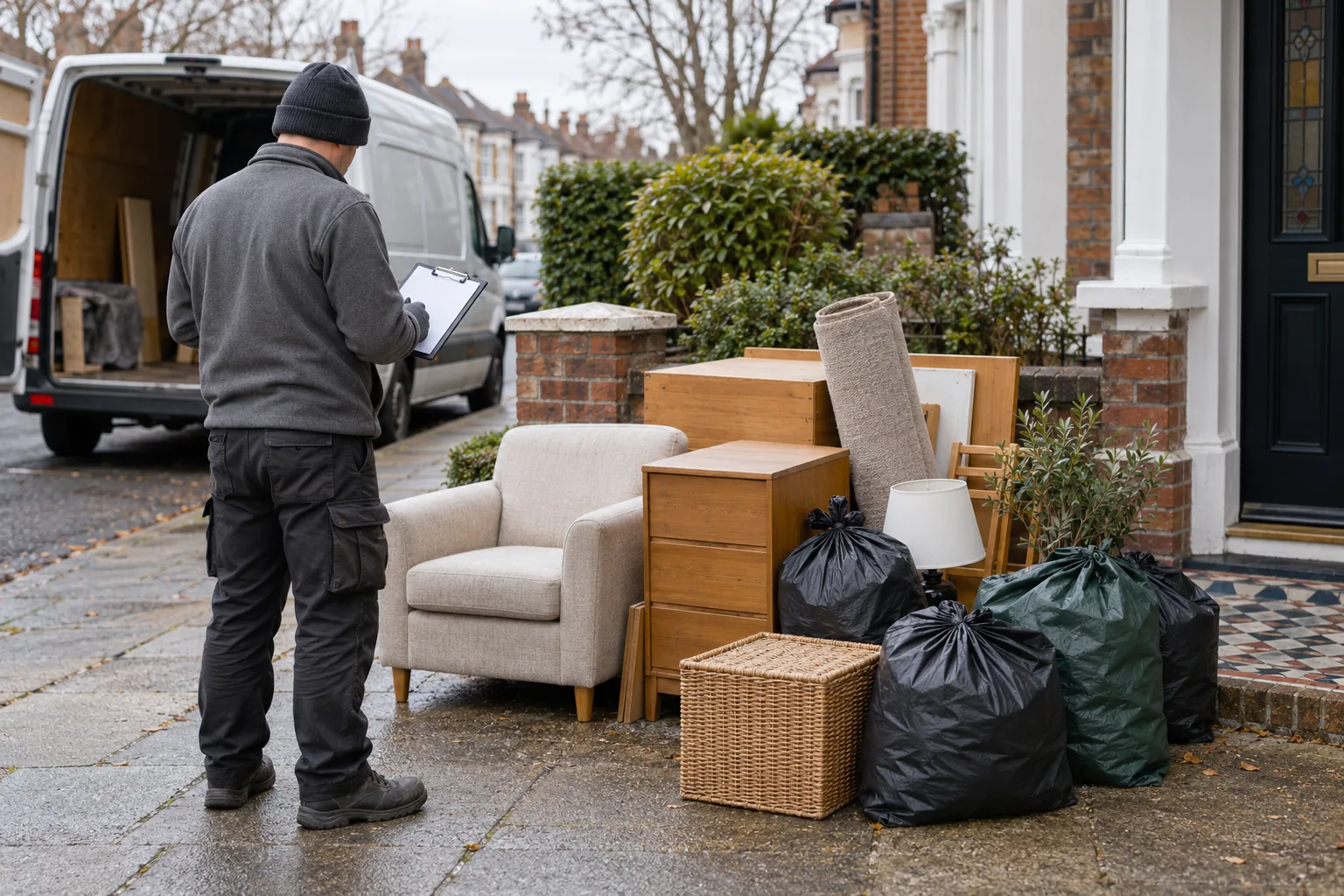
Two rubbish removal quotes can show different totals while describing different jobs. One may cover the waste you photographed and two people carrying it downstairs. Another may assume that every item is already bagged at the kerb. A third may leave uncertain materials or a second vehicle trip outside the initial price. The useful question is therefore not simply “Which number is lower?” but “What work does each number buy?”
A clear written quote should let you recognise your own load, understand where the crew will collect it, and see what happens if the job changes. It should identify meaningful exclusions before the vehicle arrives. This guide walks through the details worth checking so you can compare providers fairly and avoid an argument on collection day. It is a practical comparison checklist, not a promise that every provider will use the same pricing method.
Start with the exact load being priced
The quote should describe the items or piles that are included. A brief but specific scope is more useful than “one van of rubbish”. List large objects separately, give approximate counts for bags and boxes, and identify the main materials. If the collection covers several rooms, a garden and an outbuilding, name those locations. If a pile shown in a photograph is staying, say so. The collector should be pricing the same set of items that you expect it to remove.
Photographs help, particularly when they include wide views of each area and detail shots of unusual material. Yet they are not a substitute for a short written list. A sealed bag does not reveal whether it contains clothes or broken tiles, and a sofa can hide bags behind it. Our guide to photographing rubbish for a quote explains how to show the full load and the route out of the property.
Check whether the price is an estimate based on your description or a fixed price for a precisely defined scope. If the amount is provisional, ask what will be assessed on arrival and how any change will be explained. Keep the photos and list you supplied. When both sides can refer to the same brief, it is easier to distinguish an unexpected extra item from a misunderstanding about the original job.
Check the load size and material assumptions
Some providers describe their price by a fraction of a van, the number of items, weight, labour time or a mix of these. The quote should state which method applies to your job and what it assumes. “Half a van” may sound straightforward, but a compact pile of rubble can reach a vehicle's weight limit before filling half its space. A large amount of lightweight cardboard can have the opposite effect.
Tell the provider about dense material, wet waste, electrical items, glass and anything in sealed bags that a photograph cannot identify. If the job includes bricks, tiles, soil or plasterboard, ask whether those materials are in the quoted scope and whether a weight allowance applies. Our separate article on heavy waste and van-load quotes explains why volume alone may be a poor guide for such loads.
Avoid assuming that a van-size label tells you how many journeys are included. Ask whether the quoted amount covers one visit and one vehicle, and how additional trips would be authorised and priced. If your waste is spread across a property, confirm whether the quote is for the entire list or only the pile visible in the first photo. A fair comparison requires the same material and quantity in each provider's brief.
Make labour and preparation explicit
Collection can mean very different levels of service. One team may carry loose items from inside a property, load them and sweep the immediate working area. Another may collect only prepared bags from an accessible outside point. Your quote should tell you whether carrying, lifting, bagging, dismantling and basic loading are included. If the provider will break down a large cabinet or remove a fitted item, describe exactly what is expected and ask it to confirm that work.
State whether heavy objects are on the ground floor, upstairs or in a basement. Tell the provider if there is no lift, if the lift is small, or if it must be booked. A long walk from the door to a legal vehicle stop adds labour even if the pile itself is small. For an occupied home or office, mention any narrow doorway, shared hallway or restricted work hours. The crew can then plan enough people and time.
Do not make the job appear easier by moving an unsafe load to a pavement or blocking a communal route before the agreed visit. A useful quote can cover collection from the safe location where the material actually sits. If you plan to move some items before the appointment, say which ones and confirm whether the price depends on that preparation. This avoids two different assumptions about who is doing the carrying.

Record access, parking and timing
The written scope should identify the collection address and the part of the property from which the waste will be taken. It should also reflect anything the provider needs to know about arrival: parking restrictions, a distant loading bay, a gated entrance, a concierge, lift booking or site access hours. A quote based on a van stopping outside the front door may not describe a job where it must stop around the corner and carry items through several shared spaces.
Ask whether the quoted price includes the access conditions you described. If a parking permit or building permission is needed, agree who arranges it. Do not assume a photo of a free bay guarantees that it will be available on the day. Discuss an arrival window and any time restriction that matters to the site. For a business, landlord or managing agent, check who will be present to grant access and confirm which items go.
A quoted appointment time and a quoted price are related but separate. If the date is critical, ask the provider to confirm availability and any conditions for booking. If the load will not be ready until a renovation or tenant move ends, avoid locking in a scope while the number of items is still changing. A fresh photograph or updated item list before collection is often the simplest way to keep the booking accurate.
Understand disposal and excluded materials
The quote should make clear that the price covers transport and appropriate disposal of the included waste, rather than only carrying it to a vehicle. Ask how electrical equipment, mattresses, plasterboard or other distinct materials are handled if they are in your load. Do not assume that a general collection can take every item. Paint, chemicals, gas cylinders, fuels, asbestos-containing material, sharps and unknown containers may require another route or a specialist provider.
List potentially restricted materials before accepting a price. Ask for an explicit inclusion or exclusion rather than waiting for the crew to discover an item during loading. If something is excluded, keep it separate and arrange the appropriate collection route. Never hide an item in an ordinary bag to make the booking appear simpler. That creates safety and disposal problems and can invalidate the assumptions behind the quote.
When a private business takes household waste, GOV.UK says you must check that it is an authorised waste carrier. Ask the provider for its carrier details and keep your collection documentation. This is part of choosing a responsible service; the lowest stated price is not a useful comparison if you cannot establish who will take the waste and what is included in its removal.
Ask what can change the final price
Even a carefully described load can change between the estimate and the appointment. You might add a wardrobe, discover more bags behind a shed, or find that a lift is unavailable. Ask in advance which changes would lead to a revised price. The answer should explain how the crew will assess an overrun and how you will approve the new amount before extra work starts. A vague promise to “sort it out on the day” gives little protection to either side.
If the provider quotes a range, ask what determines the final figure. If it offers a fixed figure, identify the quantity, access and material assumptions that make it fixed. Where the price is subject to on-site assessment, keep room in your decision for a changed total and request a clear explanation before loading continues. It is reasonable to decline an unagreed extension and arrange another solution for extra material.
Confirm whether tax, labour, transport and disposal are included in the stated total, and whether there is a minimum charge. Ask about any fee for waiting, a failed visit or cancellation if those terms are relevant to your booking. Read the provider's written terms before committing. You do not need a long contract for every small collection, but you do need to know which amount is being quoted and what could reasonably alter it.
Compare quotes using one shared brief
Send the same item list, photographs and access description to each provider. Then compare responses in the same order: included load, labour, vehicle or trip allowance, excluded materials, disposal, appointment, and price conditions. A low price based on bags at the kerb should not be compared directly with a price that includes carrying bulky furniture down three flights of stairs. Ask each provider to clarify missing points before making a decision.
You can keep a simple comparison note. Record the quoted total, whether it is fixed or provisional, what preparation you must do, how many people or trips are assumed if specified, and what documents you will receive. If one provider cannot identify its scope, do not fill the gaps with your own assumptions. Ask for a revised written quote that refers to the load you actually described.
The Rubbish Please price guide is a starting point for indicative load sizes. For an individual job, the useful next step is to send the complete brief to the waste removal team or contact Rubbish Please with your photos, list and access notes. A quote that spells out the work helps you plan the collection and compare the real service behind the number.