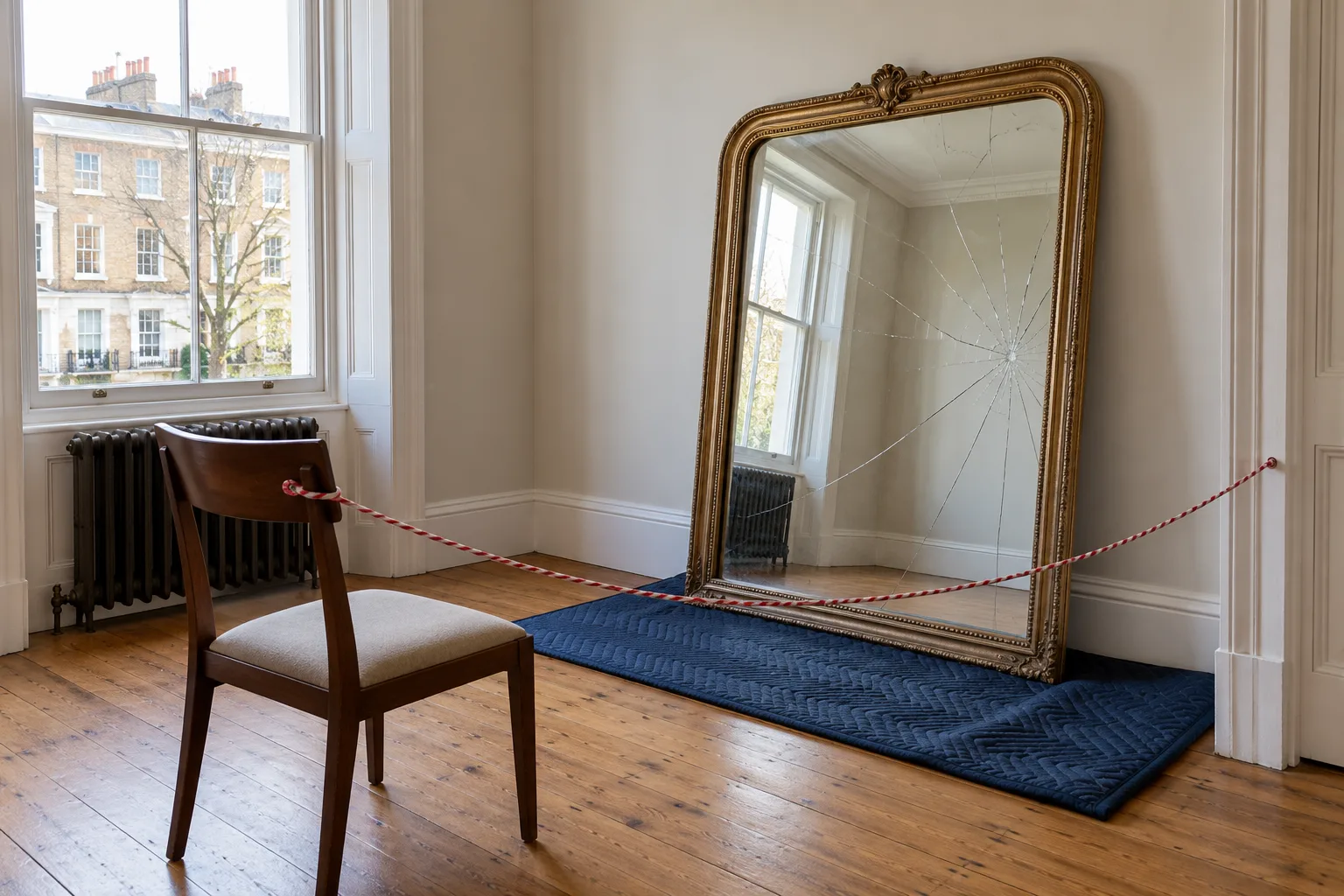
A broken mirror changes the rhythm of a property clearance. A small shard hidden under furniture can injure the next person into the room, while a cracked full-length pane may fail when someone tries to lift its frame. Broken drinking glasses, picture-frame glazing and a damaged shower screen all look like “glass” on an inventory, but their size, construction and disposal routes are different. The first priority is to keep people away from sharp material and tell the collection provider exactly what remains.
This guide covers household items encountered while emptying a property, including mirrors, framed pictures, glass furniture and loose fragments. It gives a practical order for assessing, containing and describing them. It does not ask a householder to dismantle a large glazed unit, remove a fitted shower screen or handle an unstable pane. If the item is fixed to the building or likely to collapse, make the area safe and arrange a competent person to assess removal before the ordinary clearance begins.
Stop the room becoming a carrying route
If glass has broken during a clear-out, pause work in that part of the room. Keep children, pets and helpers away, and make sure nobody carries furniture over fragments. Look beyond the main break: small pieces can travel under a table, into a rug or alongside a skirting board. Do not put bare hands into a drawer or a black bag to feel for glass. Tell everyone helping which area is affected so another person does not unknowingly resume sorting there.
Photograph the item from a safe position before moving anything. A picture showing the full mirror, its frame and the surrounding area helps a provider judge scale and access. If a framed mirror is cracked but still held in its frame, do not assume the frame will retain every piece when tilted. Avoid leaning a pane where someone may brush past it, or placing fragments in a hallway while you find a box. The safest temporary arrangement is a clearly identified area away from the route to the door.
If glass has shattered on carpet, upholstered furniture or bedding, separate those items from the clean load until they have been assessed. A general photograph of a sofa may not reveal shards trapped in a seam. This is one reason our guide to photographing rubbish for a collection quote recommends close views of unusual materials as well as a view of the whole room. Tell the collector when fragments may be embedded in another item.
Identify the object before choosing a container
Make a short list of what has actually broken. A handful of drinking-glass fragments can fit inside rigid protective packaging; a wardrobe mirror, glazed cabinet door or tabletop may need a planned two-person carry or specialist handling. Note the largest dimensions and whether the glass is loose, bonded, laminated, framed or fixed. Do not label a whole mirrored wardrobe as “one small bag of glass”. The frame, backing and fittings contribute to both weight and handling.
Keep intact and reusable items separate. A sound framed mirror may be wanted by another person or a reuse organisation, but ask first and describe its condition honestly. Do not offer a cracked mirror as reusable simply because the frame is attractive. If the item is part of a sale or an inherited collection, check who owns the decision before disposal. The sorting guide for a house clearance helps establish a keep and reuse area before the waste crew arrives.
Glass bottles and jars from a kitchen are a different stream from mirror glass, drinking glasses, Pyrex and panes. Recycle Now explains that mirrors contain mixed materials and that drinking glasses and heat-resistant glass differ from bottle and jar glass. Do not empty a mirror into the bottle bank or the ordinary glass recycling container on the basis that it is transparent. Your local council or recycling authority should confirm which centre or residual-waste route accepts the particular item.
Contain small shards without creating a hidden hazard
For a small amount of loose household glass that you can safely collect, use a rigid container or layers of cardboard that prevent points from cutting through. Close the package securely and clearly identify it as containing broken glass for anyone who will handle it. Avoid a thin carrier bag or an open box: both can spill, and a concealed shard may tear through the side. Never mix fragments into a sack of clothes, paper or soft furnishings, where the next handler may reasonably expect to reach inside.
Southwark Council advises residents to wrap broken glass or other sharp objects securely in cardboard or another rigid material before putting them in its specified household waste route. Camden likewise says broken glass should be carefully wrapped so that it is not dangerous to collect. These are examples of local handling rules, not a single disposal instruction for all London boroughs. Follow your own council's current instructions or the private collector's agreed preparation method.
Do not overload a glass package. Several heavy pieces in one large carton can break the carton or become impossible to lift safely. If the wrapping has split or the box has become wet, replace it before handover. Keep the package somewhere stable and out of the path of other clearance work. Tell the collection crew where it is rather than leaving an unmarked package among ordinary boxes.
Leave large or fitted glass to an agreed removal plan
A full-height mirror, shower panel, glass door or glazed tabletop is not a scaled-up version of a jar. Check whether it is attached to a wall, furniture or frame. Removal may expose screws, adhesive, wiring behind a fitting or an unstable surrounding structure. Ask the relevant installer, property manager or competent contractor to deal with detachment where needed. A waste collection booking should state whether the glass will already be safely removed or whether a separate service is required; do not assume dismantling is included.
Measure the item and photograph both sides if it can be done without touching a dangerous edge. Note stairs, lift openings, tight turns and the loading distance. If the pane is already cracked, tell the provider about every visible break. Do not wrap a huge pane in a sheet and call it safe for a normal carry. The provider may need to specify protection, crew size and a different handling route, or decline that item until it has been made safe.
Other waste can hide glass. A broken glazed bookcase, picture frame or cabinet is still partly furniture. Describe the timber or metal components and the glazing separately in the quote. Our wardrobe removal guide explains why large furniture dimensions and access matter; a mirrored door adds a fragile surface and sharp-edge risk to that same route.
Confirm the local destination instead of guessing from the material
An unbroken mirror that somebody can genuinely reuse should follow an agreed reuse handover. A broken mirror may go to a household recycling centre for disposal where that centre accepts it. North London Waste Authority says a broken mirror can be taken to one of its reuse and recycling centres. It separately advises that broken glass can be taken to a centre or, when carefully wrapped, placed in household waste in its area. The options available at another London address may differ, so check the borough or waste authority for the property postcode.
The destination also depends on quantity and origin. Several panes from renovation work may be treated differently from a single household mirror. Glass from a shop refit or business premises is commercial waste, not a normal household bin load. Tell a private provider what the glass came from and ask whether it accepts that material. Do not claim that all glass will be recycled; a waste centre may dispose of mirror glass through a different route from the glass used for bottles and jars.
If using a private waste business, check its authorisation before handing over the load. GOV.UK's household waste guidance explains the waste-carrier register check. Keep the registration details, booking and collection confirmation. The route for a tricky material should be agreed in the quote, rather than decided by leaving sharp pieces at the kerb and hoping they disappear.
Give the collector a precise handover description
Send the number of items, largest dimensions, photographs, whether the glass is intact or cracked, and the exact collection point. Include the weight and material of any frames or furniture. Say whether small fragments are already enclosed in rigid packaging, whether a large pane is still fitted, and whether glass may be embedded in carpet or upholstery. The questions in what a rubbish removal quote should include help check that carrying, dismantling and material exclusions are clear.
For a whole-house job, identify glass items in the room inventory and point them out on arrival. Do not let the crew discover a cracked mirror only after lifting it. If a break happens during clearance, stop that task, reassess and agree a safe plan. A property with several fragile items may benefit from a separate sequence: first confirm reusable pieces, then make loose fragments safe, then remove fitted or large glass through the agreed method, and finally finish the ordinary load.
The Rubbish Please house clearance service is the appropriate starting point for discussing a property-wide collection. Share the glass details and access photographs when you request an estimate. The aim is a handover where every sharp item is identified, safely contained or separately assessed, and sent through a route that the receiving service actually accepts.