Flat or house share change
Beds, desks, bags and small appliances assigned to the correct room and carried without confusing another resident’s belongings.
Clearances for flats, venues, studios and trading spaces
Camden loads can combine household furniture, market or venue equipment and project leftovers within a very small area. We separate the materials, identify the correct entrance and plan around trading, event and residential access.

Distinct Camden jobs
Beds, desks, bags and small appliances assigned to the correct room and carried without confusing another resident’s belongings.
Desks, shelving, props and accepted electrical items listed separately from confidential data, batteries, liquids and fixed installations.
Furniture, displays and packaging collected through the authorised service route outside the busiest customer or event period.
Camden’s mixed-use reality
A flat above a shop, a rehearsal room beside an office and a venue behind a busy frontage all require more than a volume estimate. The crew needs to know who controls the entrance, when the route is quiet and whether the material comes from a household, a business or building work. That classification affects handling as well as logistics.
Photograph the load in its separate groups. Show stairs, service corridors, gates and the realistic vehicle position. Give the collection window and explain any event, market or delivery timetable. Do not move waste into a public passage to save time: keep fire routes, pavements and neighbouring entrances usable until the crew is ready to load.
Camden briefing matrix
| Setting | Typical contents | Access detail | Separate before arrival |
|---|---|---|---|
| Shared flat | Bed, desk, bags and kitchen items | Floor, stairs and named rooms | Other residents’ possessions |
| Creative studio | Furniture, props and equipment | Lift, corridor and service door | Paint, solvents and batteries |
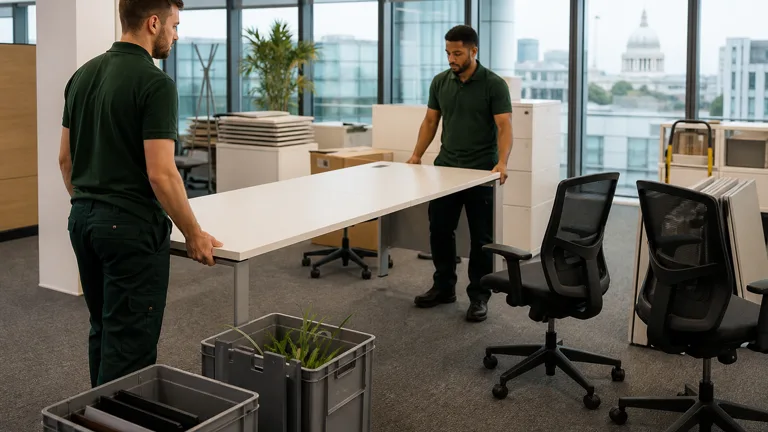
| Office | Desks, chairs, storage and IT | Loading window and building contact | Confidential data and electricals |
| Retail or venue | Displays, seating and packaging | Trading or event schedule | Food, glass, liquids and fixed fittings |
Chemicals, fuel, gas cylinders, asbestos, clinical waste, paint and unidentified liquids must be declared. They cannot be hidden inside general rubbish or prop boxes.
Trading and event times
A collection that crosses a queue, audience route or active shop floor may be unsafe even if the door is open. Agree access with the premises manager and provide the service-door location, keys, lift rules and loading instructions. If security signs the crew in, ensure the booking name and contact are correct.
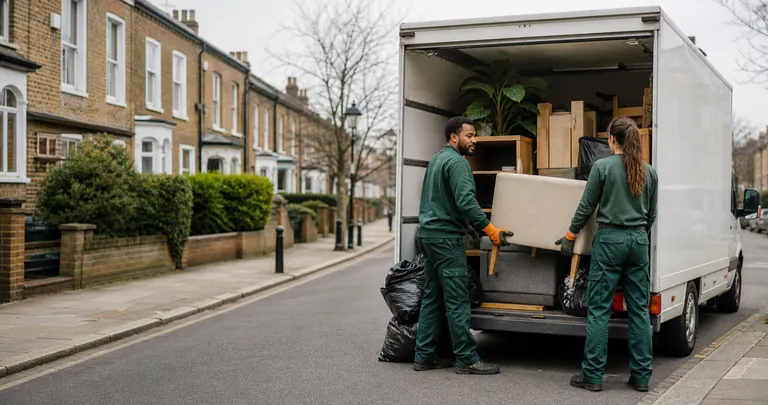
Residential upper floors need their own route check. Show stair turns and landings, measure bulky furniture and keep communal doors unobstructed. For a whole flat or several bedrooms, our flat clearance service is a clearer framework than booking isolated objects with no room schedule.
Useful price guidance
From £55
From £120
From £180
From £240
The displayed bands are planning guides. The final quote depends on the actual volume, weight, material type and crew work. Stairs, a long service corridor, dismantling, timed building access and distance from a legal stopping point can affect labour. Applicable supplementary charges are explained before work begins.
Rubble, tile, plaster and soil must not be estimated like packaging or furniture. Send separate close and wide photographs, state the number of sacks, and consult builders clearance for waste arising from refurbishment.
Evidence before allocation
Count bags and list each bulky or electrical item. Give dimensions for furniture that must pass through narrow stairs. For commercial loads, describe the business activity and how the contents were used. Dense building material should have its own photographs and approximate quantity, because weight can govern the job before volume does.
We assess the accepted material, route and labour and arrange attendance. One authorised contact identifies the final load and approves the on-site quote before loading. If the pile has changed, the team reassesses it openly. Fixed equipment, deep cleaning, confidential destruction and hazardous-waste work are not silently added to an ordinary collection.
State whether each group is household, business or project waste.
Show the full load, route and lawful vehicle position.
Agree the quiet trading, delivery or event access period.
One contact approves the final scope and price before loading.
Studios, venues and offices
Do not assume a crew can decide whether a cable, prop, instrument case or display component is obsolete. Label retained property and nominate a responsible person. Paints, aerosols, solvents, batteries and pressurised containers stay outside general waste until their handling is confirmed. Freestanding accepted items should be disconnected and accessible.
For workplace furniture and listed electrical equipment, use office clearance. Cafés and trading premises should describe food, oil and recurring waste separately from a one-off furniture reset. Empty drawers of paperwork and valuables, and keep customers or visitors away from the carrying route.
Near Camden
Camden questions
Yes, when the private entrance, stairs, trading hours and vehicle position are described in advance.
Identify their materials and ownership. Paint, liquids, batteries, pressurised containers and uncertain contents must remain separate.
A suitable service-access window can be assessed with the premises manager. Audience and customer routes must stay protected.
List electrical items separately and deal with confidential data first. Their handling is not identical to ordinary desks and chairs.
State the likely material, sack count and approximate weight if known. Include wide and close photographs.
Fixed fittings and extensive dismantling are not assumed. Explain the construction before booking so the scope can be assessed.
Send an updated inventory before attendance. Added volume, weight and ownership questions can change the job.
Separate, show, schedule
Send each waste group, its source, the correct service route and the available collection window in one clear brief.