Loft and upper rooms
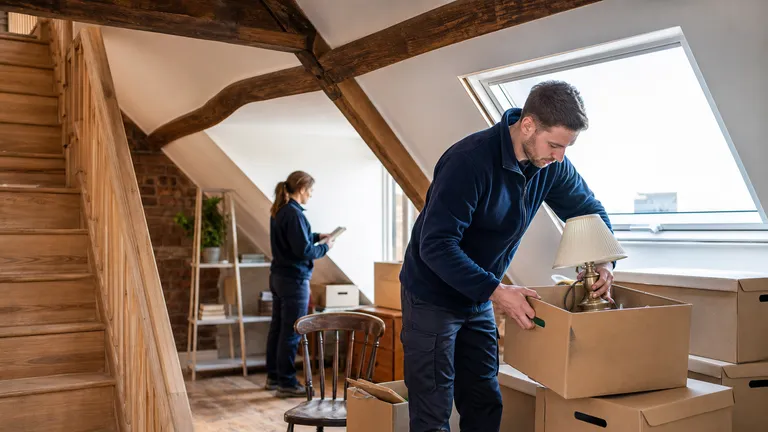
Boxes, suitcases and small furniture assessed against hatch access, headroom, floor condition and several flights of stairs.
Multi-level homes, sloping approaches and long carries
A Hampstead clearance can stretch from loft to basement, then along steps or a garden path before reaching the vehicle. We map every collection point and the full carrying route before allocating the crew.
Survey vertically
Hampstead houses and conversions can distribute unwanted items across attic rooms, upper bedrooms, lower-ground storage and garden structures. The volume may be straightforward, yet the labour changes with stair turns, low loft access, external steps and the distance from a rear garden to the street. A sloping or narrow approach can also limit where a collection vehicle can stand.
Walk the property systematically and photograph each collection point. Label the floor or outside area, show connections between levels and identify heavy objects. Add a continuous route from the most distant item to the likely vehicle position. This prevents a few visible room photographs from hiding half of the work in storage areas.
Hampstead clearance patterns
Boxes, suitcases and small furniture assessed against hatch access, headroom, floor condition and several flights of stairs.
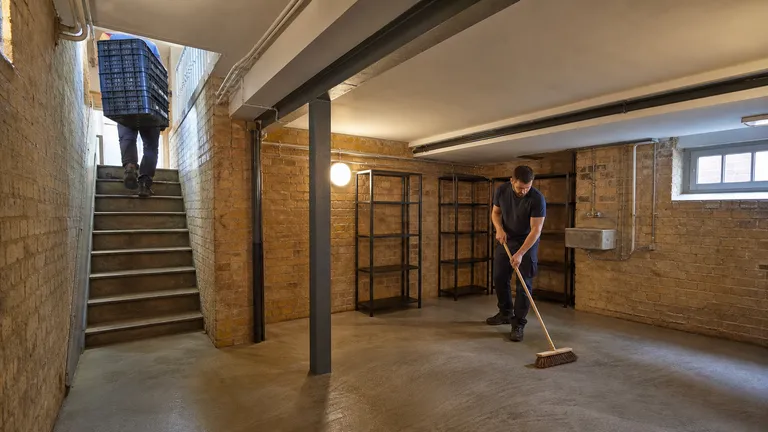
Household contents carried up internal or external steps after damp, lighting and restricted headroom have been shown.
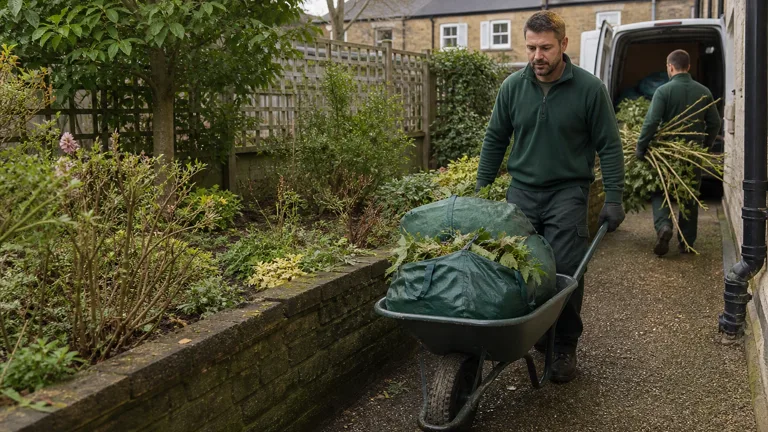
Green waste, freestanding garden items and stored contents reached through a measured side passage or through the home.
Hills, narrow streets and gates
Show the road width, restrictions, entrance steps and distance to the door. A private drive or forecourt must be suitable and authorised; a narrow street does not guarantee that the vehicle can stop beside the property. If the crew must carry uphill, through gates or across gravel, include that in the brief.
Rear access needs width, height and surface details. Do not assume a large wardrobe or garden bench passes through a side gate because a person can. When there is no side passage, explain whether the route crosses finished rooms. Our garden clearance service covers accepted loose garden contents and green waste, not excavation, tree surgery or removal of fixed structures.
From survey to collection
Create an inventory by level and outside area. Wide photographs show scale; close images identify heavy bags, fragile access and bulky pieces. Measure furniture against the smallest doorway or stair turn. For lofts, state whether access is by fixed stairs, a fitted ladder or a loose portable ladder, because the crew cannot assume unsafe equipment is usable.
We review volume, material, route and labour and arrange attendance. One responsible person confirms the included areas and receives the final quote before loading. Items found later in a shed or cellar are additions, not automatically part of the photographed load. Send updates early so crew time and capacity can be reconsidered.
Include attic, rooms, basement, garden and outbuildings.
Record hatches, stairs, gates and the longest carry.
Keep green, household, dense and restricted groups distinct.
Approve the complete on-site scope before loading.
Lofts, cellars and gardens
Do not enter an unstable loft floor, unlit cellar or damaged shed simply to move items nearer the door. Photograph access safely and describe the concern. The team can assess only a route that is structurally usable and reasonably lit; unsafe ladders, contaminated areas and fixed building fabric are outside ordinary carrying work.
Keep garden chemicals, fuel, batteries and sharp tools apart from green waste. Bag light cuttings appropriately, but describe branches and heavy timber by size. For stored attic contents, review our loft clearance service; for a broader furnished home, house clearance helps coordinate decisions across rooms.
Whole-property map
| Starting point | Common contents | Route detail | Special check |
|---|---|---|---|
| Loft or attic room | Boxes, suitcases, small furniture | Fixed stair or hatch, headroom and floors | Safe access and item dimensions |
| Upper bedrooms | Beds, wardrobes and bags | Flights, landings and tight turns | Need for agreed dismantling |
| Lower ground or cellar | Stored household items | Internal or external steps and damp | Unidentified liquids or unsafe flooring |
| Garden or shed | Green waste, tools and furniture | Side passage, gate and carry distance | Soil, fuel, chemicals and fixed structures |
Asbestos, fuel, paint, chemicals, gas cylinders, clinical waste and unidentified liquids must stay separate and be declared. Soil and dense building material need their own weight assessment.
Hampstead pricing guide
From £55
From £120
From £180
From £240
The price bands are initial guides. The final quote reflects actual volume, material, weight and labour. Multiple staircases, low loft access, slopes, long garden carries, dismantling and distance from a legal vehicle position may increase the work. Applicable supplementary charges are discussed before loading.
A few sacks of soil, stone or broken tile can be heavier than a much larger furniture group. Identify dense material separately and use builders clearance for suitable renovation debris rather than mixing it into a household estimate.
Around Hampstead
Hampstead questions
Yes, when every area and its route are photographed and included in the agreed inventory.
Safe access must be assessed. Explain the ladder, hatch, headroom and floor; unsafe equipment cannot be assumed suitable.
Photograph the complete path, measure its approximate length and include gates, steps, slopes and surface changes.
Declare soil separately. Its density can determine vehicle capacity and pricing even when the volume looks small.
Limited agreed dismantling may be possible after dimensions, construction and the route are reviewed. Empty the item first.
The route can be assessed, but clear personal objects and explain delicate surfaces. Bulky or dirty material must be safe to carry internally.
Send updated photographs before attendance. Additional volume, weight or carrying time may change the allocation and quote.
Survey from top to bottom
Send every collection point, its access constraints and the full route to the likely vehicle position.