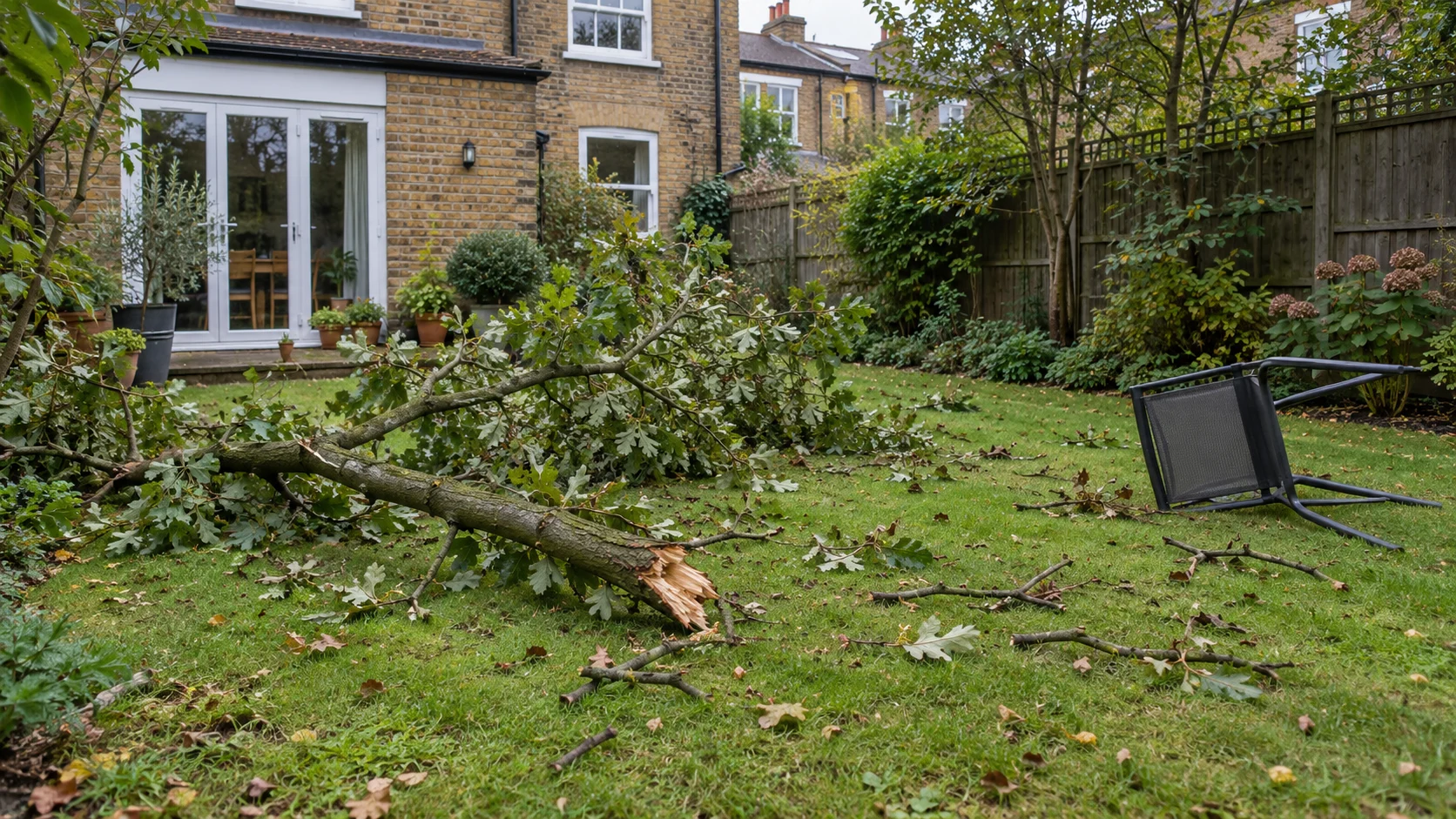
A storm can leave a garden looking like one large clearance job, but the first task is assessment, not loading. A small branch on an open lawn may be simple to move once conditions are calm. A tree limb resting against a wall, a hanging cable or a leaning fence is a different problem. If people start dragging material before checking what it is attached to, they can turn a manageable clean-up into an injury or further damage. Work through the site in order and leave anything uncertain in place for the right professional.
This guide covers a household garden after the severe weather has passed. It focuses on assessing hazards, recording damage, sorting loose debris and giving a collection team useful information. It does not offer emergency response or tree surgery. The Met Office advises against going outside to repair damage during a storm and warns about weakened trees, walls and fallen cables afterwards. Follow current official warnings for your area before going out.
Wait for calm conditions and view the garden from safety
Start from a doorway or another protected position and look across the entire space. Is anything still moving in the wind? Has a tree split, does a branch hang overhead or is a wall leaning? Are there loose roofing pieces, glass or water pooling near electrical equipment? If the answer is yes, do not walk underneath or reach through the damaged area to retrieve a bin or garden chair. Keep other household members and pets away while you seek advice.
Do not touch a fallen or hanging cable, anything touching it, or a branch that might be carrying it. UK Power Networks advises people to stay clear of damaged power lines and call 105. If there is an immediate danger to life, use the appropriate emergency service. A waste collection team cannot make an electrical hazard safe, and a cable may be live even when it appears quiet. Explain the hazard when reporting it and do not try to move the branch first.
Watch for damage above eye level. A branch wedged in a canopy may fall later; a fence panel supported by another broken panel may shift when the lower one is lifted. The Met Office's storm safety page says to avoid walking close to walls, buildings and trees that may have been weakened. A visual assessment from a distance is enough to decide that specialist help is needed. Do not climb a ladder or use a saw under a suspended limb to “finish” the job before a clearance quote.
If a large tree blocks a public road or pavement, report it through the relevant council or highway authority route rather than treating the public space as part of your private garden collection. For example, Bromley Council provides an urgent contact for large fallen branches on roads and pavements. The correct contact varies by borough and by who owns the tree or land. Give the precise location, the obstruction and any immediate danger so it can be triaged.
Photograph the damage before moving safe loose items
Once you can view the site safely, take wide photographs showing the garden layout and where each fallen item landed. Then take closer views of the branch, fence, shed, paving or planter involved, without entering a hazardous zone. Include a familiar object or measurement for scale. Record the date and keep any storm warning or incident notes that may be relevant to a repair or insurance discussion. Photographs are useful for both the owner and any contractor who has to estimate the job remotely.
Separate the assessment of damage from the count of waste. A broken fence may need a repair decision before its panels are removed, and a fallen branch may be evidence of a tree issue that should be inspected before the area is changed. Ask the relevant insurer or property manager what documentation they need before disposal if a claim may be made. Do not delay urgent safety action solely to get a perfect photograph, but avoid discarding all evidence of the event during a routine tidy-up.
Make a simple list: fallen branches, loose twigs, shattered pots, broken timber, damaged furniture, roofing fragments and any soil or rubble. Note what is still attached, propped or suspended. Our guide to photographing rubbish for a collection quote shows how an overview, item detail and access view help a provider understand the load. Include an unobstructed view of the route from garden to vehicle as well.
If the garden is shared, tell the other users which area is unsafe and who will arrange tree inspection, repairs and waste removal. Do not place a pile in a shared alley simply because the private patio is crowded. The clearance plan must leave fire exits, gates and pedestrian routes available. When a neighbour's tree or fence is involved, document the position and speak with the relevant owner or manager rather than assuming ownership from where the debris landed.
Use a tree specialist for unstable or heavy timber
A large limb or damaged trunk is not simply an oversized version of a bag of twigs. It may be under tension, tangled in other branches or partly supporting a fence or roof. Cutting at the wrong point can release that load suddenly. Ask a qualified tree professional to inspect and make it safe before the ordinary waste collection. Give them photographs of the tree, its location, nearby structures and access for equipment. The Met Office notes that storm impacts depend greatly on where a tree falls, including risks to buildings and power lines.
If the tree may be protected, check with your local planning authority about a Tree Preservation Order or conservation-area requirements before non-urgent work. Government guidance on protected trees explains that work on a protected tree generally needs the authority's permission. Urgent dangerous-tree procedures can differ from normal applications, so ask the authority and the tree specialist which applies. Do not describe every storm-damaged tree as automatically exempt from the rules.
Once the specialist has made the tree safe, ask what material they will remove and what they will leave. Tree surgery may produce logs, branches, chips and roots; the quoted scope may cover some but not all. A separate garden collection can be arranged for a clearly defined residual pile. Avoid double-booking a waste team for wood the arborist intends to take away. If logs are to remain for use, put them in a separate agreed area.
Do not move a heavy trunk segment across fragile paving or down steps merely to make a collection faster. Ask the provider what size and weight of pieces it can carry and whether mechanical access is needed. A stack that looks compact in a photograph can still be too heavy for an ordinary van-load quote. Our heavy waste quote guide explains why weight, not just visible volume, changes the job.
Sort only material that is clearly safe to handle
Once the hazardous parts have been assessed and isolated, gather loose, reachable twigs and small branches into one low pile. Keep them away from drains and the street. Put intact lightweight pots and garden furniture in a separate group so they can be cleaned, repaired or reused rather than automatically discarded. If a chair is cracked or a table has broken glass, describe it accurately instead of putting it into a bag of green waste.
Broken fence slats, painted timber and metal fixings should not disappear inside a heap of leaves. Keep them separate, and place loose screws or brackets in a rigid container. The old fence panel guide covers sorting treated timber, posts and concrete footings. A storm may scatter these components over several parts of the garden; count them after gathering rather than estimating from the original length of fence.
Shattered glass should be treated as a distinct sharp-material problem. Do not grab it through a thin garden bag or let it mix with clippings. Ask the collector how it wants fragments contained and avoid overfilling any container. If a greenhouse has broken panes, first check that no unsupported glass remains overhead. Our broken glass during a clearance guide explains why loose shards need a separate description.
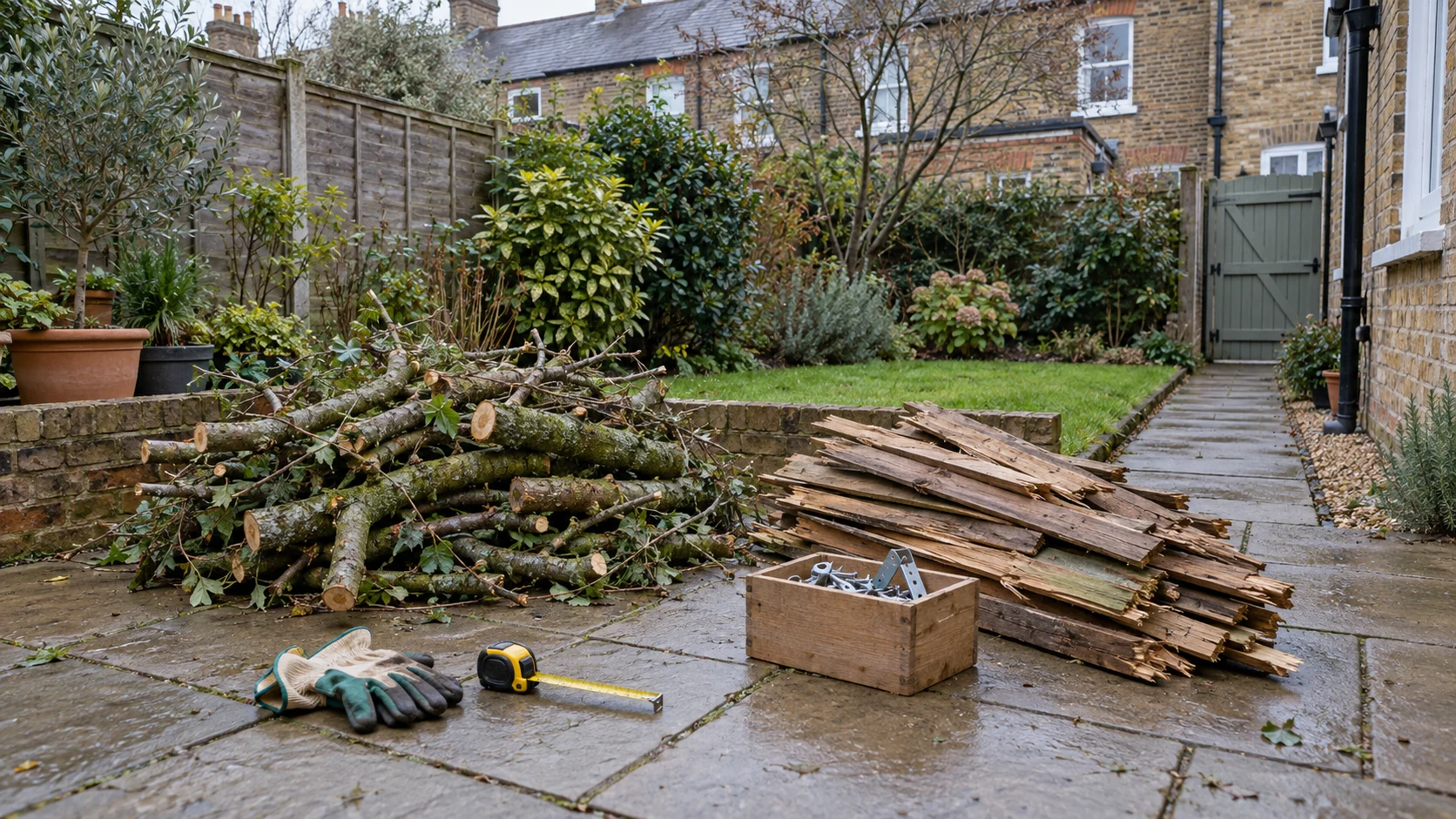
Soil, stones and rubble may be scattered by a collapsed planter or wall. Bag only quantities that can be safely moved, and do not describe dense wet soil as ordinary garden cuttings. The soil and turf disposal guide covers measuring this heavier material. Keep any suspect invasive plant material apart; a storm can break and scatter stems, so do not spread unidentified fragments with a leaf blower or normal garden pile. Our invasive plants guide explains when identification and a specialist disposal route are needed.
Check what can be reused, repaired or collected
After the site is safe, decide which items have a realistic second use. An undamaged fallen branch might be chipped or retained as logs by the tree professional if appropriate. A fence panel that has simply come free may be repairable. A cracked plastic planter or broken glass table probably needs a disposal route. Do not keep dangerous material simply because reuse sounds preferable; condition and safe storage come first.
Check the local council's current garden-waste rules for branches, cuttings and quantity limits. Some services have maximum branch sizes or refuse soil, treated timber and pots. A household recycling centre may accept separated materials but impose vehicle or booking conditions. The route for a small garden bag is not necessarily suitable for a whole fallen tree or several broken fence panels. Confirm each material before loading a car or ordering a collection.
For a private collection, send a full item list and photographs after any tree specialist has completed the hazardous work. Include branch lengths and approximate pile size, number of fence panels, any rubble or soil, broken glass, parking and carry distance. Ask whether cutting material down, bagging and loading are included. Our guide to what a rubbish removal quote should include provides useful questions about labour, exclusions and disposal.
The garden clearance service can be a starting point for the movable, accepted debris, but give the team a truthful description of all storm damage and any areas excluded for safety. Do not book a normal waste collection as though it will repair a roof, disconnect a cable or assess a tree. If a repair contractor will produce more waste later, decide whether one collection after repairs or two smaller collections is more practical.
Prepare access and compare the result with the plan
Keep the collected piles on private land without blocking exits or paths. Cover light material if further wind is forecast, but do not cover an unstable structure or hazardous area in a way that encourages someone to handle it. Give the crew a safe path from pile to vehicle and tell them about steps, narrow gates or damaged paving. If a garden gate has been twisted by the storm, measure the usable opening rather than assuming the usual access still exists.
Before the vehicle arrives, compare the agreed quote with the actual piles. A contractor may have removed the large timber, or repairs may have added extra fencing and packaging. Tell the collection company about material changes before it arrives. Keep clear records of what was removed, what remains for repair and any waste documentation from the collector. GOV.UK's household waste guidance explains the responsibility to make sure another person is legally allowed to take your waste.
After the collection, inspect the garden from a safe position. Are sharp fragments still present? Is a drain blocked by leaves, or a broken piece of timber left behind a shed? Do not enter an area that remains unsafe just to complete the visual check; pass any remaining hazard to the appropriate specialist. The aim is a safe, documented recovery, with loose debris dealt with only after the dangerous parts have been made safe. If you need a quote for the ordinary cleared material, contact the Rubbish Please team with the item list, photographs and access details.