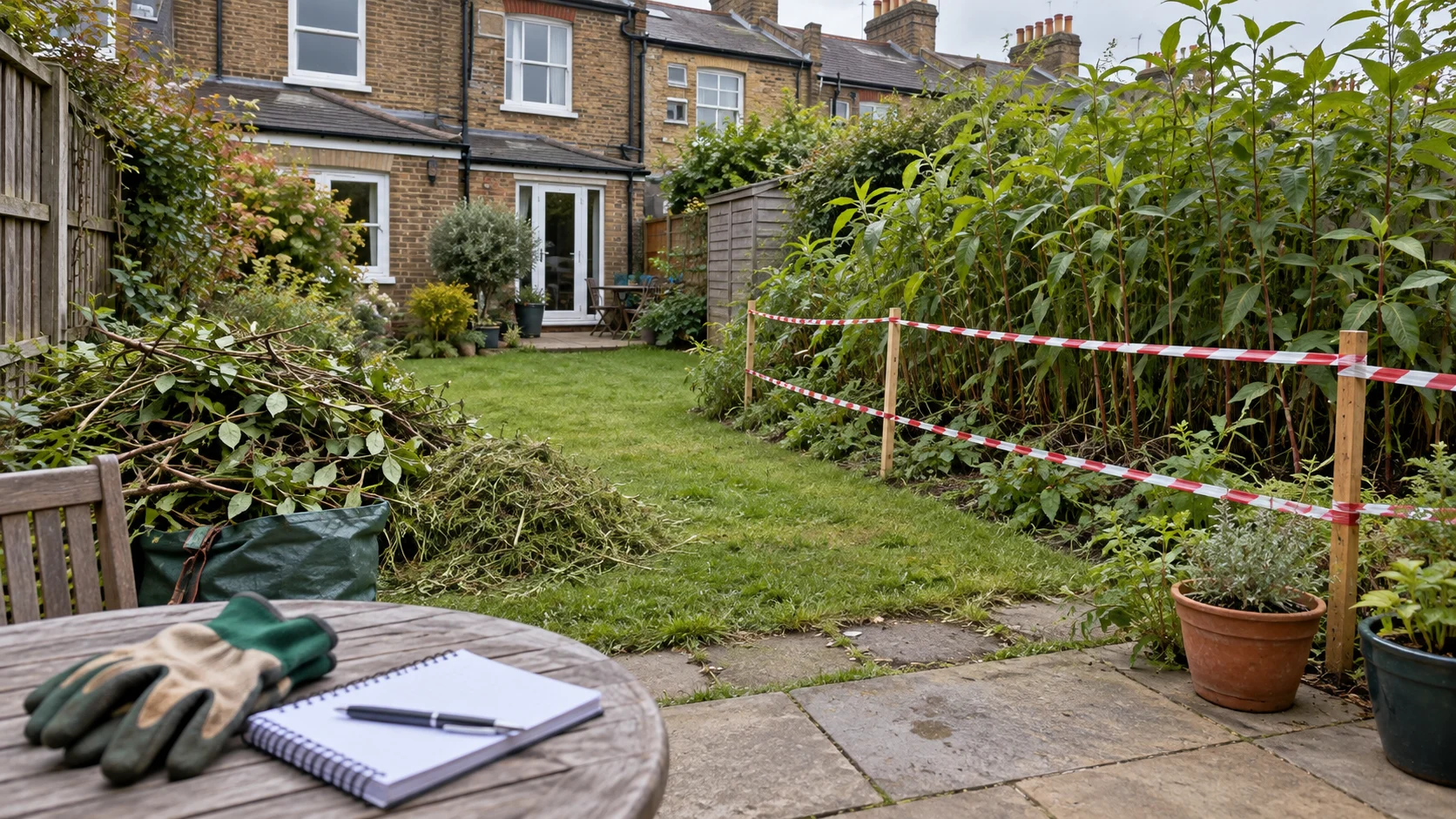
A garden clearance usually involves cutting, gathering and loading as quickly as access allows. A suspected invasive plant changes that sequence. Moving pieces or soil before the species and disposal route are known can spread a problem beyond the original patch. The sensible first step is to pause work in that part of the garden, document what has been found and keep ordinary garden cuttings separate. A specialist can then decide whether treatment, containment or a particular disposal facility is required.
This guide covers practical decisions for a household clearance in England, especially in London. It does not diagnose a plant from a picture or prescribe herbicide treatment. GOV.UK's invasive non-native plant guidance names Japanese knotweed, giant hogweed, Himalayan balsam, Rhododendron ponticum and New Zealand pygmyweed among commonly found examples, but the risks and handling differ. If the job is an ordinary mix of branches, turf and soil without a suspect species, our mixed garden debris guide is a better starting point.
Pause the affected work and identify what is actually growing
Do not strim or dig an unfamiliar patch just to make the site look tidy before someone checks it. Take clear photographs of the whole plant, leaves, stems, flowers or seed heads where present, and its position relative to a fence, path or watercourse. Photograph without pulling a specimen or walking through the patch. Record the season and approximate extent. These observations help a competent person identify the species; they are not a substitute for an assessment. Many ordinary plants resemble an invasive one at a particular stage, and a stock photograph on a website cannot establish what is growing in your garden.
Show the suspected area to the landscaper or clearance company before they price the job. Explain whether anyone has already cut, moved or bagged material. If so, note exactly where it was placed and which tools were used. Do not blend an uncertain bag into the main garden pile while awaiting identification. Keep the rest of the garden job separate and, where possible, continue only in areas that will not disturb the suspect patch or track soil through it.
The potential hazard may affect how close people should get. GOV.UK's woodland guidance identifies giant hogweed as a plant whose sap can cause severe skin reactions. Do not touch or cut a plant you suspect may be giant hogweed. Seek species-specific professional advice about work near it. If someone has already had sap on their skin, use current medical guidance for the exposure rather than relying on a waste collection article.
An identification should be recorded with the job plan. Ask the assessor what species they think it is, how confident they are and whether the affected soil, roots, cut stems or seeds need separate handling. If the answer remains uncertain, plan conservatively until it can be resolved. That is more useful than declaring every vigorous weed “knotweed” or treating a suspected patch as harmless because it is not flowering today.
Understand why Japanese knotweed needs a separate plan
Japanese knotweed is a frequent concern during garden work because it can spread through rhizomes and plant fragments. GOV.UK's Japanese knotweed guidance explains that even small rhizome pieces can regrow, and that moving contaminated soil can relocate the problem. The same guidance says you do not automatically have a legal duty to remove knotweed merely because it is on your land, but you must prevent it spreading off the property. A general rubbish collection is not a knotweed management programme.
If knotweed is confirmed or seriously suspected, stop excavation, soil redistribution, mowing and flailing in the affected area until an appropriate plan exists. Keep any soil already lifted from that area separate from clean soil. Do not offer it as topsoil, use it to fill another part of the garden, or put it in bags of ordinary soil for a normal collection. The soil and turf disposal guide explains how to estimate a clean garden load; its usual centre and collection assumptions do not cover soil contaminated with knotweed.
The off-site route requires advance coordination. GOV.UK says Japanese knotweed waste sent off site needs a registered waste carrier and an authorised landfill or other suitable permitted facility. The receiving site must be told what it is and confirm it can accept the material. A specialist may recommend management on site rather than immediate excavation, depending on the location and intended work. Do not infer from the size of visible canes that the affected soil volume is small; the underground extent needs assessment.
Avoid presenting an improvised home method as a guaranteed cure. Government guidance describes regulated options including herbicide treatment, on-site burial under specified conditions and off-site disposal. Each has conditions, timing and practical limitations. A homeowner planning a patio or extension over the affected area should tell the relevant professionals early, because disturbing soil later can undo a superficially tidy clearance.
Treat seed spread and contact hazards as different issues
Not every species spreads like knotweed. Himalayan balsam is a seed-spreading plant, and timing matters. The Environment Agency's account of a Himalayan balsam project warns that touching plants once they have set seed can disperse seeds metres away. A crew that moves through a mature stand or drags flowering stems across a path may therefore create a new problem even without shifting soil. Ask someone familiar with the species whether removal is appropriate at that stage and how the material will be contained.
Giant hogweed introduces a contact risk in addition to spread. Its sap and sunlight can produce serious skin injury. Do not assign a general clearance crew to cut or bag it without telling them what is suspected and agreeing on a safe method. The first question is how to keep people away from the plant; the disposal plan follows identification and safe handling advice. A “plant waste” line on an ordinary collection quote cannot cover an undisclosed exposure hazard.
Aquatic or pond plants can be a different route again. Defra's rules for listed invasive plants warn that small fragments of listed aquatic plants can spread and that dumping them in the wild may be an offence. Keep pond clearings and water separate from general garden waste until the species and route are checked. Do not tip material into a ditch or stream to avoid a disposal fee.
This variation is why a blanket statement such as “all invasive plants must go to landfill” is unreliable. GOV.UK describes more than one treatment and disposal method, each with its own conditions. Equally, ordinary compost advice cannot simply be applied to suspect plant material. The correct plan depends on the species, whether viable fragments or seeds are present, where the plants are growing and which authorised site can receive any material leaving the property.
Keep the ordinary clearance genuinely separate
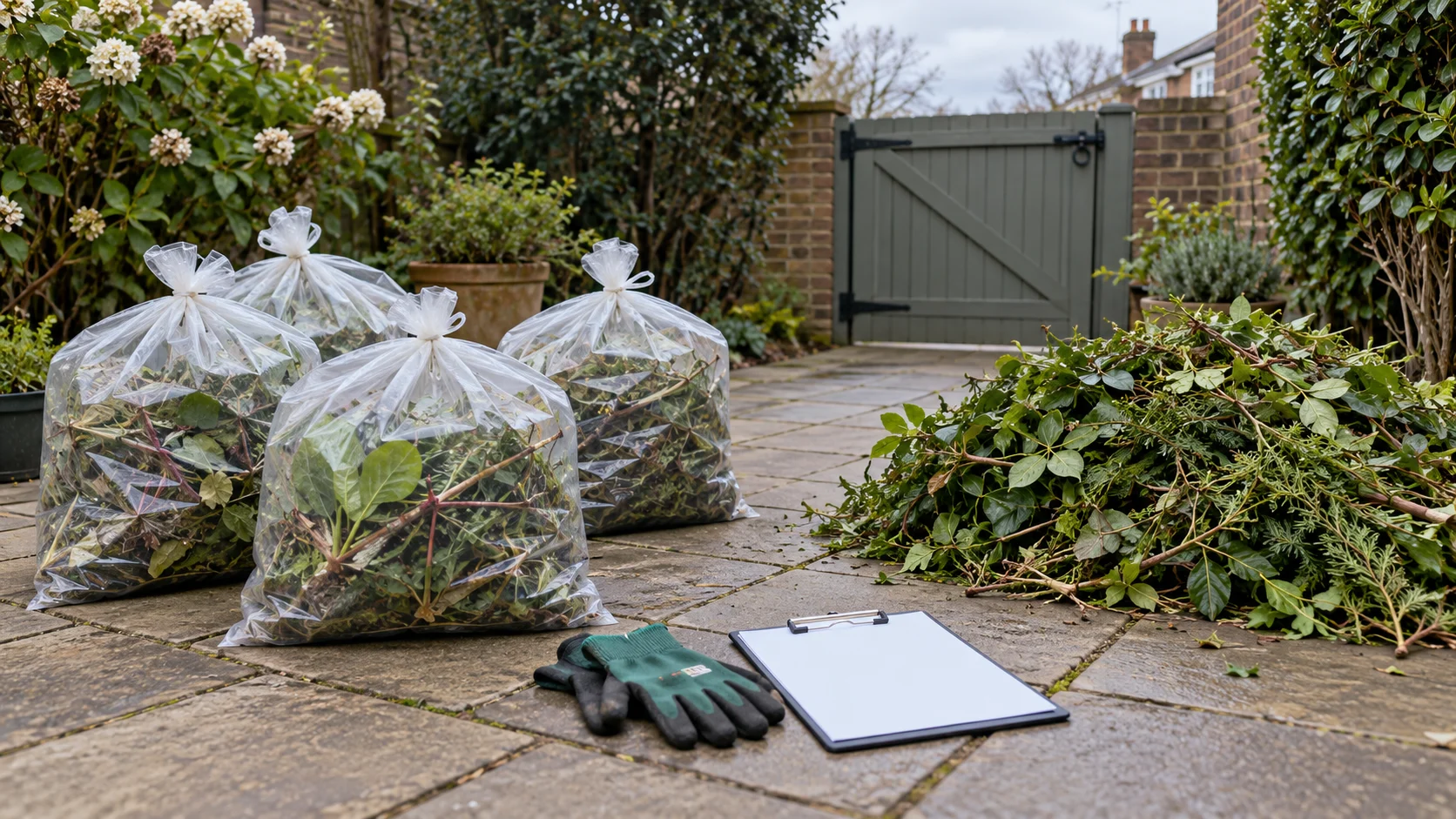
An affected patch does not necessarily stop all other garden work. Separate clean cuttings from material taken in or near the suspected area. Agree a visible boundary with the crew, and keep the route for wheelbarrows and bags away from the patch. If tools, footwear or vehicle tyres have passed through suspect soil, ask the specialist how they should be cleaned before they enter unaffected ground or leave the site. Do not assume a quick brush is enough for every species or situation.
Bagging is not a universal answer. It may help contain material that has already been cut, but the bag type, closure, handling and disposal destination need agreement for the identified species. Do not fill a garden-waste sack with affected cuttings and then leave it for a routine council collection. Tower Hamlets Council, for example, explicitly excludes Japanese knotweed from its garden-waste collection. Check the rules of the borough serving your own address for ordinary green waste, and use the specialist route for controlled material.
If suspect plant fragments have already entered a general pile, mark the whole potentially affected portion as uncertain. Do not remove only the visible canes and assume the rest is clean. Tell the person assessing the site when and how that pile was made. A clear description can save a collection team from loading something it cannot lawfully or safely take. For a large normal pile that remains separate, our garden-clearance service may be relevant, subject to confirmation of the materials accepted.
Retain photographs of both the affected area and the clean pile. If a treatment programme will last months or years, record which parts of the garden must remain undisturbed. A later landscaper, tenant or buyer should not have to infer from an old pile of bags where the original problem was. A dated plan from the specialist can clarify future work far better than an informal verbal warning.
Ask a specialist and receiving site the right questions
When requesting an assessment, send the photographs, site address area, approximate patch size and details of planned excavation or clearance. Ask what identification evidence the specialist will provide, what treatment or removal is proposed, whether soil is implicated and how follow-up monitoring will work. A one-day tidy-up quote and a multi-season control plan are different services. Clarify which one is being offered before any work starts.
For off-site disposal, ask who is the registered waste carrier, where the material will go and whether the receiving facility has confirmed it accepts that species and waste type. GOV.UK's invasive plant disposal guidance requires a registered carrier and authorised destination for contaminated material leaving the site. The GOV.UK household waste guide also explains the general duty to check that a person taking household waste is legally allowed to do so. Keep the waste paperwork and treatment report with the property records.
Tell any ordinary rubbish company clearly that suspect invasive material is present, even if you only want it to remove unaffected branches, fence panels or furniture. Ask it to exclude the affected zone from the scope and to confirm where it will place its bags and vehicle. Our guide to what a rubbish removal quote should include can help distinguish accepted items, labour and exclusions. A transparent quote is safer than discovering at collection time that the team was not warned.
Check whether the specialist's proposed on-site solution needs permissions or notifications. The government guidance for knotweed sets specific conditions for burial, burning and chemical use; those options should not be improvised from a short online checklist. If the garden is near water or on protected land, the constraints may be different again. Ask the person recommending the method to state which current guidance and authorisations apply to this site.
Document the work and monitor after the garden looks clear
After treatment or removal, take dated photographs of the area and keep the contractor's identification, method, waste destination and any follow-up schedule. A visually clear bed does not by itself prove that an underground rhizome system or seed bank has gone. GOV.UK's knotweed guidance notes that treatment may take years and rhizomes can remain dormant. Ask how regrowth should be reported and who is responsible for any return visits.
Do not move stored soil or begin new excavation simply because the first visible stems have died. Follow the agreed treatment plan and recheck the affected boundary before future work. If the clearance is part of a property handover, pass the relevant records to whoever will maintain the garden. This makes the next decision based on evidence, not a new guess about a plant that may be out of season.
The practical sequence is straightforward: pause the suspect patch, identify the species, protect people from any contact hazard, separate clean material, then confirm the treatment and receiving route before anything affected leaves the property. That sequence lets an ordinary garden clearance proceed where appropriate while giving the invasive plant the attention its particular biology and rules require. If you need help arranging the unaffected part of the job, contact the Rubbish Please team with photographs and a clear note about the excluded area.