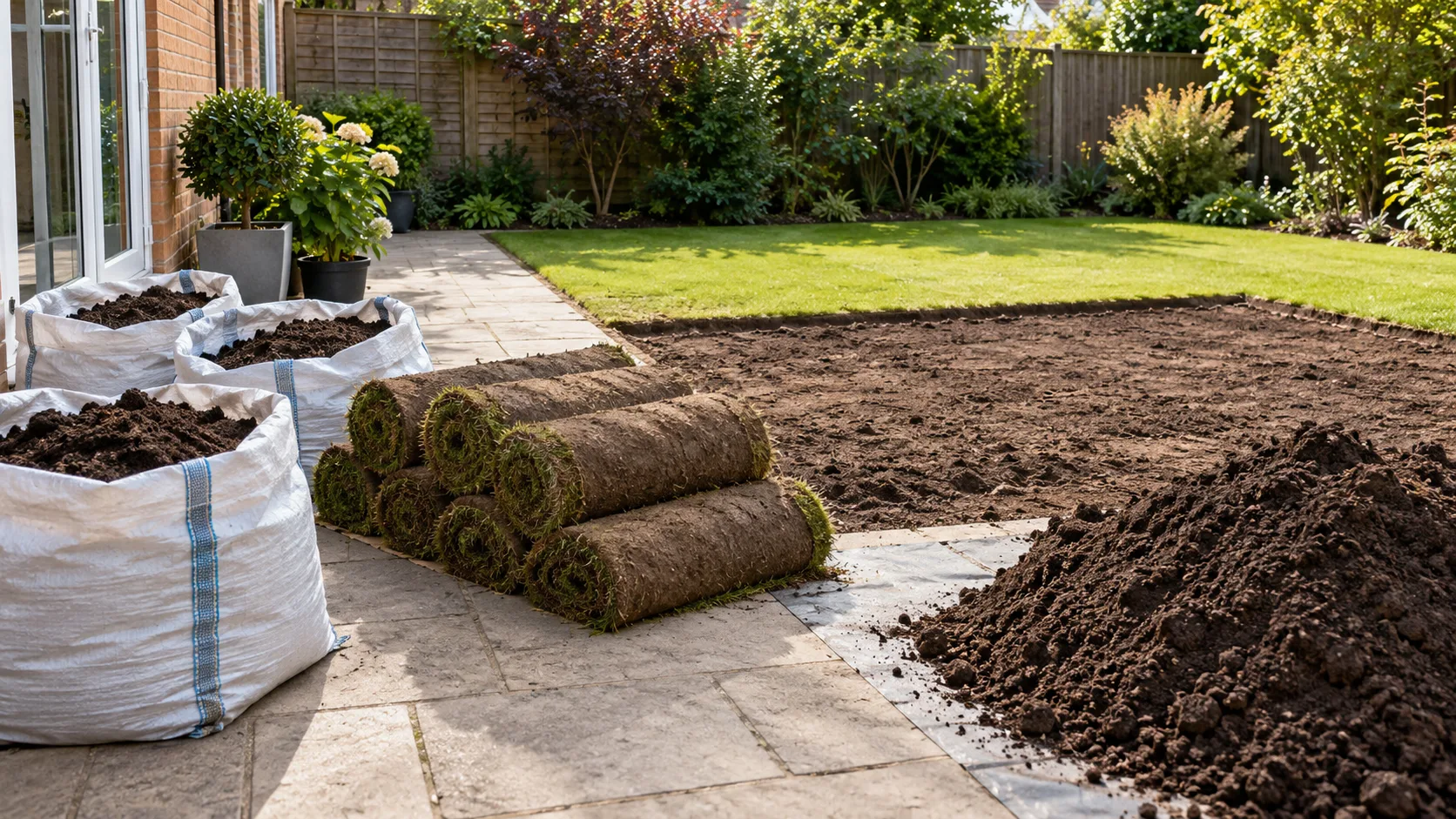
Replacing a lawn or lowering a border can create a dense waste load that is easy to underestimate. A shallow layer of soil spread across a few square metres becomes a substantial pile once excavated. Turf brings soil and roots with it, so its rolls are not equivalent to a bag of dry grass clippings. If the material is wet, bagged in oversized sacks or carried through a narrow terrace passage, the collection plan changes again. A useful quote needs measurements and the right description before anybody starts loading.
This guide concentrates on soil and turf from household garden work. The previous mixed landscaping debris guide explains how to divide several waste streams; here the issue is the volume, weight and accepted route of the two dense materials themselves. It does not assume that an ordinary green-waste bin takes them, that a recycling centre has unlimited capacity or that every soil pile is clean. The person arranging the work should confirm both origin and destination.
Measure the area and depth before the pile grows
If excavation is planned, measure the length and width of the area and the average depth to be removed. Multiplying those dimensions gives an approximate in-ground volume. For example, four metres by two metres at ten centimetres deep is roughly 0.8 cubic metres before the soil has been dug and loosened. This is a planning estimate, not a guaranteed skip size or vehicle capacity: roots, stones and air spaces can change the loose pile, while moisture changes its weight. Tell the provider the original dimensions and show the resulting pile once it exists.
For a lawn replacement, record the surface area and the thickness of the cut turf. Count rolls or sections separately from any additional topsoil beneath them. If work is already complete, measure the pile's rough footprint and height, count bags and photograph one bag beside a familiar object. Do not describe the load merely as “a few bags” if there are several large flexible containers. The guide to photographing rubbish for an accurate quote gives a useful set of overview, detail and access views.
Include anything mixed into the material: gravel, broken brick, concrete fragments, old membrane, plastic roots barriers or plant waste. A clean soil estimate is not the same as an excavation spoil estimate. Tell the collector if the pile has been under a building project, near a former fuel store or on land with known contamination; do not present uncertain spoil as clean garden soil. Where the history raises a real concern, seek an appropriate assessment before moving or offering it to someone else.
Decide whether any clean soil or turf can be used on site
Before treating all excavated soil as waste, ask whether a planned bed, low spot or future planting area can use a sensible amount of clean material. This needs a real landscaping purpose and a suitable place to store it; making an unnecessary mound merely to avoid collection creates another job later. Keep useful topsoil separate from subsoil, stones and construction debris. If a landscaper will return for a second phase, label the reserved quantity so the collection team does not remove it.
Fresh, usable turf might have a recipient nearby, but time and condition matter. Describe the grass, dimensions, root layer, how long it has been lifted and when someone can take it. North London Waste Authority suggests offering leftover turf for reuse and lists a centre route when it is not reusable. A recipient should agree to the handover before you remove the rolls from the waste quote. Old or deteriorated turf stripped from a lawn is a different prospect from unused new rolls.
Do not offer soil or turf from a site with suspected contamination as safe fill for another garden. Equally, do not spread an unidentified invasive plant's roots through a reuse listing or a normal garden pile. The disposal rules for particular species require separate advice; when in doubt, keep that material apart until it is identified. Reuse is valuable only when the receiving person knows what they are getting and the material is suitable for the intended use.
Keep turf and loose soil in separate, stable groups
Roll or cut lifted turf into sections that can be moved without tearing or creating an unmanageable weight. A turf roll contains both plants and soil; keep it apart from clean grass clippings and from bags of pure soil. If a large sheet is too heavy, ask the person lifting it to make smaller pieces as part of the planned work. Avoid stacking tall unstable towers of rolls on a sloping patio or against a shared fence.
For loose soil, use sturdy containers filled only to a weight that the crew can safely move. A bag's litre capacity does not say how much damp soil it should hold. Many garden bags are designed to carry bulky light cuttings; overfilling one with earth can damage handles and create an awkward lift. Agree bag type and maximum fill with the provider, and count the filled bags rather than assuming a photograph of an empty sack explains the load. Keep seams and handles accessible for inspection.
Protect the load from avoidable rain and runoff where practical, but do not create a sealed wet pile that becomes harder to assess. Keep soil from spreading across a communal path or into a drain. Remove obvious plastic, metal and unrelated rubbish as the work progresses, rather than after the soil is bagged. If the material includes large stones or paving, list those separately. Our heavy-waste quote guide explains why a compact mineral load can be more significant than a much larger pile of branches.
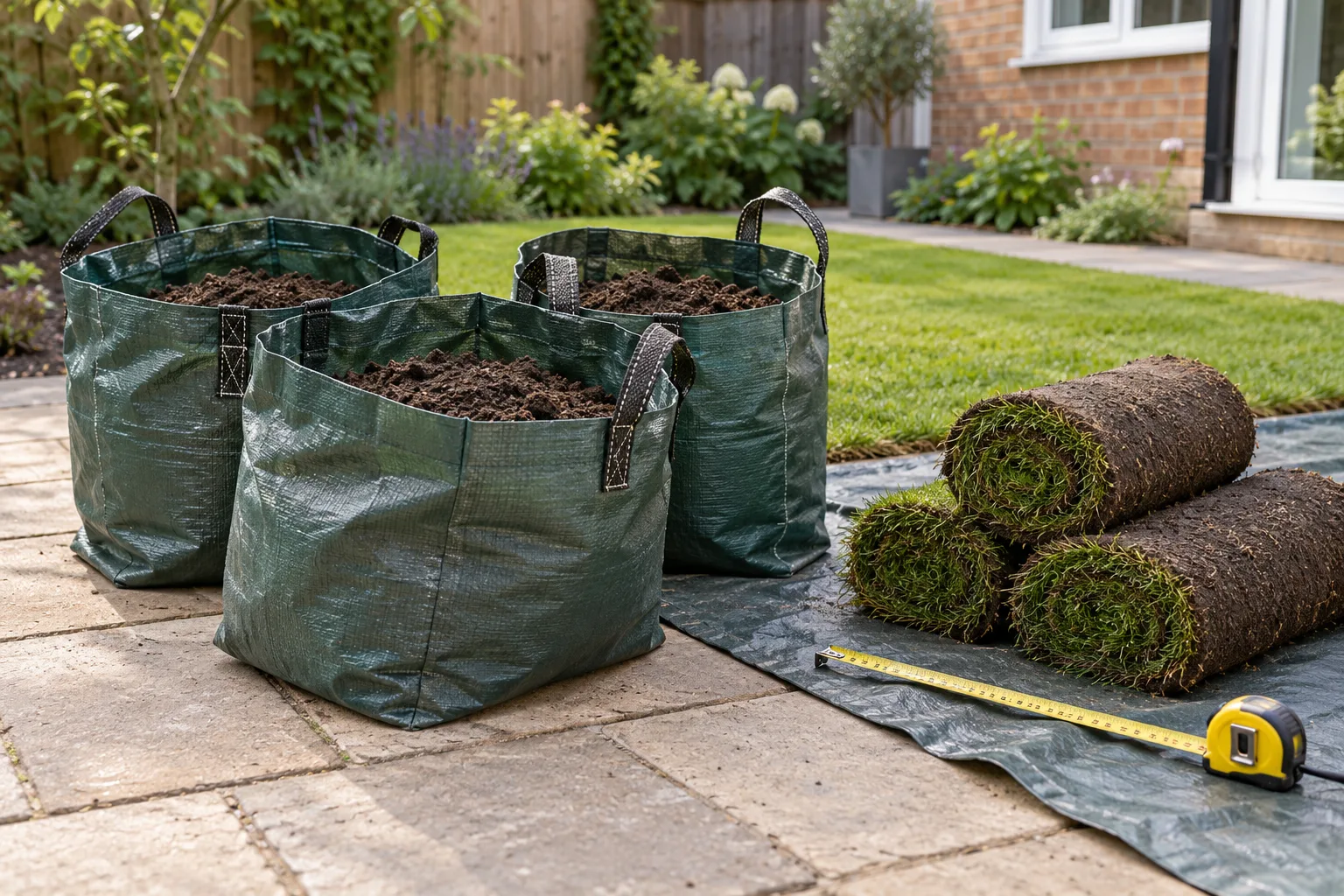
Check the centre rules for the exact postcode and quantity
Do not assume that a paid council garden bin accepts soil or turf. North London Waste Authority says its organic garden-waste stream should not include soil or turf. Other London services may have similar exclusions but different collection arrangements, so read the current local page. A service that takes prunings is not automatically the correct service for excavation material.
Household recycling centres can also set limits. North London Waste Authority's soil-and-stones page identifies accepting sites, exclusions at particular centres and quantity rules for DIY material. It says that soil brought to its centres is currently placed in a general-waste container rather than recycled. Its separate turf page describes reuse and centre options. Check the live site rules immediately before a trip; a centre may restrict vehicle type, resident access, bag quantity or how often the household can visit.
Do not plan a series of trips based on an outdated summary of the allowance. A single landscaping job can produce far more than the free DIY quantity. Tell the centre how the waste was generated and ask whether a paid or alternative route is needed. If a tradesperson carried out paid work and produced the material, clarify that with the centre before trying to use a household DIY entitlement. GOV.UK explains that waste produced by a tradesperson during work is business waste. The disposal responsibility should be agreed in the landscaping contract.
Give a private collector the information that changes the job
Send the dimensions of the dug area, estimated depth, current bag and roll counts, photographs, and a note on whether soil is wet, stony or mixed with other materials. Include the distance from pile to vehicle, side-gate width, steps, slopes, parking and whether a wheelbarrow can be used without crossing a neighbour's property. A quote based on a van parked next to the pile may not work if material must travel through a long house or down a narrow shared path.
Ask the provider what it accepts and how it wants soil and turf contained. Confirm whether the price includes carrying, loading and disposal of both materials. Do not place soil in opaque sacks with rubble and then describe the whole load as turf. The guide to what a rubbish removal quote should include helps identify scope gaps before the day. For a broader job, the garden-clearance service is a relevant starting point, but the heavy soil component still needs a specific description.
If using a private waste business, check its carrier registration as required by GOV.UK's household waste guidance. Keep the booking and handover confirmation. Registration does not replace asking where this particular material can go. Do not promise that the soil will be recycled or reused unless a receiving route has actually been identified.
Finish by comparing the cleared area with the original estimate
After the load leaves, inspect the soil and turf holding areas. Check for torn bags, soil spilled on paving, rolls left behind a shed and any material intentionally reserved for landscaping. Compare the amount collected with the original dimensions and bag count. If a deeper layer was excavated than planned, document that difference before accepting a revised quote or arranging a second collection.
Soil and turf disposal works best when the material is measured before digging, separated during the work and matched to the local route's actual limits. When you request an estimate, send the measurements and access photos so the collection team can plan for the dense load, not just the size of the visible pile.