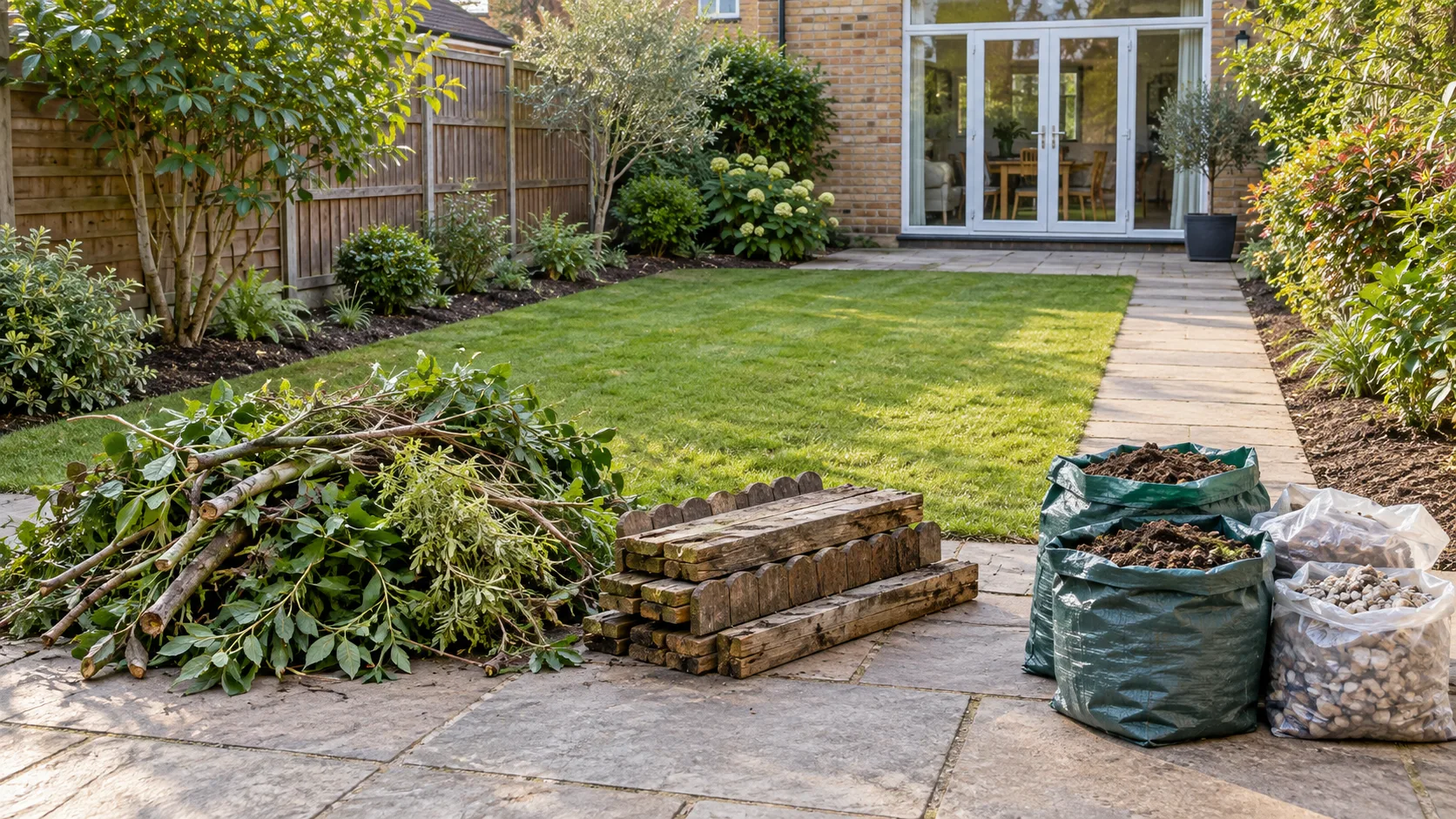
A landscaping project can leave a garden looking finished while the patio holds four very different waste loads. Pruned branches and turf offcuts sit beside old edging timber, soil, gravel, broken paving, plant trays and bags from new materials. Calling it all “garden waste” may lead to the wrong bin, an incomplete quote or a collection team that cannot take part of the pile. The useful task is to identify the materials before they are bundled together.
This guide is for a household garden after ordinary landscaping, planting or border work. It focuses on segregation, storage and the information a collector needs; it is different from a guide to garden-clearance prices. It also does not assume that every plant is suitable for an ordinary green-waste stream. If an unusual or potentially invasive species is present, stop and seek specific advice before moving it into the general cuttings. The same applies to chemicals, treated products or contaminated soil that the normal load description does not cover.
Walk the site and make four practical groups
Start with a wide photograph of the garden and mark where each pile sits. Then group the material as green cuttings, timber and garden structures, dense mineral material, and miscellaneous items such as pots or packaging. You may need further divisions within those groups, but this first pass prevents a hedge pile from hiding bags of rubble. Record the number of sacks, approximate pile dimensions, the longest branches and any awkward item that cannot be bagged.
Green cuttings may include grass, leaves, small branches and ordinary plant material. Timber may include removed edging, a short section of fence or an old raised-bed board. Soil, stones, broken slabs and bricks are dense even when the pile looks small. Plant pots, compost bags, plastic sheet and metal fixings belong in their own descriptions. A photograph of each group next to a common object gives scale; do not rely on a single image taken from the back door.
Check what is staying in the garden. Reusable topsoil, spare paving and sound timber may be needed for a later repair, but they should be deliberately set aside and protected. A vague “keep some of it” instruction creates confusion on collection day. If several people worked on the project, agree who owns the final decision. Our guide to photographing rubbish for a collection quote explains why a full view plus material details helps the provider understand the real load.
Keep the green stream free of construction material
Do not add stones, soil, plastic pots or treated fence pieces to a bag of leaves to make the patio look tidy. GOV.UK's household recycling guidance lists materials that garden-waste collections do not need to accept, including plant pots, plastic, sand, stone, gravel and bricks. It also notes that large branches may have to be cut to local size requirements. The collection rules at the property's postcode remain the practical test for what may go in a council garden bin.
Use the local bin only within its rules and capacity. A paid garden-waste service may be intended for routine trimmings rather than the result of removing a large hedge or rebuilding a border. Keep sacks or piles accessible without blocking paths, drains or neighbouring space. If branches are long, ask the collector what lengths it accepts before cutting them; do not create an unsafe pile of loose sharp ends or assume a private crew will process whole trees.
Ordinary cuttings can sometimes be composted at home where suitable, but do not treat home composting as a universal answer for a large one-off load. Material mixed with soil, plastic ties or chemical packaging needs different sorting. If the project uncovered a plant you cannot confidently identify, do not move roots or cuttings into a shared green-waste pile while you wait for advice. The question of invasive species has its own rules and should be handled separately from this normal landscaping load.
Treat soil, stones and rubble as a heavy load
Small bags of soil can weigh much more than their appearance suggests, especially after rain. Count the bags and estimate their size, not just the number of wheelbarrow trips. Keep stones, gravel, broken slabs and bricks separate where practical so the collector can assess their weight and destination. Do not fill a large garden bag to the top with wet soil if nobody can safely lift or move it. Use containers and quantities agreed with the provider.
Council green-waste bins commonly exclude these mineral materials. For example, Camden's garden-waste collection information excludes soil and rubble. A household recycling centre may have different rules or limits for DIY material, and a private collection may price and plan dense waste differently from branches. Our guide to why heavy waste changes a van-load quote explains why weight matters even when the visible volume is modest.
Keep the soil group protected from extra rain where sensible and prevent loose material spilling onto a shared path. If the soil is believed to be contaminated, or the landscaping involved excavation near a known problem area, do not present it as ordinary clean topsoil. Ask an appropriate specialist what assessment or route is required. The ordinary garden load should not quietly absorb material of uncertain origin or composition.
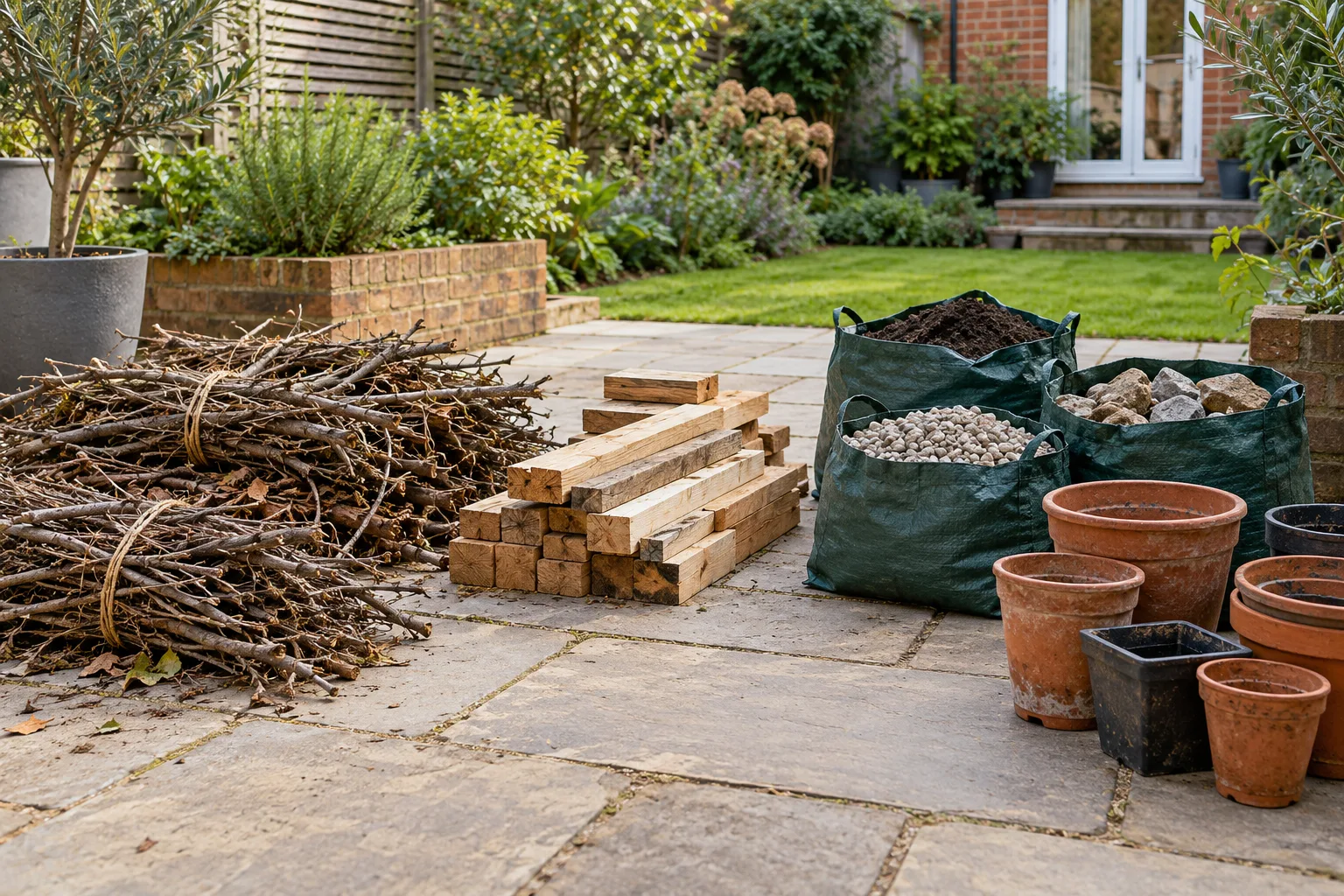
Describe timber and manufactured items separately
Old edging boards, fence panels, raised-bed timber, stakes and decking offcuts may differ in treatment, condition and size. Photograph both the whole stack and close views of paint, coatings or fixings. Do not burn unknown treated timber or assume it can go with prunings merely because it came from a garden. Remove or contain protruding nails through a safe process and tell the provider if any remain. A fence panel with attached posts is a different lifting problem from a small bundle of dry sticks.
Keep plant pots, trays, plastic membrane, netting, compost packaging and metal brackets out of the green pile. Some packaging may fit local household recycling rules once empty and clean, but the project waste is not automatically one recyclable stream. Ask the council or provider about each substantial group. If a garden structure has to be dismantled, agree whether that work is included in the collection or will be completed by the landscaper first.
This is also the point to distinguish a residential one-off load from work generated by a professional landscaper. GOV.UK's household waste guidance notes that waste produced by a tradesperson during work is business waste for which the tradesperson has disposal responsibilities. Agree this before the contractor leaves and record what it will remove. Do not assume the householder's routine bin is the default route for construction leftovers simply because they are on a domestic property.
Plan the carrying route and collection sequence
Check how a crew will reach each pile: side gate width, steps, distance from garden to vehicle, muddy ground and any door that must remain locked or protected. Do not put all categories behind a pile of heavy slabs that has to be shifted twice. If a wheelbarrow route crosses a shared hallway or narrow passage, plan how to keep it clean and available. The London parking and loading guide helps identify why the legal vehicle stop may be farther from a garden than expected.
Schedule the removal around the landscaping team's last workday. New materials and tools should have left before the waste collection, and any soil or timber to be reused should be marked. A provider may prefer the heavy mineral material loaded separately from light cuttings. Ask before stacking one group on another or bagging everything in opaque sacks. The safest and clearest handover is a set of visible groups that match the photographs used for the quote.
Do not leave loose garden debris on the pavement or block a neighbour's gate while waiting for a vehicle. If rain is expected, keep lightweight packaging and leaves contained. If an unexpected item appears during final cleanup — for example, a paint tin, gas canister or electrical fitting — set it aside and tell the provider. An ordinary garden collection should not become an unannounced hazardous or electrical-waste load.
Confirm the route and count what leaves
Send the collector a written breakdown: approximate volume of cuttings, number and length of timber pieces, count and size of soil or rubble bags, and the separate pots and packaging. Include the access photos and desired date. Ask which materials are accepted, how the categories will be handled, whether dismantling or bagging is included, and what will be excluded. The garden clearance service is the relevant starting point for discussing this mixed load, while what a rubbish removal quote should include helps check the scope before booking.
If you use a private waste business, verify its carrier registration as described by GOV.UK and keep the collection confirmation. A registered carrier still needs to confirm that it accepts the particular soil, timber and green-waste mix. Do not describe the whole load as composted or recycled without knowing the actual routes. Separation improves the chance of appropriate treatment and gives the customer a clear account of what happened.
After collection, compare each area of the garden with the original inventory. Check that saved materials remain, waste sacks and small fixings have gone, and the access route has been left clear. If a category was refused, record why and arrange its proper next step instead of hiding it in a council bin. A successful post-landscaping clearance is a set of material-specific decisions, not simply an empty patio.