Office reconfiguration
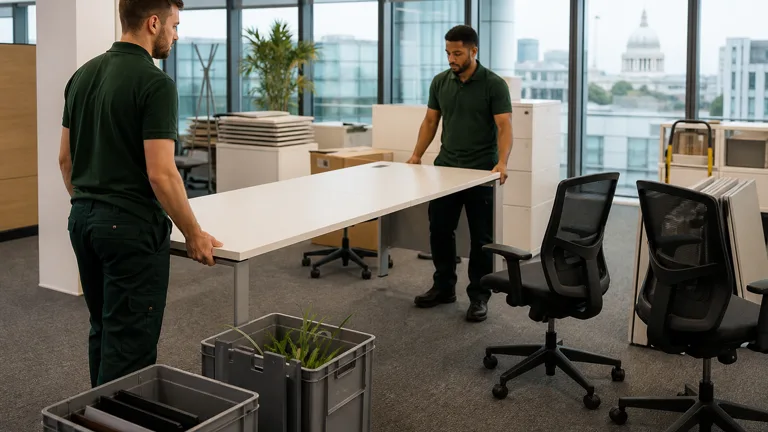
Desks, chairs and freestanding storage removed after confidential records, data-bearing devices and retained equipment are identified.
Office moves, hospitality resets and warehouse apartments
Shoreditch clearances often sit inside active workplaces or nightlife premises. We identify the waste source, agree a quiet service window and keep customers, staff and residents away from the carrying route.
Shoreditch work patterns
Desks, chairs and freestanding storage removed after confidential records, data-bearing devices and retained equipment are identified.
Accepted furniture and packaging collected separately from food, oil, glass, gas cylinders, chemicals and fixed appliances.
Large domestic furniture measured against goods-lift doors, long corridors and controlled courtyard access.
Shoreditch operating hours
Offices, studios, bars, cafés and mixed-use warehouse buildings can share service yards and lifts. A collection that looks simple after closing may be impractical during deliveries, a lunch rush or an event changeover. Identify the premises contact, correct service entrance and period when furniture can move without crossing a live queue or busy workspace.
Photograph separate groups for furniture, electrical equipment, packaging and dense or liquid material. Show the corridor, lift, gate and lawful vehicle position. State whether security needs a booking reference or whether neighbouring units use the same yard. This lets us assess an operational job rather than an anonymous pile behind a commercial postcode.
Operational clearance table
| Premises | Typical load | Access evidence | Keep separate |
|---|---|---|---|
| Office | Desks, chairs, storage and IT | Lift, reception, bay and access window | Data, batteries and retained equipment |
| Café or bar | Tables, stools and packaging | Trading hours and service door | Food, oil, glass, chemicals and cylinders |
| Studio | Shelving, props and equipment | Goods lift and shared yard | Paint, solvents and specialist materials |
| Warehouse flat | Furniture, boxes and appliances | Floor, corridor, lift and gate | Other residents’ property and fixed fittings |
Gas cylinders, chemicals, fuel, paint, clinical waste, asbestos and unidentified liquids must not be mixed with ordinary contents. Declare them before booking.
Service yards and shared lifts
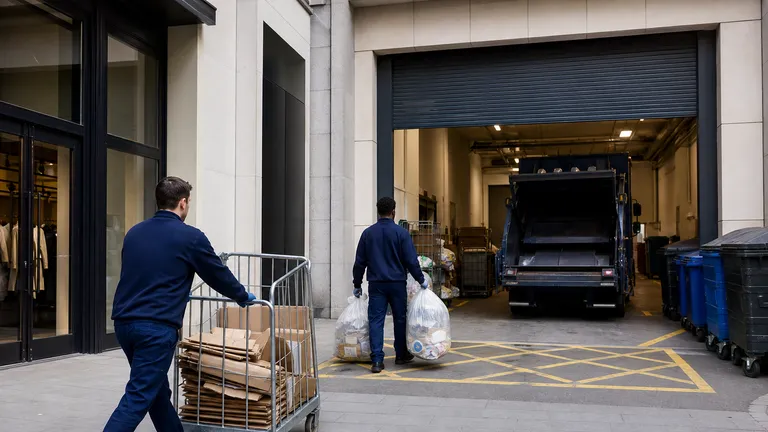
Confirm lift availability, internal dimensions and any protective-cover requirement. Loading yards may impose vehicle limits or short slots; provide the management contact and gate procedure. Waste cannot be left in a service corridor while a key or permission is found.
If the route crosses customer or staff areas, designate a quiet period and keep people clear. Large tables, sofas and counters need measurements. Fixed bars, extraction, plumbing and wiring are not assumed loose contents. For workplace furniture, use our office clearance service to document the inventory and access plan.
Commercial price guidance
From £55
From £120
From £180
From £240
The bands provide an initial guide. Final pricing reflects actual volume, weight, material and labour. Long corridors, lift rules, dismantling, security procedures and restricted loading windows can increase crew time. Applicable supplementary charges are confirmed before loading.
Building debris must be assessed separately from packaging and furniture. Tile, plaster, rubble and soil are dense; send quantities and use builders clearance for accepted refurbishment waste.
From business brief to handover
List items by department, room or trading area. Count furniture and electrical equipment; give wide views for scale and close images for dense sacks or unusual material. The organisation should address confidential documents and data before collection. Do not ask a driver to decide whether equipment is obsolete.
We assess accepted material, weight, volume, route and labour. The authorised contact meets the crew, confirms the load and receives the final quote before loading. Additions from another tenant or contractor are reassessed. Deep cleaning, disconnection, fixed-furniture removal and specialist waste routes remain separate unless explicitly arranged.
List furniture, electricals, packaging and specialist material separately.
Choose a service period away from customers and deliveries.
Arrange security, lift, yard and loading-bay access.
One contact approves the final scope before loading.
Hospitality and technology
A café or bar should distinguish daily food, glass and oil streams from a one-off removal of tables or freestanding equipment. Refrigeration and appliances must be safely disconnected. Cleaning chemicals, aerosols and cylinders stay visible and require separate confirmation. Fixed counters and extraction are not ordinary collection items.
Offices should list computers, monitors, printers and batteries separately from furniture. Remove confidential data before collection. Suitable desks and chairs can follow office clearance; recurring accepted business rubbish may need a planned daily rubbish collection rather than repeated ad hoc piles.

Near Shoreditch
Shoreditch questions
A suitable access window can be arranged when the premises, security and loading rules are provided in advance.
List electrical items separately and resolve confidential data first. Their handling differs from ordinary furniture.
Keep recurring food, oil, glass and chemicals separate from a one-off furniture collection and describe each stream.
Fixed installations and extensive dismantling are not assumed. Request a specific assessment with photographs and construction details.
Reserve an authorised period and identify the correct gate, unit and contact so neighbouring operations remain clear.
No. Paints, solvents and unidentified liquids must be isolated and declared for separate acceptance.
It can add carrying time, particularly with bulky furniture. Show the complete route and lift position in advance.
Plan around the premises
Send the grouped inventory, service route, business contact and quiet loading window in a single operational brief.