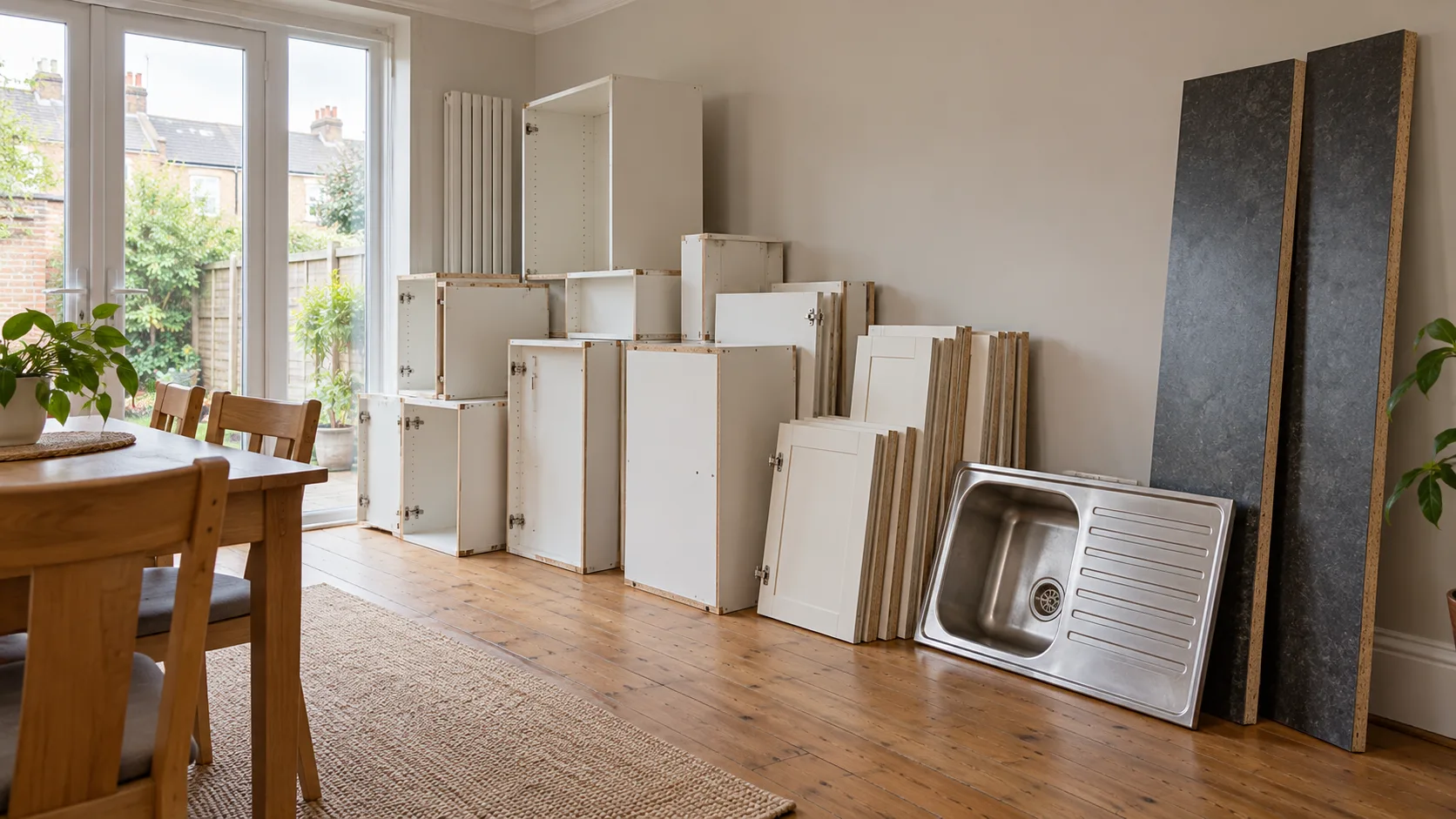
A kitchen refit can produce several very different waste loads within a few days. The old cabinets take up van space even when they are light. A stone or tiled worktop may be difficult to lift. Appliances need an electrical-waste route. Packaging from the new kitchen can fill a room after the old one has gone. Treating all of this as “one kitchen” hides the details a collection team needs. Kitchen refit waste sorting works best when it starts with the removal plan, follows each stage of the installation and ends with a checked handover.
This guide is for household kitchen projects in London. It explains how to describe materials and arrange a practical collection; it does not determine a legal waste classification for an unknown item or guarantee acceptance by a particular site. If a hired fitter creates the waste, agree who handles it. GOV.UK states that waste produced by a hired tradesperson during construction or renovation is business waste and that the tradesperson is responsible for removing and disposing of it correctly. That question should be settled before the first cabinet comes off the wall.
Map the removal stages before the fitter starts
Make a list of what will come out: wall and base units, doors, drawers, handles, plinths, cornices, worktops, splashback, sink, taps, flooring, lights and appliances. Record approximate dimensions and materials where known. A useful entry is “six chipboard base units with laminate doors”, rather than “old cupboards”. A long worktop should have its approximate length and thickness noted. The list need not be a technical survey, but it should make hidden weight and awkward shapes visible before a vehicle is booked.
Ask the fitter which parts they will detach and whether their price includes carrying, loading, collection and disposal. Some quotes cover installation only; others include an allowance for removing the old units but exclude tiles, flooring or an unexpected second layer. If the job happens over a week, ask whether waste will be collected once at the end or after demolition. A single final collection may save coordination, but only if there is a safe place to keep the old material during the fit.
Photograph the installed kitchen, then photograph each material group after removal. The first images help explain what is expected; the later images prove the actual volume. Keep a running count rather than relying on the original plan, because damaged backing board, extra tile layers and unused new materials often appear only during work. Our guide to photographing rubbish for a collection quote shows how wide views and close details can complement a written inventory.
Consider access before stacking anything. A kitchen on the fourth floor without a lift presents a different carrying job from one beside a driveway. Measure narrow doorways and stair turns for long worktops or a range cooker. Note the distance to lawful loading and any time-limited parking restriction. The London parking and loading guide is useful when preparing those details. Do not fill a communal corridor or block a fire exit while waiting for the collector.
Separate cabinets and reusable fittings by condition
Kitchen units are often a mix of particleboard, MDF, solid wood, laminate, metal fixings and glass inserts. Keep doors and drawers with their units if reuse is realistic, and label a complete set. If hinges and handles are sound, put them in a marked bag rather than throwing them into a rubble sack. A potential recipient needs dimensions, condition and photographs of any damage. Do not describe water-swollen or mould-damaged board as reusable just because the doors look tidy in one picture.
Some units may be too damaged to reuse but still need a clear material description for collection. Count flat cabinet panels separately from intact boxes. Dismantling can reduce volume, although it adds labour and can expose sharp screws or brittle edges. Ask the collection provider whether it prefers units left assembled, safely broken down, or stacked flat. Never remove fixings from a wall if doing so could disturb a service or leave a heavy unit unsupported; that remains part of the fitter's work plan.
North London Waste Authority's DIY guidance suggests considering reuse when updating a kitchen and identifies small amounts of DIY materials that qualifying households may bring to its sites. Reuse is a possibility, not a guaranteed destination. If you arrange a donation or sale, give the item a collection deadline that does not interrupt the fit. A last-minute no-show should not leave the fitter working around a pile of old units. Put anything without a confirmed recipient back into the collection inventory.
Keep metal sinks, taps, rails and handles visible rather than buried inside cabinet boxes. A stainless-steel sink may have a different recovery route from composite worktop offcuts. Disconnect plumbing safely and drain fittings before transport. If a sink has a waste-disposal unit or electrical component attached, describe that too. Include glass doors and mirrors as a separate line, especially if they are cracked or framed. The aim is a pile the collector can understand at a glance, not a perfect material laboratory.
Describe worktops without assuming their weight or route
Worktops can be laminate over particleboard, solid timber, stainless steel, natural stone, engineered stone or a composite. Give the material if confirmed by the installer; otherwise say it is unknown and provide clear photographs of the top, edge and underside. Measure each section. A worktop that fits along a wall may not turn through the exit doorway in one piece. Agree who makes any necessary cuts as part of the controlled renovation work; the waste collector should not be surprised by a request for cutting on arrival.
Stone and engineered-stone pieces deserve particular care. They can be very heavy, and cutting or grinding them creates hazardous fine dust. HSE guidance on stone worktops explains the health risks of respirable crystalline silica and the controls needed by those doing such work. A household collection plan should state that pieces are already safely detached and the approximate size and weight if known. Do not dry-cut a slab merely to make it fit a van or assume an ordinary rubbish crew will do stone processing.
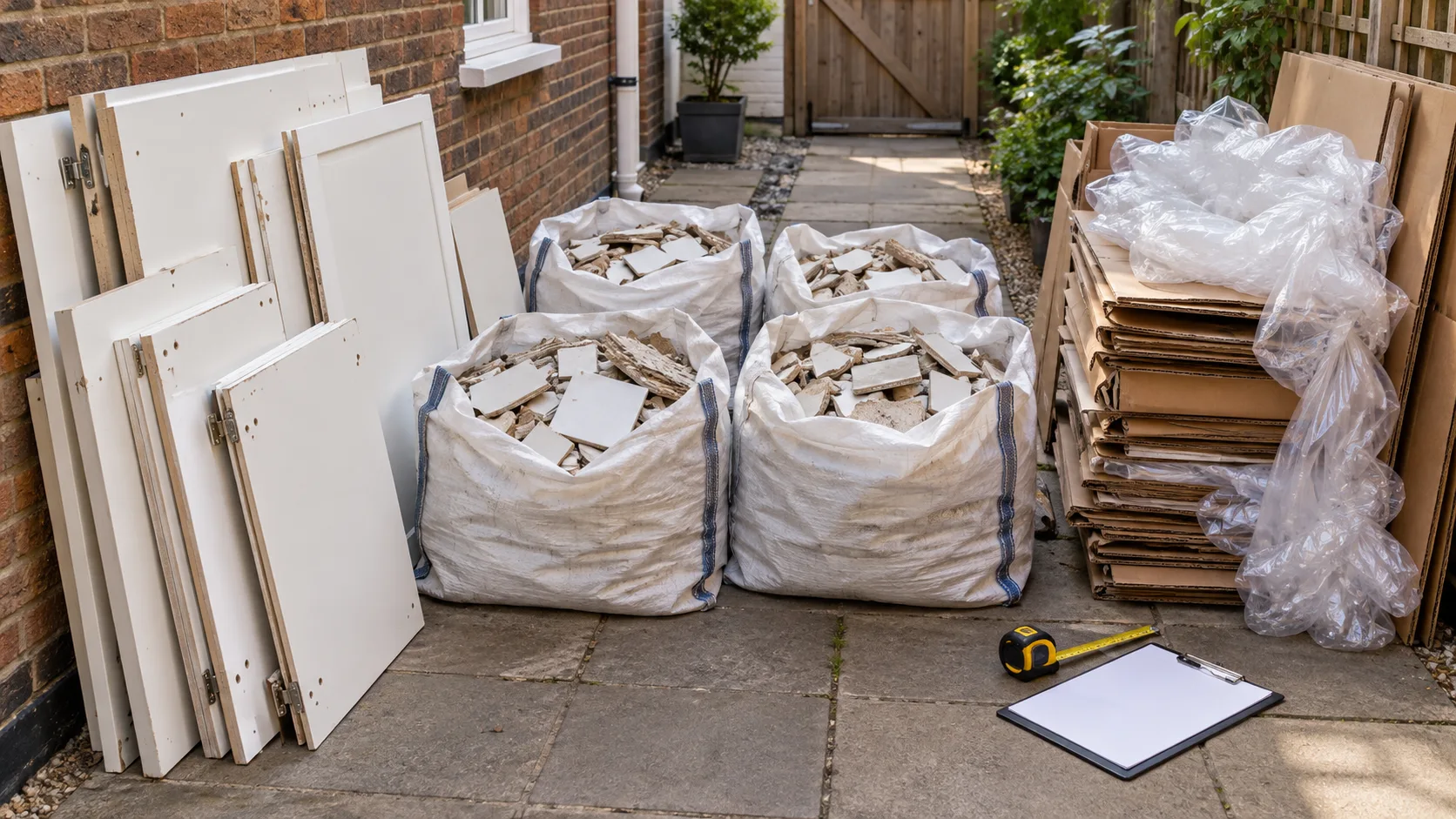
Keep broken tile and mortar fragments in manageable bags. Count bags and say how full they are; a bag of ceramic or stone pieces can become too heavy before it looks full. The guide to why heavy waste changes a van-load quote explains why volume alone is not enough. If the splashback is still attached to backing board, do not label the whole assembly “clean rubble”. Note the mixed material and ask how it should be handled. Separate plasterboard and gypsum-based board from mineral rubble where feasible; our plasterboard separation guide covers why that distinction matters.
Flooring brings another material stream: ceramic tiles, vinyl, laminate, timber or underlay. Describe what has been lifted and what remains attached. Old adhesive, levelling compound and board can make the pile harder to classify from a distance. If an unknown layer or suspect material appears, stop disturbing it and arrange appropriate assessment before ordinary collection. Do not make a “non-hazardous” claim based on appearance alone. The collector needs an honest inventory and a chance to exclude uncertain material.
Give appliances their own collection plan
A kitchen refit may involve a fridge-freezer, oven, hob, extractor, dishwasher, washing machine or microwave. List each appliance by type, size and condition. Say whether it still works, whether it is built in, and whether it has been safely disconnected. A usable appliance may be suitable for resale or reuse if a recipient can collect it promptly; an unusable one needs an appropriate electrical-waste route. Recycle Now lists options for white goods, including some recycling centres and local authority bulky-electrical collections. Availability depends on the area and item.
Keep cooling appliances upright and intact as directed by the chosen provider. Do not strip out a compressor, puncture the cooling system or put a fridge-freezer into a pile of general builders waste. Confirm whether the installer, new-appliance retailer, council or private collector will take it. GOV.UK's household waste guide also notes retailer take-back when buying a replacement electrical item with the same function. Check the retailer's current terms and timing before relying on this route.
The same question applies to smaller electrical fittings. An extractor fan or under-cabinet light is not merely a plastic offcut. Ask a competent person to disconnect fixed wiring and keep the removed item separate. If a built-in appliance is not yet disconnected, state that clearly; a collection booking cannot assume the team will carry out electrical or plumbing work. Gas appliances require appropriately qualified disconnection. Confirm the boundaries of work with the fitter before requesting removal.
Appliances can dominate the carrying plan even when the building materials dominate the weight. Measure the exit route and tell the provider about stairs, lifts and steps. Empty food, water and loose contents where safe. Do not place an old fridge or cooker outside on a public pavement while waiting for a booking. Keep the handover route clear and ask whether the team needs any doors removed by the installer before arrival.
Keep packaging, liquids and special materials apart
New cabinets and appliances bring cardboard, protective film, polystyrene or foam, straps, timber pallets and plastic bags. This clean packaging should stay out of wet or dusty demolition debris where practical. Flatten cardboard after checking for fittings and manuals. Record how many sacks or stacks the packaging occupies. It may be light but can fill much of a vehicle. A quotation based only on the old kitchen might miss the delivery waste completely.
Keep unused tiles, spare handles, matching paint and a few labelled repair pieces only when they serve a real future purpose. Return unopened products where the retailer's rules allow it. A large pile of “maybe useful” leftovers that has no storage plan becomes another disposal problem. Conversely, do not throw away a matching cabinet door or tile while the installer is still checking whether it is needed. Use a marked keep area physically separate from the waste zone.
Paint, sealants, adhesive, solvents and cleaning products should remain in their labelled containers. Never pour them into drains or hide them inside a tile bag. Tell the collector about each container and ask what is accepted. The guide to leftover paint tins outlines questions to ask before choosing a route. If an old material is unidentified or appears hazardous, do not mix it with ordinary renovation waste. Arrange assessment and the suitable specialist path first.
The origin of the load matters for a recycling-centre visit. Small DIY allowances differ between London boroughs and site operators. Check your own council's current rules for residency, booking, vehicle type, quantities and the exact materials accepted. A fitter's waste should not be presented as the resident's personal small DIY load. A council centre may reject mixed bags even where it accepts clean wood or rubble in separate areas. Ask before loading a vehicle, particularly if the material includes appliances, gypsum board or liquids.
Send an itemised request and check the final pile
Once removal is complete, update the inventory with actual quantities. A concise message might say: “Eight dismantled chipboard units and sixteen doors, two laminate worktop sections approximately two metres long, one stainless-steel sink, five partly filled bags of ceramic tile debris, three sacks of clean packaging, and one disconnected dishwasher. Ground-floor kitchen; side gate; legal loading 20 metres away.” Change every detail to fit the job. Mention unknown worktop material, glass, gypsum board, chemicals and any appliance that remains connected as separate exceptions.
Ask the provider to confirm which streams it accepts, whether dismantling or carrying is included, how heavy items are charged, and what happens if the final pile differs from the photographs. The guide to what a rubbish removal quote includes is useful for comparing scopes. A collection team should not have to discover an extra oven or a stone slab behind the cabinet stack. Send a new photograph when the project changes.
For a private collection, check that the carrier is registered for the waste being taken. GOV.UK says householders giving waste to someone else must make sure the recipient is legally allowed to take it. Keep the agreed scope, carrier details and receipt. If a stream is excluded, record it and arrange another suitable route rather than leaving it beside the bins. At the end, walk through the kitchen, storage area and loading path. Count what remains against the inventory before calling the clearance complete.
A good kitchen refit collection plan gives each component its proper place: units and reuse candidates, long or heavy worktops, dense tile debris, separate electrical appliances, and the packaging from the new installation. With that information, a provider can assess the actual load and access. For an agreed London collection of accepted kitchen-refit material, send Rubbish Please the itemised list, photographs and carrying details.