
A bed frame can look like one bulky item in the bedroom but become several awkward pieces on the way out. The headboard may be wider than the stair turn. Long side rails may fit the lift only at an angle. Slats and fixings can scatter when a frame is dismantled in a hurry. Before booking collection, decide whether the frame is suitable for reuse, whether it must come apart to leave the property, and who will do that work.
This guide deals with the frame rather than the mattress. The two may have different collection rules and prices. A wooden platform bed, metal frame, divan base, bunk bed and storage bed also present different handling tasks. Describe the actual model and condition when you ask a council, reuse organisation or private collector what it can take. The aim is a safe, complete handover with no missing pieces or last-minute dismantling surprise.
Identify the frame and every component
Start with a simple inventory. Is it a single, double, king or another size? Is the base a solid divan, a platform, a metal rail frame or a frame with individual slats? Count any drawers, storage panels, detached headboard, footboard, centre support and legs. A bed that was assembled in the room may not fit out in one piece. Photograph it before changing anything, then photograph the underside or connections if they help explain how it comes apart.
Keep the mattress out of the frame assessment. If it is also leaving, list it separately, with its size and condition. Do the same for bedding, bedside cabinets and any other furniture. A booking for a bed frame is not automatically a booking for everything around it. The list also helps a reuse recipient decide whether the frame is complete and whether it has transport space for the longest section.
Look for damage that changes the route. A cracked support, loose weld, warped rail or missing bolt may make reuse unsuitable even if the bed still stands. Do not promise a recipient a complete working frame if you cannot account for the supports or fittings. For a divan with fabric covering or a hydraulic storage mechanism, mention those features because the collector may classify and handle the base differently from simple wooden rails.
Decide whether reuse is realistic before dismantling
A clean, sound and complete frame may have a second life. Ask a furniture charity or direct recipient whether it accepts the exact type and whether it wants the frame assembled for inspection or disassembled for transport. One charity's acceptance policy does not apply to all. For example, the British Heart Foundation explains that missing parts affecting use can prevent a furniture donation. Get the recipient's decision before arranging a collection or taking the frame apart.
If reuse is agreed, keep all original fixings and assembly instructions where possible. Photograph the frame before disassembly, label which rail belongs on each side, and put bolts and brackets in a secure bag attached to a large component. Do not substitute random screws for missing structural fittings. A prospective user needs to know whether the frame can be assembled as intended. Note any cosmetic marks honestly; hiding defects can result in a refused collection at the door.
A bed frame that is unsafe, incomplete or refused for reuse should be booked as waste through a service that accepts it. Do not leave it outside a charity shop. A recipient's decision to take it is the point at which a reuse plan becomes real. Until then, leave room in your timetable for another route, especially if you are clearing a property for a move or tenancy handover.
Measure the exit route before deciding to take it apart
Measure the largest assembled dimensions and the longest separate components. Then check the bedroom doorway, corridor, stair turns, lift opening and building exit. A headboard may pass a doorway upright but fail at the next corner. A long rail may fit a stair flight but leave no room to turn at the landing. Photographs from both directions help a collection team judge the route more accurately than a statement that it is “standard size”.
Allow space for people to carry without scraping walls, catching a handrail or blocking a fire exit. If you are in a managed block, check whether a lift needs booking or protective covers and whether a service entrance is available. Our guide to preparing a flat for bulky-waste collection covers the building side of the job. Tell the collector about stairs, narrow doors, a long walk to the vehicle and any time-limited loading point.
If the intact frame clearly fits and the provider agrees to remove it as assembled, taking it apart may create unnecessary work and extra loose pieces. If it does not fit, ask whether the collection team includes dismantling or expects it to be ready in sections. Do not assume a quote for removal includes tools, labour or repair of any damage caused while dismantling. The exact responsibility belongs in the booking.
Dismantle only what you can do safely
If you will dismantle the frame yourself, find its maker's instructions if available. Empty drawers and storage compartments first. Remove the mattress and keep the work area clear. Some frames use bolts or clips; others have heavy panels, gas-lift mechanisms, electrical adjustments or connections to a wall. Do not release a spring-loaded or gas-assisted section without the maker's procedure and adequate help. For a fixed or complex installation, ask the provider or an appropriate tradesperson what is needed.
Work in a sequence that keeps the frame stable. A second person may be needed to support a headboard or side rail while fittings are removed. Wear suitable hand protection for rough wood or sharp metal edges, and do not stand under an unsupported component. Stop if a connection is seized or the structure shifts unexpectedly. Forcing it can turn a manageable removal into an injury risk and make a reusable frame unusable.
Avoid sawing or breaking sound pieces merely to shorten them. That can create sharp edges, dust and more items for the collector, and it destroys reuse potential. If the only way out appears to be destructive cutting, tell the collection provider before the appointment and agree whether that work is in scope. A divan base or storage bed may require a different plan from a simple bolt-together frame; do not treat every bed as the same flat-pack product.
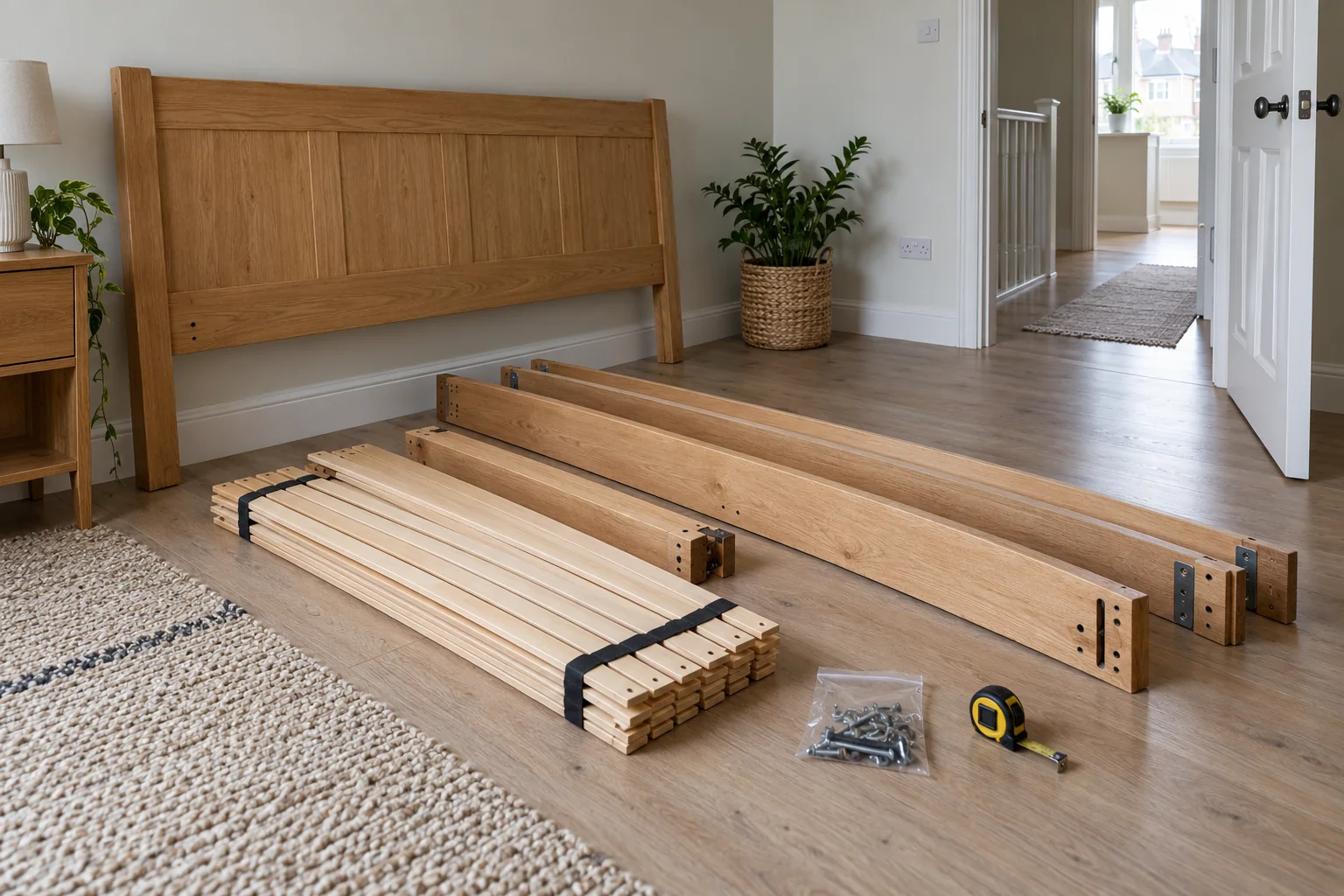
Keep the parts organised for the handover
Group slats together so they do not roll or trip somebody. Keep rails, headboard, footboard and supports in a stable stack away from doors and shared access. Bag small fittings and label them if the frame will be reused. For waste collection, ask whether the provider wants fixings attached or bagged separately. Do not leave sharp screws protruding from boards or metal brackets exposed at carrying height.
Take a new photograph of every piece after dismantling. The finished pile may be larger than the collector expected from the assembled-bed photo. Count the sections, note the longest and heaviest, and update the booking if there are additional drawers or a separate base. A quote based on one wooden frame may not cover a bed frame, divan base, headboard and mattress as four components. Our guide to what a rubbish removal quote should include explains why the exact item list and carrying work matter.
Keep the pieces dry and inside the property until the agreed handover unless the confirmed service specifically instructs otherwise. Do not put rails in a communal corridor or a stairwell. Their length can obstruct neighbours even if they look neatly stacked. If a council requires placement at a particular point, arrange the labour to move the pieces there at the permitted time and check the building's own rules first.
Check what the collection route will accept
GOV.UK directs householders to their local council for bulky-item services. Check the rules for the frame's address: item categories, charges, number of pieces, date, preparation and placement point. A council may count a bed base, frame, mattress or headboard separately. Do not extrapolate a neighbouring borough's rules. If you can take the frame to a household waste recycling centre, check its booking, residency and vehicle rules and ask where wood and metal components should go.
For a private collection, ask whether the team will remove the frame from the bedroom, carry it downstairs, dismantle it if needed and collect every listed piece. Include any other furniture in the quote rather than adding it at the door. If you compare council and private routes, the bulky-collection comparison guide shows how to account for the carrying work and timing. A low kerbside fee and a full inside-property removal are different services.
When handing household waste to a private business, check the collector's registration. The government's waste duty-of-care code advises householders to check for a valid upper-tier waste-carrier registration. Keep the company's details and collection record. Tell the provider if the frame contains mixed materials or an electrical adjustment mechanism so it can confirm the right acceptance route rather than discovering it at pickup.
Make the booking match the actual bedroom and route
Send a compact brief: bed type and size, condition, complete piece list, whether the mattress is included, current floor, lift or stairs, whether it is already dismantled, and photographs of the route. Confirm who handles any dismantling and where the vehicle can lawfully load. Our parking and loading guide for London collections helps with that last point. Update the provider if the frame turns out to have more sections or a difficult connection.
If you want a team to assess removal from the room, Rubbish Please furniture disposal is the relevant service page. Share the inventory and access photos when you request a quote. A confirmed reuse recipient, council booking or registered collector can each be a suitable route when it accepts the complete frame and the carrying arrangement works. The practical test is that every component has a destination and nobody is left improvising with a heavy headboard on collection day.