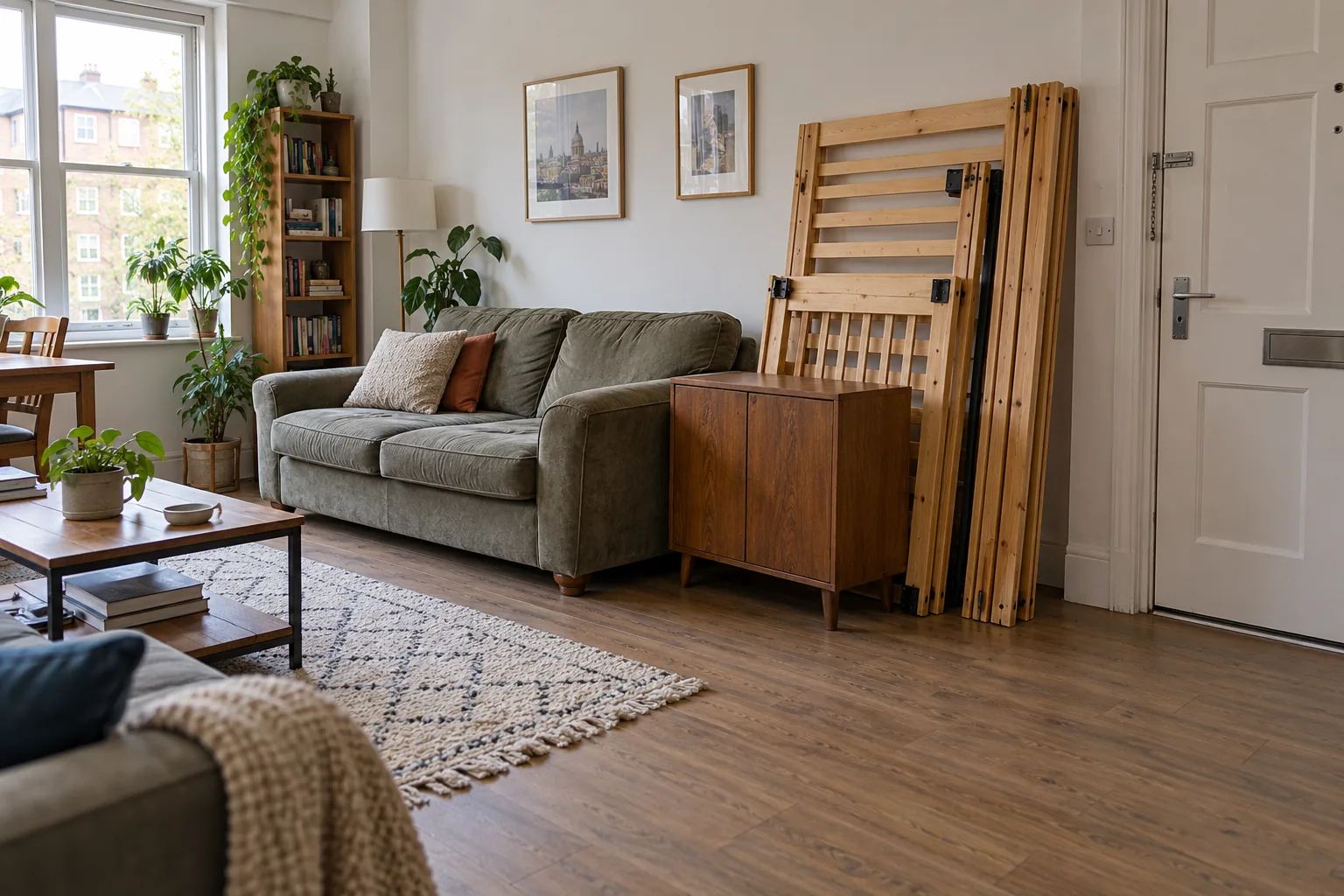
A bulky-waste collection from a flat needs more than an item list. The sofa, cabinet or appliance must leave the room, pass through internal doors, reach a usable lift or stair, cross any communal space and arrive at an agreed loading point. If the collection service expects kerbside presentation while you expect carrying from the flat, the booking may fail even though everyone has correctly identified the item.
Prepare the items and the route together. Measure large pieces, check building rules, clarify who will carry them, and confirm where the vehicle can stop. This guide is about the preparation stage. It does not assume that every council or private provider accepts the same materials or offers the same level of service; check the terms of the service you actually book.
List the exact items and their condition
Write down each bulky item by name, room and approximate dimensions. “One wardrobe” may be inadequate if it has mirrored doors, is fixed to a wall or is too tall for the lift. Photograph the whole piece and any awkward feature. Note whether a bed frame can be dismantled, whether a sofa separates into sections and whether a cabinet contains removable shelves or drawers.
Condition matters. A clean usable piece may have a reuse route, while a broken or heavily damaged one may need disposal. Contact a charity or recipient before reserving the item for them; acceptance rules, collection dates and upholstery or electrical checks vary. If a promised pickup falls through, know whether there is enough time to book a different route before the property deadline.
Check inside furniture before it leaves. Drawers, storage beds and cabinets can hold keys, documents, chargers or personal items. Remove loose contents and secure doors or detachable parts according to the collector's instructions. Do not dismantle heavy or unstable furniture simply to make it look smaller in a quote; ask the provider what preparation is safe and what work its crew can do.
Confirm what the collection service expects
Some services collect only from a specified outdoor point, while others can quote for carrying from inside the property. GOV.UK notes that councils may offer special collections for large household items, but the available items, presentation rules and dates depend on the local council. Read your borough's current booking terms and check whether the item must be outside by a certain time. Do not assume the team will enter a flat.
If you need carrying, choose a provider whose quote expressly includes it. Tell them which floor the items are on, whether there is a working lift, the number of steps and the distance to the vehicle. Ask whether dismantling, loading and disposal are included. A “collection” can mean different work depending on the provider.
Keep the booked list accurate. A team may decline an unlisted extra item or revise the quote if the load changes. If the furniture turns out to be too large for the lift or stairs, contact the provider before the visit rather than leaving it in the communal hall on collection day.
Check the lift before relying on it
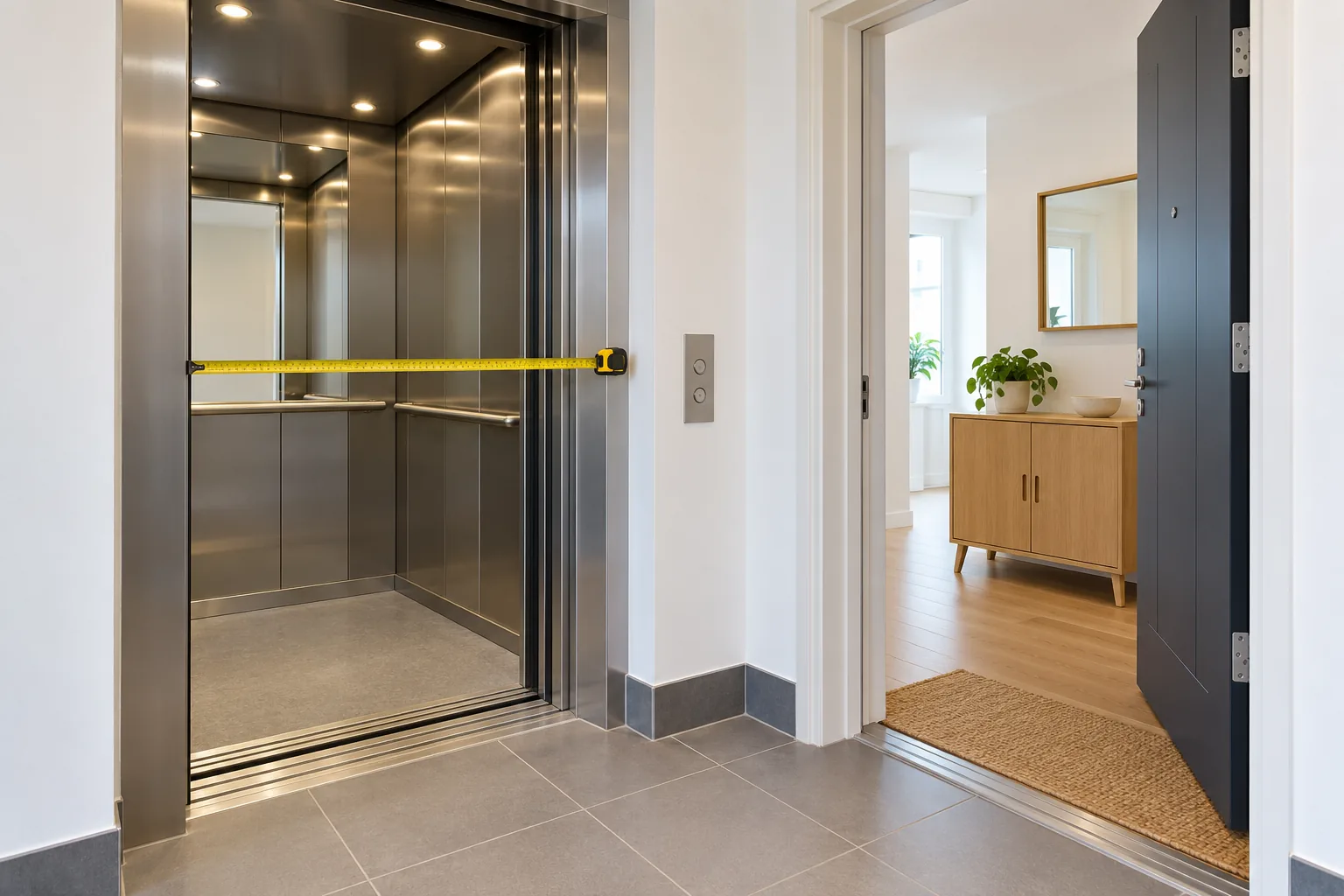
Measure the lift car's usable width, depth and height, along with the door opening. Consider the route into and out of the lift at both floors. A tall cabinet may fit in the car only when tilted, but the lobby may not provide space to turn it. Check any weight limit and follow the building manager's instructions. Do not wedge open doors or overload the lift to save a trip.
Ask whether the building requires a lift booking, protective padding or a particular moving time. Some lifts are unavailable during maintenance or peak periods. If the lift cannot be used, give the provider the stair details before accepting the quote. A job assessed as a short lift journey can become very different when every piece must be carried several flights.
Photograph the lift entrance, corridor turns and the narrowest internal doorway. A short video can help explain a complicated route, but still supply clear dimensions for the most restrictive points. The collection team should be able to judge access before arriving with a vehicle and crew.
Protect communal space and neighbours' access
Keep fire exits, corridors, stairwells and doorways clear. A communal landing is not a storage area for an old sofa while you wait for the van. If an item must pass through a shared lobby, plan a direct movement at the agreed time and have a person available to manage building access. Check whether a manager or concierge needs notice.
Remove loose rugs, small boxes and other trip hazards from the route inside your flat where it is safe to do so. Point out fragile flooring, tight corners or finishes that need care. Ask the provider what surface protection it uses and whether that is included. Avoid placing loose plastic or boards on stairs in a way that creates another hazard.
If the only route is through a neighbour's space or a controlled service entrance, obtain the necessary permission before booking. Do not assume a collection crew can negotiate access on arrival. Keep doors secure after the move and check the route for fragments or packaging when the job is complete.
Agree the loading point and parking plan
Identify where a vehicle may legally stop and how far the team must carry each item from the building entrance. Photograph the street and any gate, courtyard, basement parking or service bay. London restrictions differ by borough and street, so check the actual signs and any building rules. A short carrying route on a map may be long in practice if the vehicle cannot use the nearest entrance.
If a permit, loading-bay booking or concierge approval is needed, confirm who will arrange it. Do not promise access to a private bay that has not been reserved. Tell the collector about intercoms, coded gates and the person who will meet the crew. If the collection is through a council scheme, follow that scheme's presentation point rather than choosing an easier-looking spot yourself.
The loading plan is part of the quote. A team carrying furniture down a lift and across a courtyard needs different time from one loading directly outside a ground-floor door. Give accurate information now to reduce surprise charges or a missed pickup.
Separate items that need another route
Not everything large is ordinary bulky waste. Fridges, televisions and other electrical equipment can require a dedicated route. Batteries, paint, fuel, chemicals, gas cylinders, sharps and unidentified containers should not be hidden inside a cabinet or mixed with furniture. Tell the provider exactly what you have and ask whether it accepts those materials. Some will need a specialist or local-authority option.
If an appliance is being replaced, ask the retailer whether it offers an old-item take-back service and what preparation it requires. If the old item contains food, water or personal information, follow the chosen provider's instructions before pickup. Do not remove technical components or force a heavy appliance into a corridor to make it more visible.
Our furniture disposal service may suit a few bulky household pieces, while waste removal covers a broader load. The price guide is indicative until the items, access and material are assessed. Ask about restricted goods before booking, not when the team is already at the door.
Do a final item and route check
On the day before collection, confirm the item list, access slot and contact number. Empty storage compartments, protect important possessions and keep the carrying route free. If the building has a lift booking, remind the person meeting the team. Check the weather if an item must be presented outdoors under the booking terms; do not leave reusable furniture exposed unless the recipient has agreed to that arrangement.
Meet the crew, point out the agreed pieces and confirm what must remain. After removal, walk the flat and communal route, check for loose parts or debris and keep a receipt. GOV.UK advises checking that a private business taking household waste is an authorised waste carrier. The record helps show who collected the items.
If you can provide photographs of the bulky pieces, lift or stair dimensions and a realistic loading point, contact Rubbish Please for an estimate. A precise flat-access plan makes the collection easier to assess and reduces the risk of a large item being stranded between the room and the van.