Purpose-built apartment
Furniture and bagged contents may travel through a concierge-controlled lift, internal car park or service corridor. Give the floor, lift dimensions and usable collection period.
Riverside flats, converted homes and business premises
A collection near a busy commercial road can involve a very different route from one in a riverside apartment or residential side street. We assess the load, the building and the realistic vehicle position together before confirming the work.
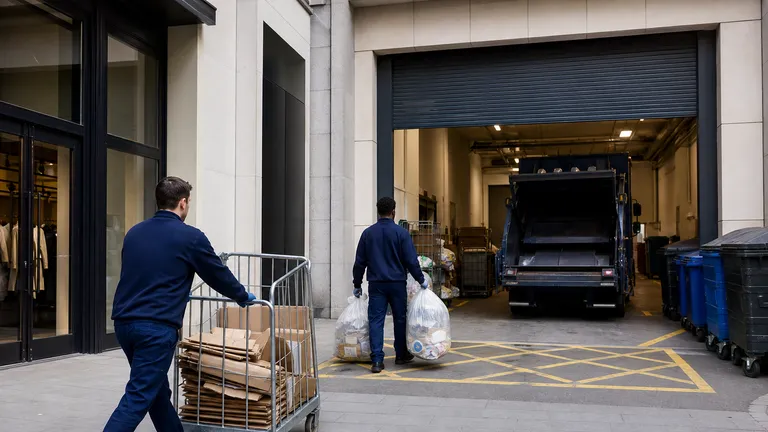
Identify the setting first
Furniture and bagged contents may travel through a concierge-controlled lift, internal car park or service corridor. Give the floor, lift dimensions and usable collection period.
A small upper-floor load can involve sharp stair turns and no holding space. Photograph the landing and measure furniture that may not leave assembled.
Desks, chairs, shelving and boxed equipment need a named contact and a clear distinction between waste, stock and working assets.
The access corridor
The nearest entrance may not be the entrance the crew is allowed to use. Managed developments can route removals through a basement, loading bay or rear service door. Older properties may have a direct front entrance but several internal flights before the street is reached. Describe the approved route, not merely the easiest-looking one.
For each collection point, record the floor and approximate distance to the exit. Mention entry codes, key holders, lift booking and doors that cannot be propped open. Outside, show where a vehicle may stand legally and practically. If the carry crosses a courtyard or underground car park, include height restrictions and any trolley rules supplied by the building.
Do not leave waste in a communal corridor while waiting for collection. Fire doors, escape routes and neighbours’ access must remain usable. If the building changes the agreed window, tell the team before attendance.
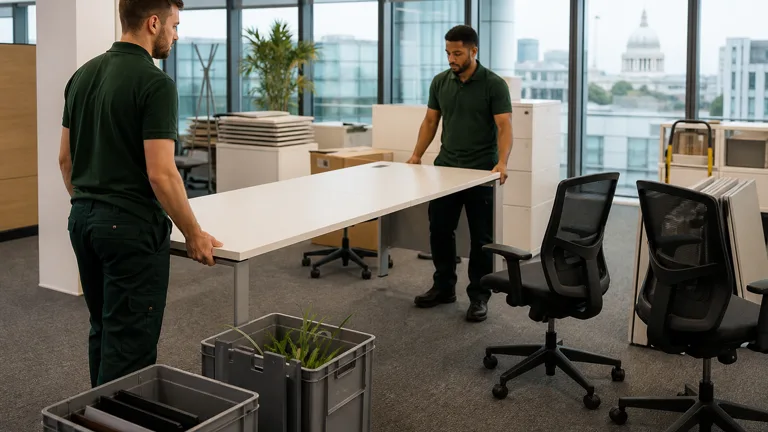
Workplace handovers
A row of desks may be obvious, but pedestal contents, monitors, cables, archive boxes and kitchen equipment are easily missed. Assign one person to confirm the inventory. Remove confidential papers and data-bearing devices unless their handling has been specifically agreed. Mark rented equipment and anything transferring to the new premises.
Use office clearance for a workplace move or refit. For regular compatible business waste, discuss commercial waste collection. A one-off furniture group should still list each unusually large or heavy piece.
Material and route table
| Property or project | Common material | Access question | Best next step |
|---|---|---|---|
| Apartment move | Furniture, bags, small electricals | Is the service lift booked? | Photograph each room and the route |
| Office refit | Desks, chairs, storage, packaging | Which loading window is authorised? | Nominate a site contact |
| Home renovation | Units and declared compatible debris | How are dense sacks carried? | List material and likely weight |
| Basement storage | Boxes, shelving and household items | Are the stairs safe and clear? | Show steps and door width |
Unknown liquids, paint, fuel, gas cylinders, asbestos, clinical material and other restricted waste must be identified separately. Never conceal them inside an ordinary mixed load.
Refurbishment loads
A few sacks of tile, plaster or rubble may weigh more than a much larger group of furniture. State what is inside every dense bag and give a realistic count. Keep reusable fittings, timber, metal and general packaging apart where practical. Sharp edges should be protected and bags must not be overloaded beyond safe handling.
For compatible non-hazardous project material, see builders clearance. Plumbing and electrical disconnection, removal of fixed services and handling of hazardous substances require appropriate specialist arrangements. If the contractor adds material after the quotation photographs, send a new overview.
Use wide views, item counts and close-ups of dense material.
Include floors, lifts, stairs, doors and outside carry.
Agree keys, site contact and the building’s usable window.
The crew checks the presented scope before loading.
A practical sweep can be completed where conditions allow.
Guide pricing
From £55
From £120
From £180
From £240
Prices shown are guides. The final quotation follows the actual volume, weight and waste type, plus the crew time required for stairs, lifts, long corridors, dismantling and the external carry. Vehicle-position constraints and applicable supplementary charges can also affect the total. The team confirms the amount before starting the collection.
Domestic furniture
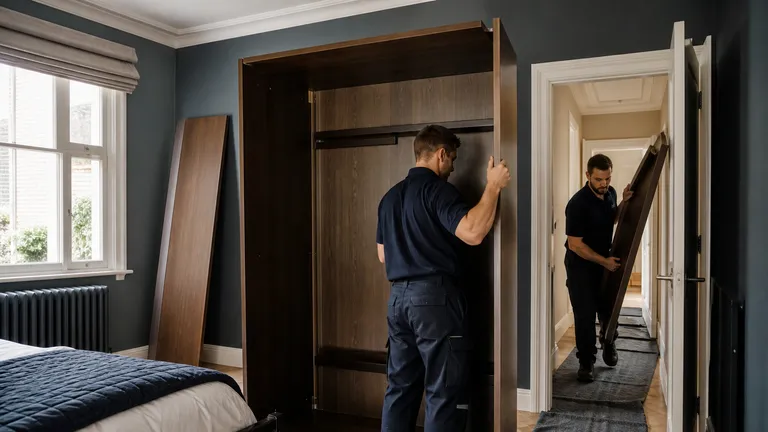
Measure sofas, wardrobes, tables and bed frames against the tightest point on the route. If a piece was assembled inside, explain its construction and send photographs of fixings. Safe dismantling is considered only when agreed. Do not assume the crew will disconnect an appliance, remove fitted cabinetry or carry a piece over a balcony.
Empty all storage furniture and label items that remain. A focused furniture disposal booking may suit a few bulky pieces, while a multi-room household job belongs under house clearance.
Neighbouring service areas
Hammersmith questions
Yes, subject to the building’s access arrangements. Confirm the service lift, route, collection window and person who will admit the crew.
List electrical equipment separately. Remove data and confidential material, and identify batteries or specialist devices before booking.
A photograph helps, but contents and likely weight are essential. State whether bags contain tile, plaster, timber or lighter packaging.
Contact the team immediately. A longer carry or different vehicle position may change working time and the collection quotation.
No. Agreed items can be collected from their stated location, provided the route is safe and accurately described.
Possibly, when its construction, dimensions and route have been reviewed and dismantling is agreed in advance.
Confidential handling should not be assumed. Remove or arrange secure treatment for sensitive documents before an ordinary clearance.
Suitable windows depend on availability and building access. Give the actual permitted period when requesting the booking.
Give us the building as well as the load
Send current photographs, floor and lift details, and the realistic vehicle position.