Garage storage
Separate ordinary possessions from paint, oils, batteries, fuel and unlabelled containers. Unknown liquids cannot be treated as general household waste.
Household, garden and garage clearances
A Chiswick collection can begin in a spare room, continue through a garage and finish at the far end of the garden. We plan every collection point, carry accepted items from their stated location and confirm the price against the complete load.
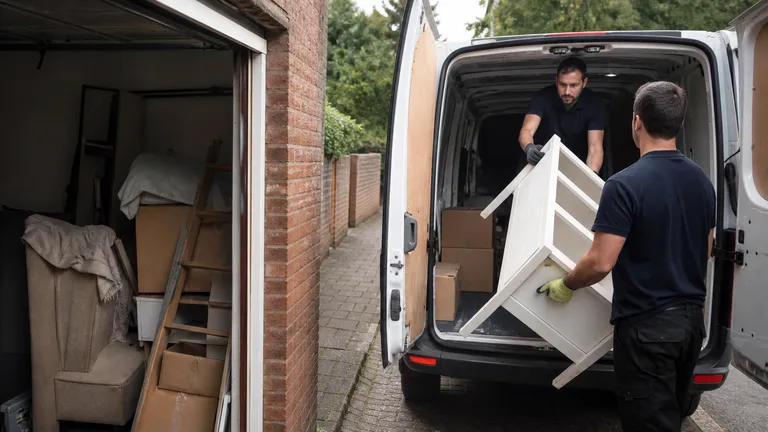
One address, several small jobs
In a family house, unwanted items rarely sit in one tidy group. There may be furniture upstairs, boxes in the garage, broken garden chairs outside and bags waiting in a utility room. A photograph of the largest pile does not represent the whole job. List each area and keep the images in the same order as the inventory.
Explain how the crew reaches every group. A front drive may help with loading but does not reveal steps inside, a narrow side passage or a shed at the back of a long garden. If the only rear route passes through the house, say so before booking so the handling and protection required can be considered.
Garden and side-return access
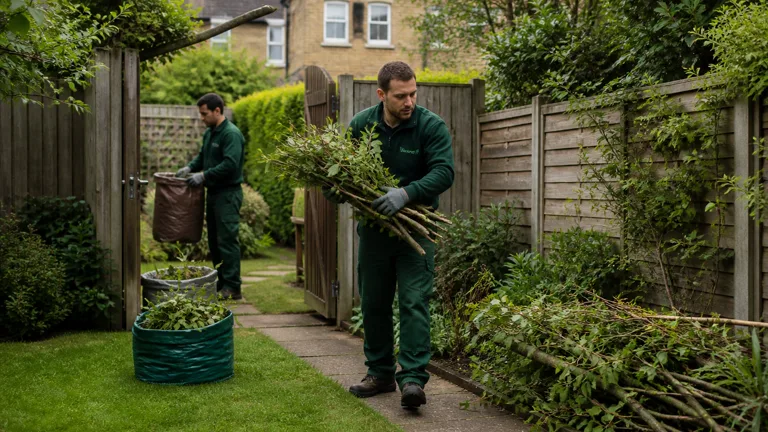
Cut branches to manageable lengths and keep thorny material contained. Leaves and light cuttings can be bagged, but do not hide soil, stone, treated timber or sharp metal beneath them. Wet bags can split during carrying, so tell us when material has been stored outside for some time.
Photograph gates, steps and the narrowest part of the route. Move bicycles and delicate pots away from the carrying line, but keep neighbours’ paths and fire routes open. For an appropriate green load, see garden clearance. Landscaping, digging and removal of rooted plants are different work and should not be assumed.
Practical Chiswick clear-outs
Separate ordinary possessions from paint, oils, batteries, fuel and unlabelled containers. Unknown liquids cannot be treated as general household waste.
Measure sofas, tables and wardrobes against doors and stair turns. Empty drawers and identify pieces that may require agreed dismantling.
Mark items that remain and appoint one person to confirm the scope. Do not mix paperwork or valuables into bags simply to clear rooms quickly.
Property-to-vehicle planner
| Location | Likely contents | Route evidence | Important limit |
|---|---|---|---|
| Upper rooms | Furniture, bags, boxed possessions | Stair turns and door width | No assumed dismantling |
| Garage | Shelving, tools, household storage | Drive or path to vehicle | Declare liquids and batteries |
| Back garden | Cuttings and outdoor furniture | Gate, side return or through-carry | Separate soil and rubble |
| Refurbished room | Packaging and compatible debris | Floor protection and bag route | State dense bag contents |
Asbestos, clinical waste, gas cylinders, solvents, fuel, unidentified chemicals and other restricted substances require declaration and may need a specialist route.
Garage contents
A half-full garage may contain light empty cartons or very dense tools and materials. Show the complete space, then photograph groups separately. List shelving, workbenches and large equipment by item. Old tins and containers should stay upright and identifiable; do not pour, mix or hide their contents.
For a general stored-household load, use garage clearance. Electrical disconnection, vehicle parts, fuel and specialist chemicals need to be discussed separately. Keep access to meters and shared doors clear throughout the job.
Check rooms, garage, loft and outdoor areas.
Keep household, green and project waste distinct.
Record gates, stairs, passages and vehicle distance.
The team checks all groups before loading.
Guide loads
From £55
From £120
From £180
From £240
These are guide prices rather than fixed Chiswick rates. The final amount depends on volume, weight, material type, the number of collection points, carrying distance, stairs, dismantling, access to the vehicle and applicable supplementary charges. Dense garden or renovation material may reach a weight limit early. The final quote is approved before loading.
Large household items
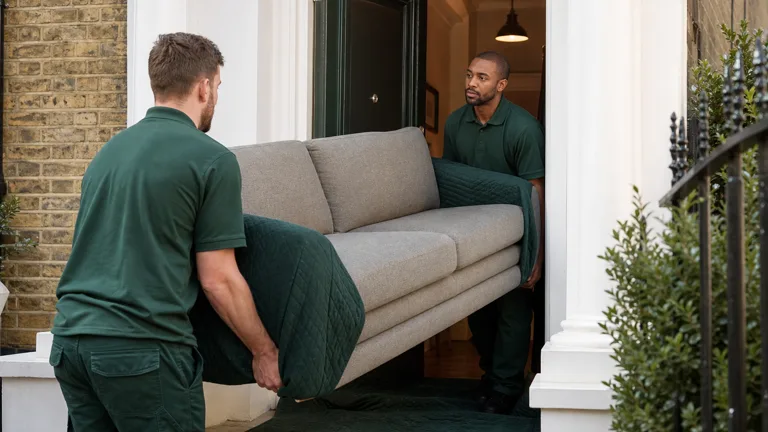
You do not need to move agreed furniture outside. Clear small obstacles from the route and show the crew where each piece is located. If a sofa must turn on stairs or a wardrobe may need dismantling, send measurements beforehand. Protecting access is more useful than stacking everything beside the front door.
A few bulky pieces may suit furniture disposal; clearing several rooms belongs under house clearance. Appliances must be safely disconnected and empty before ordinary removal.
Close to Chiswick
Chiswick questions
Yes. Photograph and list each collection point separately so the total load, route and loading order can be assessed.
Explain the through-house route, floor surfaces, steps and distance. Suitable material should be contained for safe indoor carrying.
Do not place paint or unknown liquids inside general bags. Keep containers separate, photograph labels and ask about the appropriate route.
Only if you can do so safely and without damaging the property. Otherwise send dimensions and discuss whether dismantling can be included.
Tell us their condition. Split or waterlogged bags may need repacking so material can be lifted and carried safely.
Yes, subject to safe access. State the floor, staircase turns, shared entrance and location of bulky items.
Send an updated photograph before attendance. Extra volume or weight can alter vehicle allocation and the quote.
Start at the furthest collection point
Show every room, storage space and outside area included in the job.