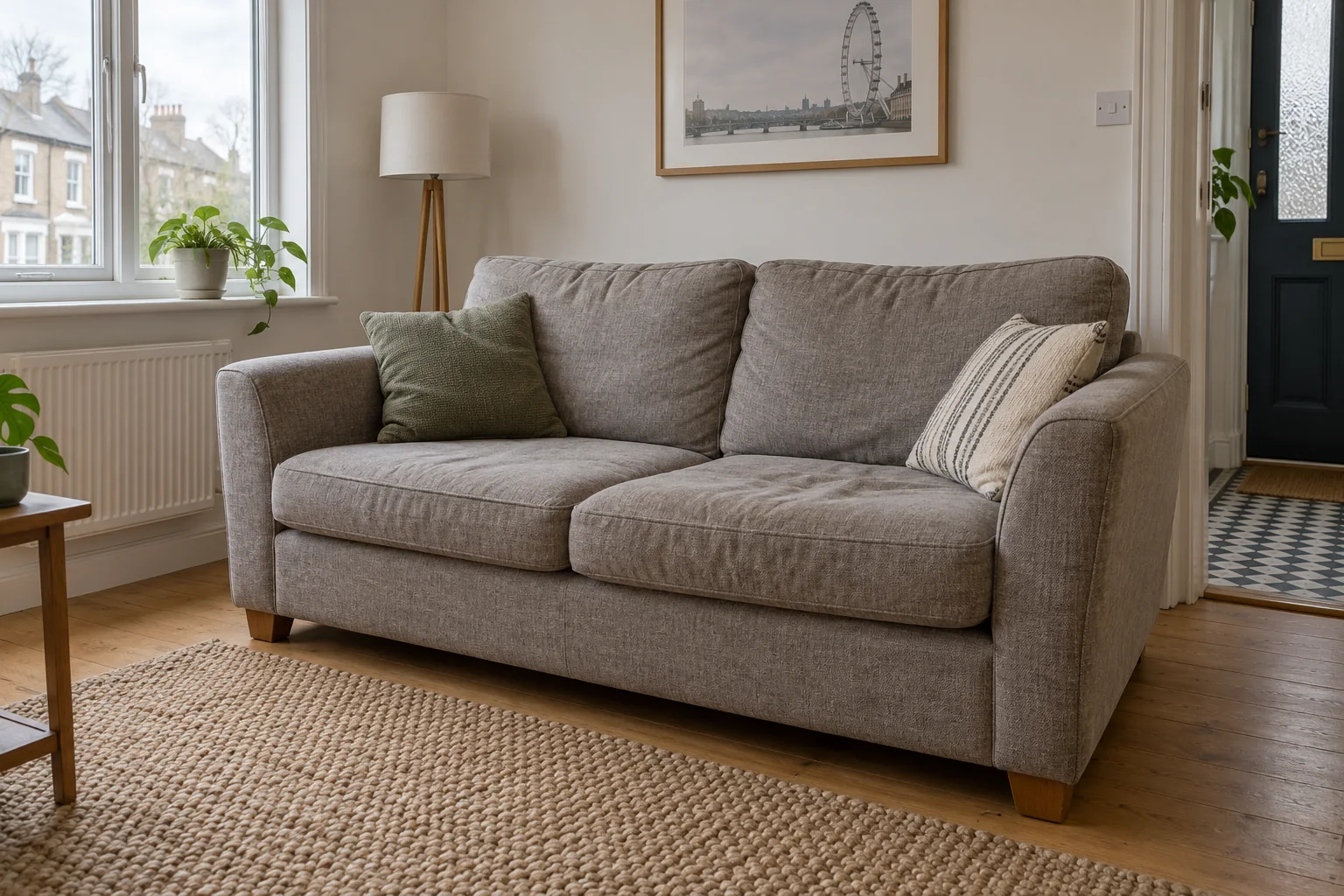
An old sofa can still be useful furniture, or it may have reached the point where it needs to be handled as waste. The responsible route depends on its condition, whether another person or organisation will accept it, and how it can be moved safely from your property. In London, the practical choices often include sale or giveaway, a confirmed reuse collection, a borough bulky-waste service, a household recycling centre that accepts it, or a registered private collector. None is right for every sofa.
Start with an honest assessment. A sofa that looks acceptable from across the room may have a damaged frame, missing cushions or deep staining. Conversely, a sound sofa with minor cosmetic wear might be suitable for a new owner after cleaning. This guide helps you make that first decision, check the current rules for your address and prepare a collection without leaving an unwanted item on the pavement.
Decide whether the sofa can genuinely be reused
Sit on every seat and check whether the frame feels stable. Look at the underside, legs, arms, cushions and any reclining or sofa-bed mechanism. Photograph wear and defects as clearly as you photograph the attractive front. A recipient needs to know the actual condition before arranging transport. Do not describe a broken or heavily soiled sofa as ready for use merely because it is intact.
If the sofa is clean, safe and structurally sound, ask local furniture-reuse charities or community groups whether they currently accept that type and size. Acceptance policies vary. An organisation may ask for a permanent fire-safety label, photographs, measurements, a collection contribution or proof that the item comes from a smoke-free or pet-free home. The label alone does not guarantee acceptance; the recipient makes its own decision. Never remove a label, conceal damage or book a donation pickup before the organisation confirms the sofa qualifies.
Selling or giving the sofa directly to another person may also extend its life. State dimensions, floor level and whether the buyer must carry it. Give a realistic collection window and check how it will leave the building. A free listing is not a disposal plan until someone has agreed to take the sofa. Keep it inside while arranging the handover, especially if rain could make it unsuitable for reuse.
Know when an upholstered sofa becomes waste
Once a sofa is discarded as waste, different handling rules may apply from those for a sofa continuing in use. The Environment Agency's guidance on waste upholstered domestic seating containing persistent organic pollutants includes sofas among the affected seating types. It explains why waste upholstered seating must be kept separate from other waste and managed through an appropriate treatment route. Households should tell a collector that the load includes an upholstered sofa so the operator can plan compliant handling.
Do not try to make a waste sofa fit an ordinary mixed-rubbish booking by cutting off the upholstery or putting loose cushions into general waste. The guidance covers relevant foam and fabric parts too. Nor should you assume that every material can be salvaged for ordinary recycling. A reuse recipient may accept an item that remains a usable product; a discarded upholstered item is a different case. If its status is unclear, describe the condition to the receiving organisation or collection provider and follow its advice.
There is no need for a householder to test a sofa for pollutants before asking for a collection. Your useful job is to identify it accurately as upholstered seating, avoid damaging it while storing or moving it, and choose a route that accepts it. Keep detachable cushions with the sofa and list them in the booking. If it is a sofa bed with a separate mattress, mention both parts because a provider may classify or price them differently.
Check the borough's actual collection and recycling options
GOV.UK directs households to their council for local large-item disposal services. Use the page for the borough where the sofa is located, not a neighbouring council's page. Check whether upholstered sofas are accepted, the fee, the next available date, how many pieces count as one booking, and where the item must be placed. A corner sofa or a sofa bed may have different item-count rules from a small two-seat sofa.
The placement instruction is as important as the price. A council may expect the sofa at a named point at a stated time, and the service may not include carrying it down stairs. If you live in a flat, check whether the building permits items in a shared collection area. Do not leave the sofa in a corridor, lift lobby, fire exit or on a public pavement while waiting. If you cannot move it safely to the required point, ask the council what arrangements it offers or compare an inside-the-property collection.
A household waste recycling centre may be another route if you can transport the sofa yourself. Check your local site before loading a vehicle: opening hours, residency rules, vehicle restrictions, booking requirements and whether it accepts upholstered seating. Some sites direct sofas to a separate area because of the handling rules. Do not arrive with a dismantled, mixed load and assume every part will be taken. Plan how two people will lift the item and secure it in the vehicle without obstructing visibility.
Compare a private collection on the whole job
A private team can be practical when the sofa must be carried from an upper floor, a council date misses your deadline, or other items are leaving at the same time. Ask for a written quote that states the sofa type, number of sections and cushions, location in the property, stairs or lift, loading distance, and any dismantling. Our guide to what a rubbish removal quote should include explains how to compare the complete work rather than a price for an undefined item.
Tell the provider explicitly that it is an upholstered sofa, especially if the request also includes bags or timber. Ask whether the quote includes the relevant disposal route and any separate charge for this item. The provider should explain what it can accept and how the collection will be handled. If you are comparing a private collection with the council, our council or private bulky-collection guide gives a wider decision checklist.
Check the carrier before handing over the waste. The government's waste duty-of-care code says a householder using a private business should check that it has a valid upper-tier waste-carrier registration. Ask for the business name and registration details, use the official register to verify them, and keep the collection receipt or other paperwork. An unusually cheap offer from an unidentified van is a poor basis for deciding where your sofa will end up.
Measure the sofa and the route out
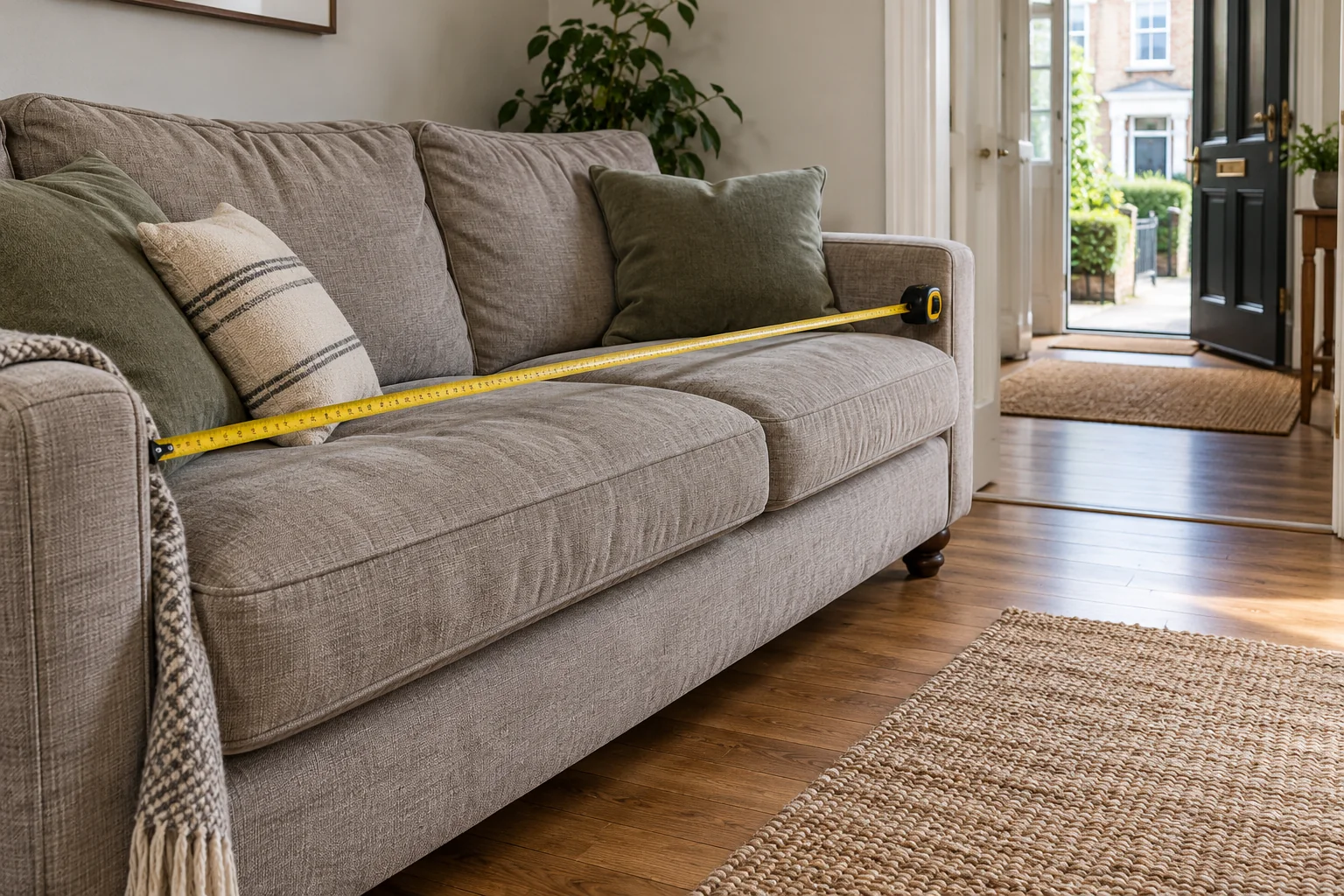
Measure the sofa's width, depth and height, including arms and fixed legs. For a corner sofa, measure each detachable section and note the connection mechanism. Then measure the narrowest doorway, stair turn, lift opening and hallway. A sofa that entered a flat years ago may have been delivered in sections, through a different entrance or before a doorway changed. Do not promise that it will pass through the current route until you have checked.
Take photos from both ends of the route and include any tight corner. Tell the collector the floor number, whether the lift works, where the vehicle may stop, and whether a concierge must open a service door. Our flat bulky-waste preparation checklist goes into building access in more detail. If the sofa is too large to move intact, ask the collection team whether safe dismantling is within its scope before touching it yourself.
Avoid cutting upholstery, foam or the frame simply to reduce the apparent size. Damaging a waste sofa can release debris and complicate the separate handling it needs. Removing detachable legs or sections according to the maker's design is different from tearing the item apart, but the provider should still know what pieces it will collect. Keep screws in a small bag if they belong with an item intended for reuse; for a waste collection, ask the team how it wants loose fittings presented.
Prepare a safe handover without creating a street obstruction
Until the agreed collection time, keep the sofa dry and in a place that does not block an exit. Do not put it outside early on the assumption that a passer-by will take it. Rain can ruin a reusable item, and an unbooked sofa can obstruct neighbours and pedestrians. On collection day, clear ordinary trip hazards along the route. If the sofa is going to a reuse recipient, follow its cleaning and preparation instructions without hiding stains or defects.
Confirm exactly which pieces are included: sofa base, detachable cushions, matching footstool, sofa-bed mattress and any other furniture. Give the collector a recent photograph and tell it if the condition changed since the quote. If the booking is kerbside only, arrange the safe carrying work separately; do not discover at arrival that nobody can move a heavy sofa downstairs. A clear item list and route description reduce delays and make the price easier to understand.
If you need a team to remove an old sofa from inside a London property, Rubbish Please furniture disposal is a relevant service starting point. Send the dimensions, condition, floor level, photos and access details when you request a collection quote. The team can then confirm what it can accept and what the collection includes. If a charity or direct recipient has confirmed reuse, follow that route instead and agree the handover details with them.
Choose the route that matches the sofa's condition
A usable sofa with a willing recipient may have a second life. A waste sofa needs an accepted collection or delivery route that accounts for upholstered seating. A council booking can work well when its date, item rules and placement point suit you. A registered private team can cover carrying and other quoted work when you cannot meet a kerbside handover. Whichever option you select, confirm it before moving the sofa, describe every section honestly and keep the property and public route clear until collection.