
An office move creates a narrow window for deciding what happens to the old desks. Some will fit the new layout, some may be useful to another organisation, and others have damaged surfaces or frames. The challenge is not simply counting workstations. A bench desk may be connected to neighbouring sections, a reception counter may be fixed in place, and an electric sit-stand desk may have a motor and cables that need a different plan from a plain tabletop.
Clearance works best when it follows the move sequence. Employees need working desks until their final day, movers need unobstructed routes, and a waste crew needs an agreed set of items that will not travel to the new office. This guide shows how to inventory old desks, make decisions early, handle dismantling and keep the business waste records aligned with the actual collection.
Make a desk inventory that matches the floor plan
Walk each room and assign an identifier to every desk or desk group. Record whether it is a single freestanding desk, shared bench, corner unit, sit-stand desk, reception desk or built-in counter. Include approximate width, depth and height, material, condition and location. Count associated modesty panels, cable trays, drawers and returns. A photograph of the whole floor is useful for scale but cannot tell a collector which desks are leaving.
Mark each unit as moving, remaining, offered for reuse or intended for waste collection. Do not use colour stickers alone if teams might interpret them differently; keep a written list tied to room numbers. Check it with the person leading the relocation and the team that knows which furniture fits the new plan. A desk may be perfectly usable but too wide for the new space. That makes it a reuse candidate, not automatically waste.
Photograph each desk type and note any loose or damaged parts. A sturdy timber top with an unstable metal frame needs different handling from a sound desk with a scratched laminate surface. If a desk contains a locker or pedestal, empty and count it separately. Remove paperwork, drives, keys and personal objects before a reuse or waste handover; a clearance team should not decide which business records are disposable.
Decide what can move or be reused before the final week
Test the new floor plan against real dimensions, lift capacities and doorways. A desk that occupies one metre on a drawing may need extra clearance for legs, cable outlets or a fixed return. Ask the mover whether an assembled desk will pass the route and whether it will dismantle and reassemble it. If a desk is moving, keep its fittings together and label each component so it reaches the correct workstation.
For surplus desks in usable condition, contact a reuse recipient early. Give exact quantities, sizes, photos, condition and a collection window. A recipient may want a matching batch and may decline damaged or incomplete units. Do not promise that a desk will be available on Friday if staff still need it on Friday morning. Arrange a handover after the last working use but before the lease deadline, with time for a fallback if the recipient cannot collect.
If resale or donation is agreed, document which desks left as products for reuse. Keep that record separate from the waste inventory. Do not leave desks outside a charity site or in a building loading bay without an accepted arrangement. A clear reuse decision reduces waste, but only when another party confirms it will take the desks and the carrying responsibilities are understood.
Separate ordinary desks from powered or fixed units
A freestanding desk with a wooden top and detachable legs is usually straightforward to describe. A height-adjustable electric desk has controls, a motor and cables. A built-in reception counter may be attached to the building and could conceal wiring or services. List these units separately and show their connections in the quote. Do not treat a powered desk as ordinary timber or metal simply because it looks similar from above.
Disconnect work equipment through the office's normal IT or facilities process. Remove computers, monitors, chargers, cables and confidential material before the furniture team arrives. If a desk has an integrated electrical mechanism, ask the supplier or collection provider how it should be handled; do not cut cables or dismantle electrical components as an improvised shortcut. Likewise, a counter fixed to a wall may require a competent contractor to detach it before a waste team can carry it away.
Do not assume a waste collector will accept every unusual unit in a general desk quote. The motorised base, glass screen, metal frame and laminate top may need different treatment once they are waste. Describe them accurately and let the provider confirm acceptance and classification. A clear photograph of the underside can reveal a cable tray, power rail or fixing that a top-down photo misses.
Sequence dismantling around the move, not before it
Set a last-use date for each group of desks. For example, a team that moves on Thursday may need its old desks until Wednesday evening, while an empty meeting room can be cleared earlier. Use the inventory to schedule disconnection, dismantling, moving, reuse pickup and waste collection in that order. Keep a few desks available for any staff who must work during the transition. Unplanned early dismantling can make the office unusable before the new one is ready.
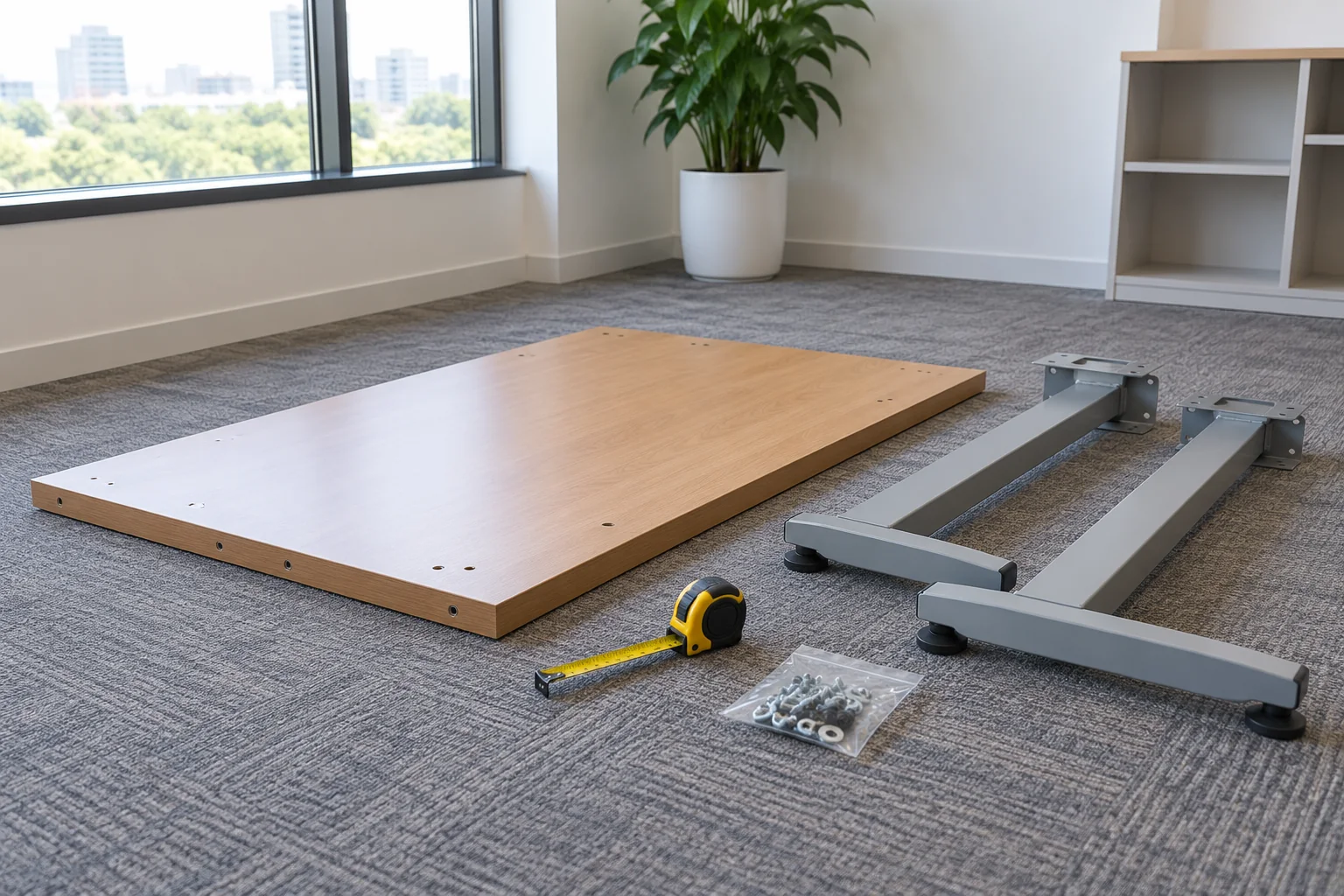
Ask who will take each unit apart and what that work includes. Removing detachable legs from a freestanding desk is different from separating a long shared bench or unfixing a reception counter. Keep fixings with desks destined for reuse or reassembly. For waste desks, tell the collector how many separate tops, legs and panels will result. A quote based on six assembled desks may not account for a pile of twenty-four loose components unless the provider understands the construction.
Store dismantled pieces flat and stable, away from exits and working routes. Do not lean heavy tabletops loosely against a wall or block a sprinkler, fire door or accessible passage. Sharp brackets and protruding screws should be made safe for handling according to the provider's instructions. The Health and Safety Executive notes that assembled furniture such as office desks can be heavy and awkward to move; use the planned crew and handling method rather than asking available employees to improvise a lift.
Check building access and the vehicle stop
An office may have a service lift, loading dock and strict delivery hours. Confirm which are available to the removal team, whether a security escort is required and how long the booking lasts. Photograph the longest desk top beside the lift opening if there is any doubt about fit. If the building is shared, tell management how many trips are expected and whether the move and waste teams need separate slots.
The vehicle must be able to stop lawfully for enough time to load. A desk batch can take longer than its floor area suggests if pieces come from different rooms or floors. Measure the carrying distance from storage point to vehicle, count stairs and note any restricted entrance. Our London parking and loading guide explains why the exact street and bay signs matter. A quote that assumes a van at the front door may fail if the legal loading point is around the block.
Coordinate the collection with the main mover so neither team blocks the other's route. Do not put unwanted desks in corridors while waiting for the truck. If the new office takes only some furniture, check the final list after loading the moving van; a desk accidentally left behind should be identified before the waste crew begins. One accountable person should have authority to resolve an item that is mislabelled.
Quote the exact removal scope and paperwork
Send a desk list by type and condition, photos, floor levels, lift and loading information, and the proposed pickup date. Ask whether the quote includes dismantling, carrying from each room, loading, transport and disposal. Note any powered or fixed units as separate lines. The questions in what a rubbish removal quote should include help identify missing labour or exclusions before collection day.
Business waste has record-keeping requirements. GOV.UK says businesses should minimise waste, store it safely, check the carrier and complete a waste transfer note for each load leaving the premises. Its waste-transfer-note guidance explains what the business and carrier must record and how long to keep the document. Agree the description of the desk load with the provider and keep the note with the inventory and collection confirmation.
If desks leave on two days, record what left on each day. Do not let an estimate for the entire office substitute for the actual transfer details. Confirm the carrier's registration and ask how powered desks or other unusual components will be handled. Our guide to worn office chairs deals with a related but different furniture stream; the desk list should not be merged with a chair count in a way that hides either material or volume.
Finish with a room-by-room sign-off
After the move and collection, compare each room with the original inventory. Check that desks promised to the new site arrived there, reuse recipients collected the accepted units, and all waste desks and detached parts appear in the handover record. Photograph any disputed remainder while access is still available. This is especially useful before a lease inspection or fit-out contractor takes over the floor.
For an office with desks and other unwanted furniture, Rubbish Please office clearance is a relevant service starting point. Send the desk count, type, condition, move dates and route photographs when you request an estimate. The best plan keeps the office working until its final day, gives every reusable desk a confirmed recipient and sends the remaining waste through a documented collection that matches the real load.