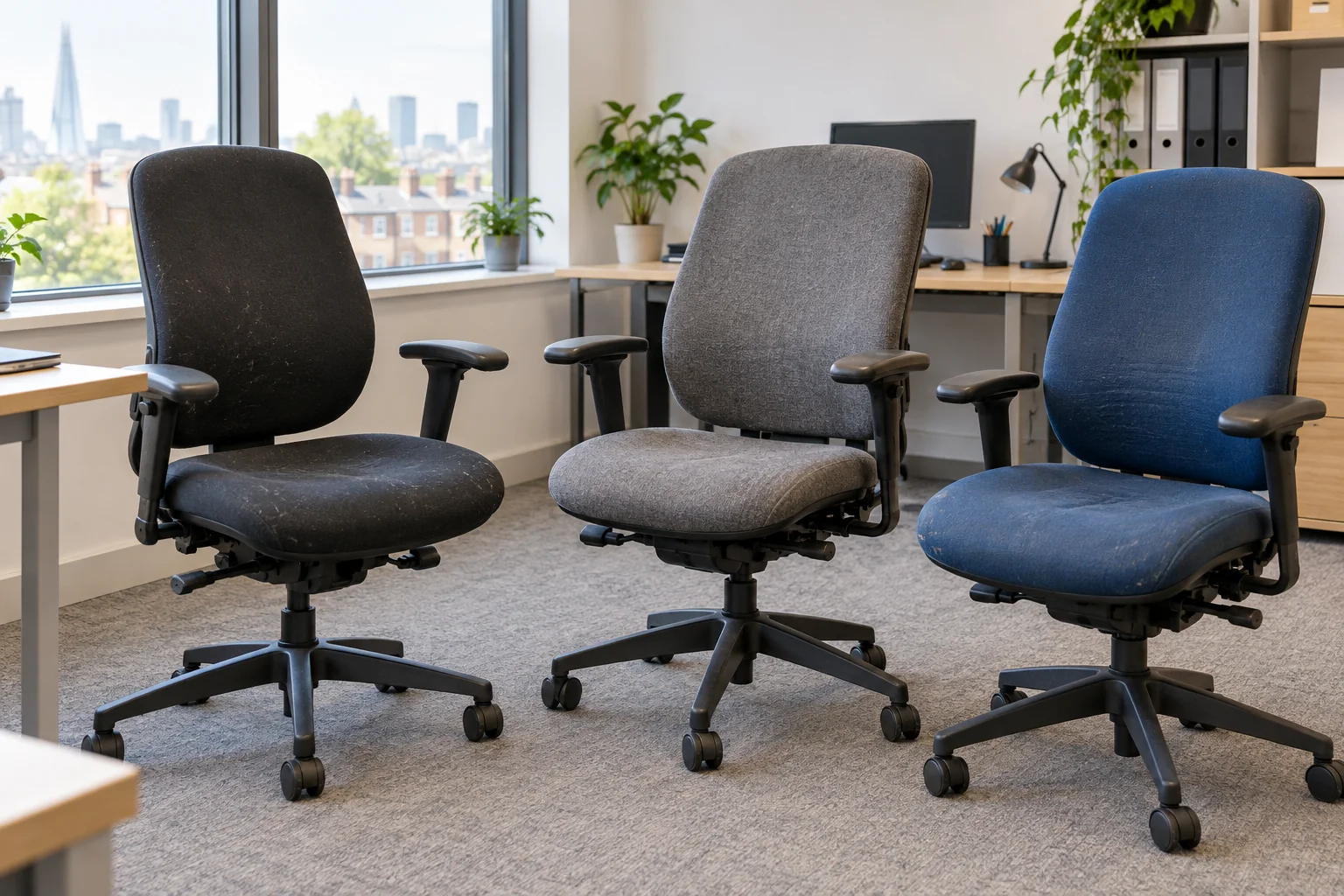
An office may replace chairs because the seats are worn, the height mechanisms fail, or a new layout leaves fewer desks. These are different situations. A chair that works and has modest cosmetic wear might be suitable for repair or reuse. A chair with an unstable base or damaged mechanism should not be passed on as ready for use. And once an upholstered chair is waste, its material and fire standards may affect how a collector must handle it.
The first useful task is an inventory, not a pile in the corridor. Count the chairs, note their condition and construction, and decide which can realistically continue in service. This guide focuses on desk and meeting chairs, rather than a general office clear-out. It explains how to describe the load, compare routes and prepare a London business collection without disrupting access or losing the paperwork.
Sort by function and condition before choosing a route
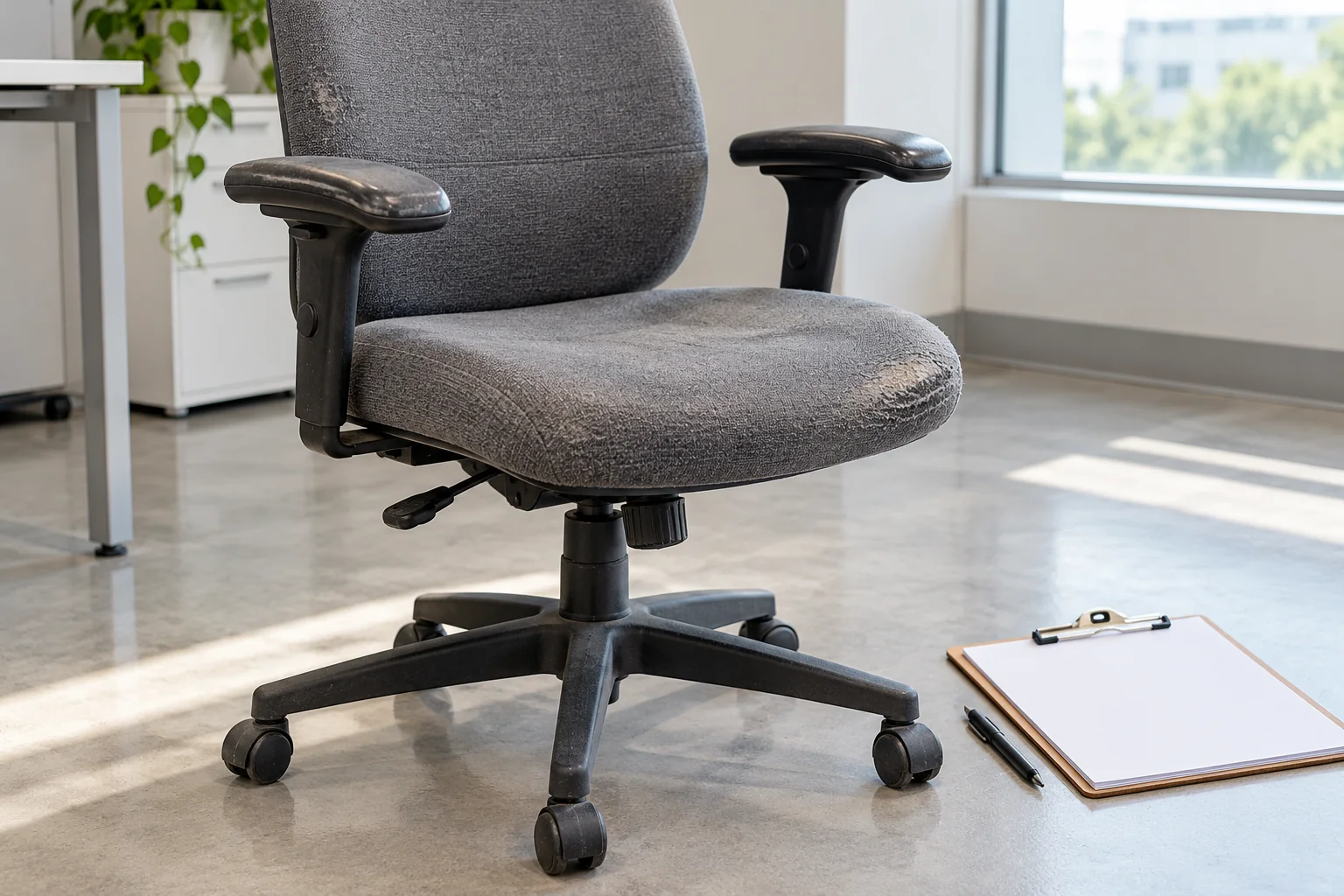
Test each chair where it stands. Does the seat rise and lower smoothly? Is the back secure, do the wheels roll properly, and does the base remain level? Are arms and adjustment levers attached? Look for tears that expose foam, loose screws, cracked plastic, stains and damage to any electrical adjustment. Record a simple condition note and take a photograph of each chair type. For a large batch, label matching models and count them rather than making a vague estimate of “several chairs”.
Separate working chairs with cosmetic wear from chairs needing repair and those no longer safe or practical to use. Do not assume an employee or charity wants a chair merely because it still has five wheels. A recipient needs accurate information about faults, dimensions and the number available. Keep any user manuals or spare parts with chairs intended for reuse, and do not hide a failing gas lift under a clean cover.
If the office has a purchasing or facilities team, check whether it has a repair agreement, supplier take-back option or internal reuse programme. A small repair can be worthwhile for a good chair, but only if the parts and expertise are available and the finished item is safe. Avoid improvised repairs to a load-bearing base or lift. Ask the maker or a qualified repairer whether the chair is serviceable; then compare the repair cost with a confirmed reuse or disposal route.
Offer reusable chairs only when a recipient accepts them
Working chairs may be suitable for another team, a local organisation, a furniture reuse project or direct sale. Photograph wear clearly and state what works and what does not. A reuse recipient may accept only a certain model, quantity or condition; it may not collect from an upper floor. Agree the number, date, carrying responsibility and any fire-label or safety requirement before moving the chairs out of use.
Avoid leaving unwanted chairs in a communal loading area in the hope that somebody will take them. That creates a storage and access problem, and an unconfirmed donation may be refused. If a recipient wants a batch of twelve but the office has eighteen, plan a route for the remaining six before the handover. A charity or buyer also needs to know whether the chairs can be rolled to a lift, whether a loading bay is available and whether the building permits pickup at the proposed time.
For a chair that needs repair, say so explicitly. The recipient may have the ability to fix it, but that decision belongs to them. If a chair is unsafe, badly damaged or soiled, do not present it as usable. The distinction between a product being reused and an item discarded as waste matters when deciding what records and treatment are needed next.
Identify upholstery and avoid casual dismantling
Office chairs vary: some have fabric or foam seats and backs, some have mesh backs with upholstered seats, and others have mostly hard plastic components. Record what each group contains. The Environment Agency's guidance on waste upholstered domestic seating containing persistent organic pollutants includes office chairs that are fire resistant to domestic standards among possible affected items. It does not mean every office chair follows one identical route. Tell the waste provider the chair type, label information if available and the materials you can see so it can decide how to classify and handle the load.
Do not strip fabric and foam from a worn chair in the office merely to make the frame look recyclable. Tearing upholstery can create debris and complicate compliant handling if the chair falls within the upholstered-seating guidance. Similarly, a metal star base does not make the complete chair a scrap-metal item. Ask the collector whether it wants chairs whole and whether different types should be kept apart. The provider, not an improvised office sorting exercise, should confirm the treatment route.
A damaged lift cylinder, electrical adjustment or loose caster is another reason to describe the chair precisely. Keep detachable components together unless the provider instructs otherwise. If a chair leaks fluid or has a damaged electrical component, flag that separately before collection. Do not roll a defective chair with a person sitting on it just to move it to the storage point.
Plan a collection without blocking the workplace
Choose a temporary storage place that keeps fire exits, corridors and accessible routes open. Stack chairs only if the model is designed to stack; most adjustable task chairs are not. A tower of wheeled chairs can shift unexpectedly. Mark which chairs are leaving so that a collector does not take a chair still in service. If several floors are involved, list the count and location on each floor.
Check the route to the vehicle. Count lifts, doors, stairs and the distance through the building. An office in a managed block may require a loading-bay reservation, lift booking, security pass or out-of-hours access. Give the collector the actual restrictions before it quotes. Our London parking and loading guide helps identify the information needed for a lawful vehicle stop.
If the collection is part of a wider move, coordinate the chairs with desks and other items but keep the chair count and condition separate in the inventory. Our guide to photographing a load for an accurate quote explains how wide shots and access photos help. A single picture of a full office is rarely enough to count twenty similar chairs or identify a few damaged ones.
Compare repair, reuse and waste collection on real terms
Put each route against the actual batch. For repair, note the models, faults, availability of parts, labour and how long the chairs would be out of service. For reuse, note what the recipient has confirmed it will take, whether pickup is included and the timing. For waste collection, note which chair types are accepted, carrying from which rooms, any separate upholstered-seating handling and the total cost.
A lower collection price is not useful if it assumes the chairs are already on the pavement. Conversely, a reusable batch may avoid waste treatment but still need transport and staff time. Ask for a quote that names the chair count and types, floor access, loading point, date and included labour. The checklist in what a rubbish removal quote should include applies to a business load as well as a household one.
Do not make a blanket promise that every worn chair can be recycled. The material mix and applicable upholstered-seating rules determine the treatment route. A collector may direct different chair groups through different streams. Ask it to explain what it can accept and how it will document the transfer, and update the item list if a late inspection finds a different chair type.
Keep business waste records with the chair inventory
An office disposing of chairs is handling business waste. GOV.UK's business-waste responsibilities include checking that the waste carrier is registered and completing a waste transfer note for waste leaving the premises. The waste-transfer-note guidance explains the information recorded for each load. Arrange this with the provider before collection, and keep the chair inventory with the paperwork so the description matches what actually left.
If the batch includes upholstered chairs potentially covered by the Environment Agency guidance, the provider should classify and describe that waste correctly. Do not guess a waste code or copy a description from another job. State the chair materials and any uncertainty, and ask the collector to confirm the appropriate documentation. If separate loads leave on different dates, maintain records for each transfer rather than treating an old quote as proof of every pickup.
Keep the reuse records distinct from waste transfers. A confirmed sale or donation should document the recipient, number of chairs and handover date; a waste collection needs the carrier and transfer details. This makes it easier for a facilities manager to account for the full original count and avoids chairs quietly accumulating in a storeroom after the main clearance.
Send a clear brief and close the loop
Before booking, send a count by chair type, condition photographs, upholstery details, floor locations, lift and loading arrangements, and the proposed pickup window. Ask the collector to confirm whether it will carry chairs from rooms, how it handles upholstered chairs and what records it supplies. At handover, compare the chairs removed with the inventory and keep the paperwork where the business stores other waste records.
For a London office needing collection of worn chairs and related furniture, Rubbish Please office clearance is a relevant starting point. Share the counts and access notes when you request an estimate. Repair or reuse remains appropriate where a chair is sound and a recipient agrees to take it. For the rest, a properly described, documented collection gives the business a clear account of what happened to each group.