Office churn or exit
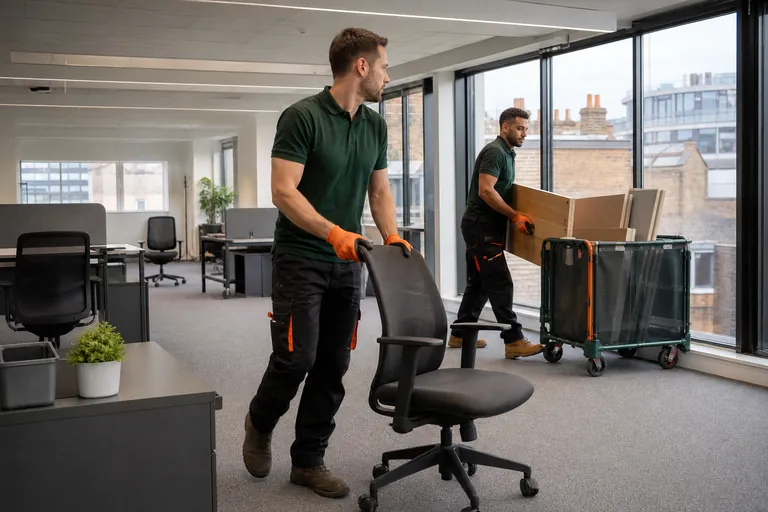
Desks, chairs and storage removed in labelled phases after asset owners address records, data and retained equipment.
Loading docks, goods lifts and phased office clearances
Canary Wharf rubbish removal is an access-controlled operation. We work from an approved inventory, building procedure and loading slot so office furniture or apartment contents move through the correct service route.
Canary Wharf clearance plans
Desks, chairs and storage removed in labelled phases after asset owners address records, data and retained equipment.
Furniture, bags and appliances carried through a reserved service lift and dock without using resident reception as a staging area.
Packaging, freestanding units and accepted project debris separated by material and cleared within the contractor window.
Facilities-led planning
High-rise offices and apartment towers can require contractor registration, security sign-in, insurance information, lift protection and a precisely timed dock slot. A reception entrance is rarely the collection route. Without the correct building contact and paperwork, an otherwise prepared crew may not reach the floor.
Create an inventory by floor, department or apartment room. Photograph furniture, electrical equipment and dense material separately. Then provide the service entrance, dock instructions, goods-lift dimensions and approved time. If the clearance is phased, identify exactly which assets belong to that visit and which remain in use.
Facilities control table
| Workstream | Typical contents | Building evidence | Client action |
|---|---|---|---|
| Office furniture | Desks, chairs, tables and cabinets | Dock, goods lift, floor route and time | Label retained assets by zone |
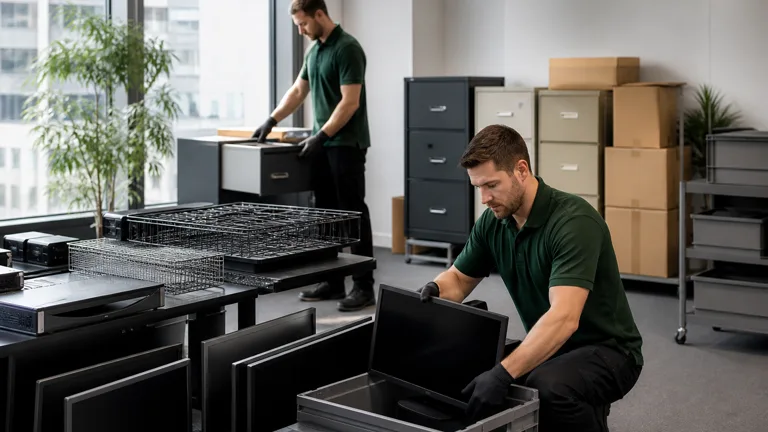
| Technology | Monitors, printers and IT equipment | Secure route and item count | Resolve data and asset controls |
| Apartment contents | Beds, sofa, bags and appliances | Service lift, concierge and dock | Arrange disconnection and room list |
| Fit-out materials | Packaging, units, timber and debris | Contractor access and material quantities | Separate dense and restricted waste |
Data, confidential records, batteries, chemicals, paint, gas cylinders, clinical waste, asbestos and unidentified liquids require decisions outside ordinary general rubbish.
Security, docks and lifts
Provide the facilities manager, security procedure and dock booking reference where relevant. Confirm vehicle limits, lift dimensions, floor protection and the permitted working period. Arrange passes for the whole crew. Waste must remain in an authorised area until the lift and dock are ready; fire corridors and shared service cores cannot become temporary storage.
Measure bulky boardroom tables, sofas and cabinets against lift and door dimensions. Fixed joinery, wired desks and connected appliances require prior work. Our office clearance service provides the right framework for a documented workplace inventory and phased handover.
Operational pricing guide
From £55
From £120
From £180
From £240
These bands are starting guides. The final quote reflects actual volume, weight, material and labour. Security sign-in, lift protection, long service routes, dismantling and restricted dock periods can affect crew time. Applicable supplementary charges are confirmed before loading.
Dense fit-out materials need their own weight assessment. Keep rubble, tile, plaster and soil separate from furniture and packaging, and use builders clearance for accepted project debris.
A phased operational handover
Number the areas included in each visit and attach an approved item list. Use wide photographs for scale and closer views for electricals, dense sacks and furniture needing dismantling. The client must decide how confidential records and data-bearing devices are sanitised or destroyed; the collection crew should not make information-security choices.
We assess accepted contents, weight, volume and labour against the booked route. At attendance, the authorised facilities contact confirms the phase and final quote before loading. Additions from another team or contractor are reassessed. A completed phase removes only the agreed assets, leaving operational and retained zones untouched.
List removals by floor, department, room or phase.
Arrange registration, passes, insurance and building contact.
Book dock, goods lift, protection and working period.
Authorised contact confirms the quote and completed zone.
Data and asset control
The organisation should inventory computers, drives, phones and printers and complete its chosen data-security process before collection. Asset tags should be reconciled, and leased or retained equipment clearly excluded. Batteries and electrical items remain separate from general furniture.
Confidential papers need an approved destruction route rather than an unmarked rubbish bag. Freestanding desks and chairs can then be handled as workplace furniture. For recurring operational waste, consider daily rubbish collection; for a one-off corporate change, keep the office clearance inventory as the source of truth.

Near Canary Wharf
Canary Wharf questions
The tenant or authorised facilities contact should follow the building procedure and provide the confirmed reference and time.
Building rules decide the route. Reserve the approved goods or service lift and provide dimensions and protection requirements.
Do not assume this. The organisation must complete or commission its own approved data-security process before collection.
Yes. Give each visit a fixed asset list and zone so operational or retained equipment remains untouched.
Fixed or wired installations are not assumed. Request a separate assessment with construction and service details.
Yes when building management authorises the lift and dock arrangements and the contents are fully listed.
Contact us immediately. Security and lift availability may require rescheduling or a revised work plan.
Align assets and access
Send the approved inventory, security contact, dock reference, goods-lift details and working window as one facilities brief.