
A shelf of books looks manageable until it becomes thirty heavy boxes. Add years of letters, magazines, notebooks and loose papers, and a property clearance can develop a very different load from the furniture shown in the original photographs. Paper is dense, boxes fail when overfilled, and a mixed pile may contain records that should never be handed to a general collector. The useful first step is to separate decisions from lifting: decide what must be kept, what someone has agreed to reuse, and what genuinely needs a waste route.
This guide is for a home, inherited property or furnished rental with more books and paper than the normal weekly recycling can absorb. It explains how to make a quick inventory, protect private material, pack safely and describe the load before booking. It does not assume every book is saleable or that every printed item can go in the same recycling container. Local collection rules and the condition of the material still matter.
Survey the rooms before filling boxes
Walk the property with a notebook and count bookcases, cupboards, drawers and loose stacks by room. Photograph the shelves and the access route, not just a close-up of book spines. Note whether the load includes hardbacks, paperbacks, magazines, newspapers, office files, archive boxes or damp paper. A shelf metre is a more useful first estimate than saying “a few books”, but the eventual box count and weights will make the quote clearer. Include material stored in a loft, cellar or outbuilding separately because the carrying route may change the labour required.
Identify who can decide what leaves. In a family property, one person may be arranging collection while another owns or needs the records. Agree a review point before anything is sealed. A simple room list with four destinations — keep, confirmed reuse, household recycling and other collection — avoids the common problem of a donation box later being mistaken for rubbish. Mark the boxes with words rather than relying on coloured tape that different helpers may interpret differently.
Make a separate note of items mixed into shelves: photographs tucked inside books, cash, certificates, keys, jewellery, digital storage devices and envelopes of paperwork. These are not part of a book-and-paper estimate until an authorised person has checked them. If the clearance follows a bereavement, our bereavement clearance guide explains why decision ownership and a protected keep area come before the collection day.
Give reusable books a real destination
Sort books by condition and likely use, rather than assuming that every printed volume belongs in a charity box. Clean, complete, dry books may be useful to family, friends, a named charity shop, a community group or a specialist buyer. Ask the recipient what it accepts and when it can take them. A charity may have limited space, refuse damaged stock or request a manageable number of boxes. Confirm the handover before you count the books as removed from the property.
Keep sets and distinctive editions together while you assess them. An incomplete reference set or a textbook from a superseded course may have little demand; a specialist title can be worth a second look. Do not spend days valuing every paperback if the property has a deadline. Set a realistic time limit, photograph the candidates for resale or family review, then make a decision. Reuse works only if it fits the timetable and another party has actually agreed to take the material.
Books with mould, heavy water damage, missing pages or strong odours are unlikely to be welcomed by a reuse organisation. Keep them away from clean donations so they do not spoil the rest of the batch. A decorative cover does not make a damaged book suitable for donation. If you are uncertain about an unusual binding or a valuable collection, seek a specialist assessment before sending it with the general load.
Pull out personal and confidential papers
Before anyone carries boxes downstairs, review files for bank details, medical letters, identity documents, account numbers, legal papers and records belonging to someone else. Put papers needing retention or secure disposal in a clearly labelled area that the removal team will not touch. A general book-and-paper clearance is not a substitute for an approved confidential destruction service. If sensitive files need shredding, arrange that separately and confirm its chain of custody rather than assuming the ordinary collector provides it.
Choose the retention decisions with the relevant owner, executor, landlord or business representative. A private household's correspondence and a company's archived records may have different retention and handling needs. Do not ask a clearance crew to determine what is safe to discard. For an office file load, the later task of secure document handling belongs in a separate plan; the office clearance service page is a starting point for discussing the physical removal scope, not a promise of shredding.
Remove obvious non-paper items while reviewing files: plastic wallets, binders, metal clips, batteries and electronic media. Whether small fasteners or envelopes with windows are accepted in a local paper stream depends on the collector's rules; check rather than making a blanket assumption. If sorting every page is impractical, tell the collection provider what is mixed in the boxes and ask what preparation it expects.
Pack dense paper in small, liftable units
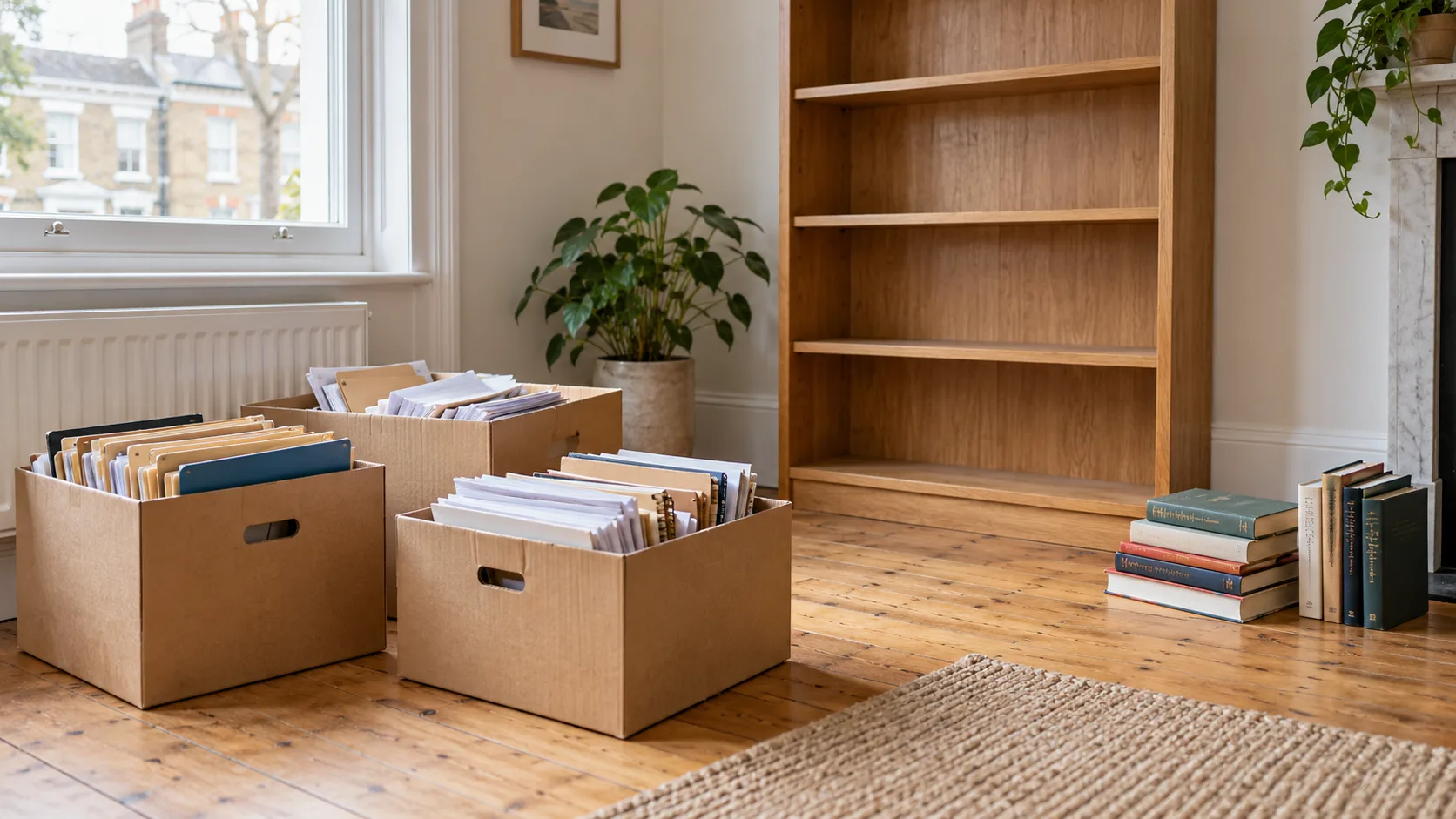
A large moving carton full of books can be too heavy to lift safely even when the cardboard is sound. Use smaller sturdy boxes, fill only to a manageable weight and close them so contents cannot spill on stairs. Test one packed box before filling twenty in the same way. Put books flat or upright without forcing them against weak sides, and avoid stacking heavy cartons on a fragile pile of magazines. The person collecting them needs a stable handhold, clear labels and enough space to work.
Do not rely on thin carrier bags for paper or place loose bundles beside the front door. Bags tear and bundles slide apart during a long carry. If a box is already soft, damp or split, re-pack it before collection. A sealed but unlabelled carton should not be assumed to contain only books; say what is inside and whether any unusually heavy bound volumes are present. Keep the load indoors and dry until the agreed handover to prevent clean paper becoming wet and difficult to process.
Plan the route as carefully as the packaging. Count stairs, measure narrow turns and identify any lift restrictions. In a shared building, keep escape routes clear and agree when boxes can pass through communal areas. Our no-lift clearance guide covers the extra preparation for multiple floors. If the vehicle cannot stop near the entrance, mention the carrying distance when requesting a quote; dozens of small boxes still take time to load.
Match each remainder to an accepted route
Check the council's current rules for paper, card and books before using the household recycling service. In England, GOV.UK's household recycling guidance addresses separate collection of paper and card, but it does not mean every damaged or contaminated paper item is accepted by every bin or every site. Your council can tell you about its kerbside capacity, recycling centre rules and any limits on repeated trips. A normal bin may be appropriate for a small amount of clean paper; it may be a poor plan for the contents of an entire property.
Keep clean paper apart from food-soiled, wet or mixed material where practical. Check the instructions for shredded paper, laminated sheets, wallpaper and heavily coated items instead of adding them to a paper box on assumption. Books may be treated differently from loose paper, especially if they have hard covers or mixed bindings. A collection provider should be told about both streams and whether it can keep them separate. Ask where material will go; do not describe the whole load as “recycled” unless that route has been confirmed.
For a larger private collection, GOV.UK says householders using a private waste business must check that it is on the waste-carrier register. Record the carrier's details and keep the booking and collection confirmation. This check remains useful even if the load looks harmless; unauthorised removal can leave the householder responsible for waste later dumped elsewhere. If the paper came from a business rather than a household, explain that when booking because commercial waste has different records and collection arrangements.
Describe the load and finish with a box count
Send a few clear photographs: shelves before sorting, the final packed boxes, any loose material and the route from the room to the vehicle. State the number and approximate size of book boxes, paper boxes and unsorted cartons. Include floor level, lift availability, parking or loading restrictions, and the intended collection date. The guidance on photographing a rubbish load for a quote gives a useful pattern for showing scale and access. Tell the provider if the boxes are heavier than typical household mixed rubbish.
Ask the provider whether the quote covers carrying from each room, loading and the particular material mix. Clarify whether it expects sealed boxes at a single pickup point or will collect from shelves. If some books are still awaiting a recipient, set a decision deadline and leave them out of the waste count until that deadline passes. A quote based on twenty boxes cannot remain accurate if another thirty appear on the day. If you want help with the whole property, start with the house clearance service and describe the paper-heavy part separately.
After collection, compare the number removed with the room list. Check that the keep and sensitive-record boxes are still where they belong, that confirmed reuse boxes reached their recipient, and that the collection receipt matches the waste handover. The best book-and-paper clearance leaves a traceable destination for each group without making staff or family members guess which box mattered.