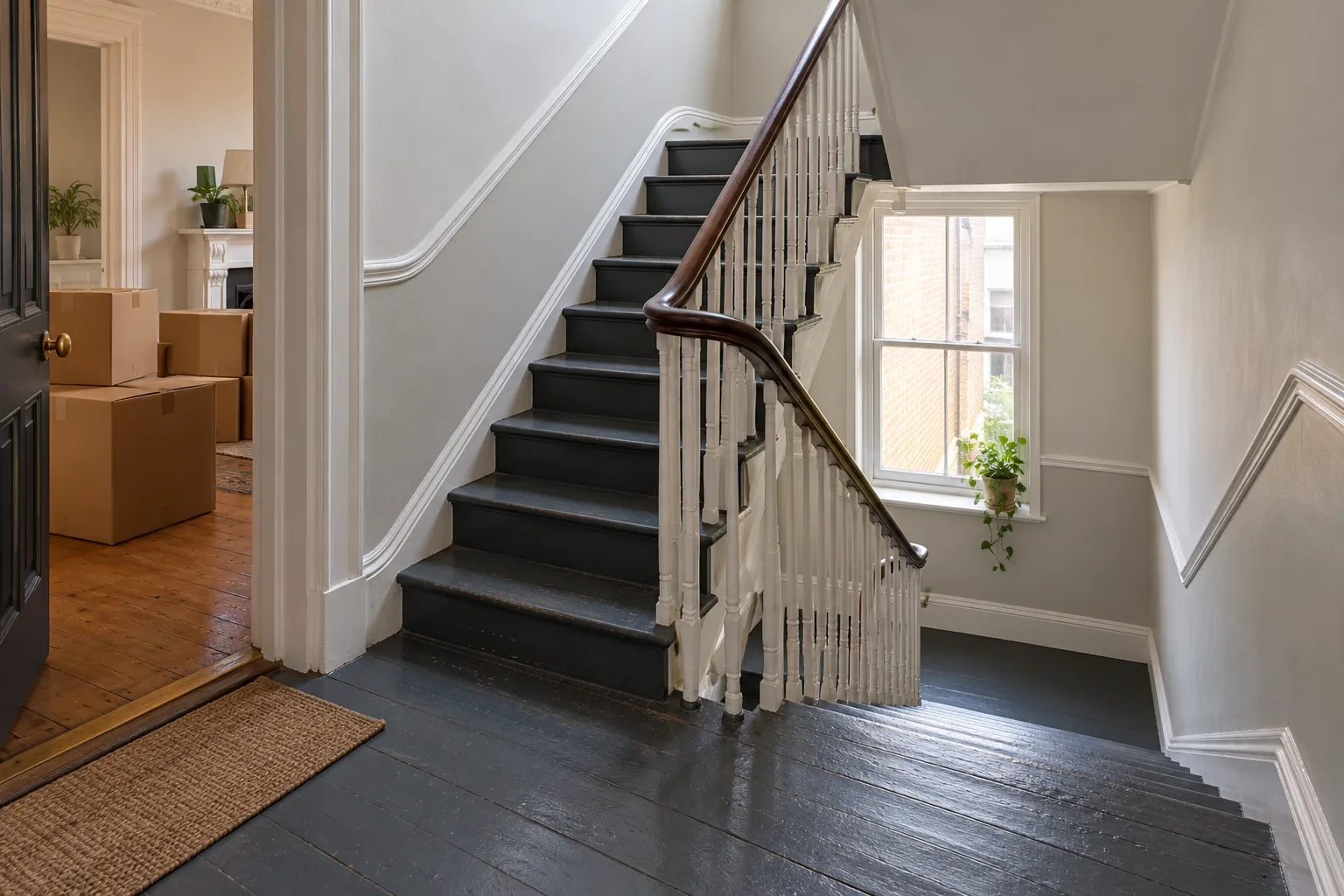
An upper-floor house clearance without a lift is mostly an access-planning job. The volume of furniture and bags still matters, but every item must also pass through doorways, along a corridor, around stair turns and down to a suitable loading point. A quote based only on room photographs can miss the labour and handling that this route requires. Before booking, describe the full journey from the item to the vehicle.
You can make the job clearer without trying to carry heavy furniture yourself. Measure awkward pieces and openings, photograph the stairs, identify what can be dismantled, and keep the route free of loose items. A professional team can then assess the work and tell you which items need different handling. This guide applies to flats and houses with internal stairs, maisonettes, converted properties and older buildings where an accessible lift is absent or unavailable.
Count the actual flights and turns
“Second floor” can mean different carrying routes. Record the number of flights from the rooms to the exit, the number of steps in each flight and whether there is a half-landing or tight turn. Photograph the route from both directions. Show the narrowest door, any low ceiling, handrails, radiators, fixed cupboards and the final exit. If the property has a basement or loft room, include those stairs separately.
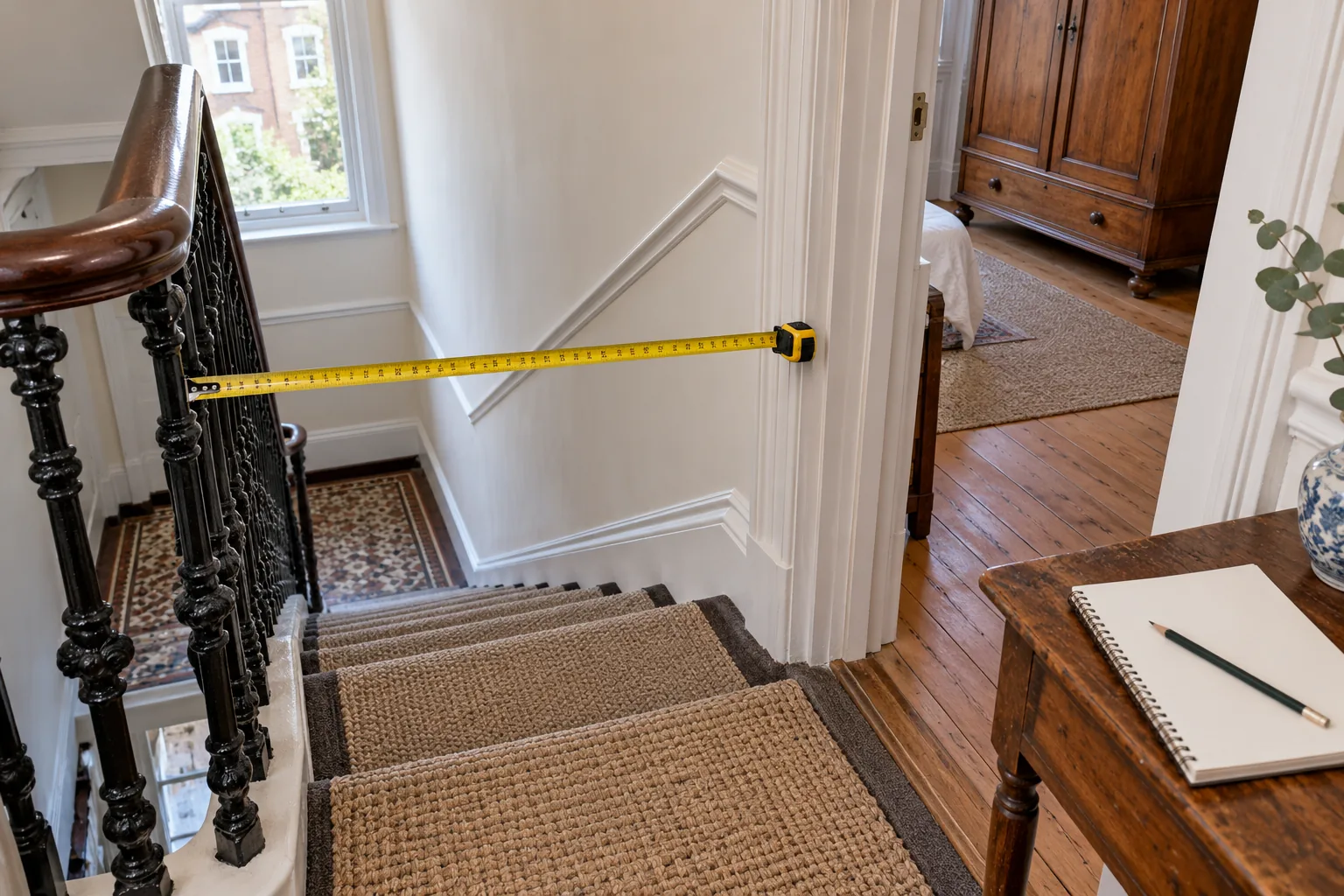
Measure the usable width, not just the wall-to-wall distance. A handrail or protruding fitting may reduce the space available for a sofa or wardrobe. Check the height of door frames and the turning space on landings. A large item that fits down a straight staircase may not rotate through a small landing. Do not remove a handrail or building fixture without appropriate permission and a safe plan.
Tell the collector if the entrance is reached through another flat, a communal hallway, a courtyard or a rear path. The route outside the staircase can add substantial carrying distance. A clear access description helps the team decide crew size, time and whether an item should be dismantled before removal.
Identify bulky and heavy items early
List each sofa, bed frame, mattress, wardrobe, cabinet, desk and appliance with its room and approximate dimensions. Note whether it is solid, flat-pack or assembled from detachable parts. A rigid wardrobe may be awkward despite modest weight, while boxes of books can be small but very heavy. The team needs both volume and likely weight to assess the job.
Check whether the item can be safely taken apart. Remove loose shelves and drawers where appropriate, but do not dismantle a structure you cannot reassemble or move safely. Some furniture is glued or built in; forcing it apart can create sharp edges or damage walls. If you want the collection team to dismantle an item, ask whether that work is available and included in the quote.
Never assume that one person can guide a heavy item down the stairs while another carries it. Awkward loads, blind corners and uneven steps can make a seemingly simple move unsafe. Leave specialist handling decisions to the provider after it has the measurements and photographs. Protect children, pets and other residents from the carrying route while work is underway.
Prepare a clear route without blocking neighbours
Move small possessions and loose rugs away from the route before the visit, where you can do so safely. Check that doors open fully and that the team can reach the agreed items. Leave the communal hall, staircase and fire exits usable. Do not stage a pile of bags on a landing or pavement while waiting for a vehicle unless the relevant permissions and safe loading plan are in place.
If the building is managed, ask whether there are rules for moving bulky items, protecting shared finishes or using a particular door. Book any required access slot. Tell neighbours when a short period of carrying activity is planned if the route is narrow or shared. A courteous notice does not replace the building's formal requirements, but it can reduce conflict at the doorway.
Photograph delicate flooring, walls and stair corners before the collection and point them out. Ask how the team handles protection of surfaces and what the quoted work covers. Do not cover steps with loose plastic or materials that could slip. A safe route matters more than a makeshift protective layer.
Keep the removal list precise
In a full property clearance, mark anything that must stay. A box left near a staircase can look like part of the load even when it contains keys or documents. Keep valuables, medicines, records and personal items in a separate protected room. Give the team a written room list and point out excluded items on arrival.
For each floor, record the number of bags, boxes and large objects. Put dense material such as books or crockery in smaller containers rather than filling large sacks that become difficult to carry. Do not overfill bags or leave loose glass where it can break on the stairs. If an item is damp, sharp or unstable, tell the provider before collection.
Separate restricted materials from the ordinary load. Paint, chemicals, fuels, gas cylinders, asbestos-containing material, sharps and unidentified containers may need another route. Electrical equipment, batteries and fridges should be declared too. Do not hide them in bags to speed up the job; an unexpected item can interrupt the carefully planned carrying sequence.
Show the loading point, not just the front door
The vehicle may not be able to park directly outside a London property. Photograph the street, legal stopping options and the path between the door and the vehicle. Check whether loading restrictions, a controlled parking zone or a bus lane affects the proposed time. Rules vary by location, so confirm the position with the relevant authority or building manager rather than assuming a short stop is permitted.
If there is a long distance from the final stair to the vehicle, tell the team. A quote can change when every item must be carried across a courtyard or down a narrow pedestrian route. If the entrance has steps outside as well as inside, count both. Mention gates, intercoms and access codes, and arrange for someone to meet the crew.
Do not promise a parking space you cannot reserve. If a loading bay or permit is required, establish who will arrange it before the collection date. The provider can then schedule the work around a realistic vehicle position instead of losing time while the team waits on the street.
Request a quote that includes the stair work
Send photographs of the load and the complete access route. Include item dimensions, flights of stairs, turning points and the parking plan. Ask whether the quote includes carrying from each room, dismantling, loading, transport and disposal. If the provider needs an on-site assessment for a particular large item, arrange it before the property deadline becomes urgent.
Our house clearance service covers household removal, while furniture disposal may be a better description if only a few bulky pieces remain. The price guide gives indicative load sizes; access and labour are part of the actual assessment. Avoid comparing a ground-floor quote with an upper-floor job unless both providers have the same stair and loading information.
Agree how changes will be handled. If a previously unseen loft contains more items or a wardrobe cannot pass intact, the team should discuss the new scope and price before proceeding. Keep one authorised person on site or reachable by phone to make those decisions.
Check the route and rooms after collection
On collection day, confirm the removal list and show the crew the narrow points. Keep other movers and trades out of the stairwell while heavy items are being carried. If a building manager has approved a slot, respect the end time and keep communal doors secure. Do not ask the team to take an unlisted item from another resident's area.
After loading, inspect each room against the list and walk the stair route. Check for loose debris, packaging, damage or items left on a landing. Clear the route for neighbours and record any work that remains. Keep the provider's receipt and details. GOV.UK advises checking that a private business taking household waste is an authorised waste carrier.
A no-lift property does not have to be an unpredictable job. Good photographs, measurements and a realistic loading plan let the collector assess the stairs before arrival. If you can describe the load and the route from room to vehicle, contact Rubbish Please for an estimate and discuss any unusually heavy or awkward pieces in advance.