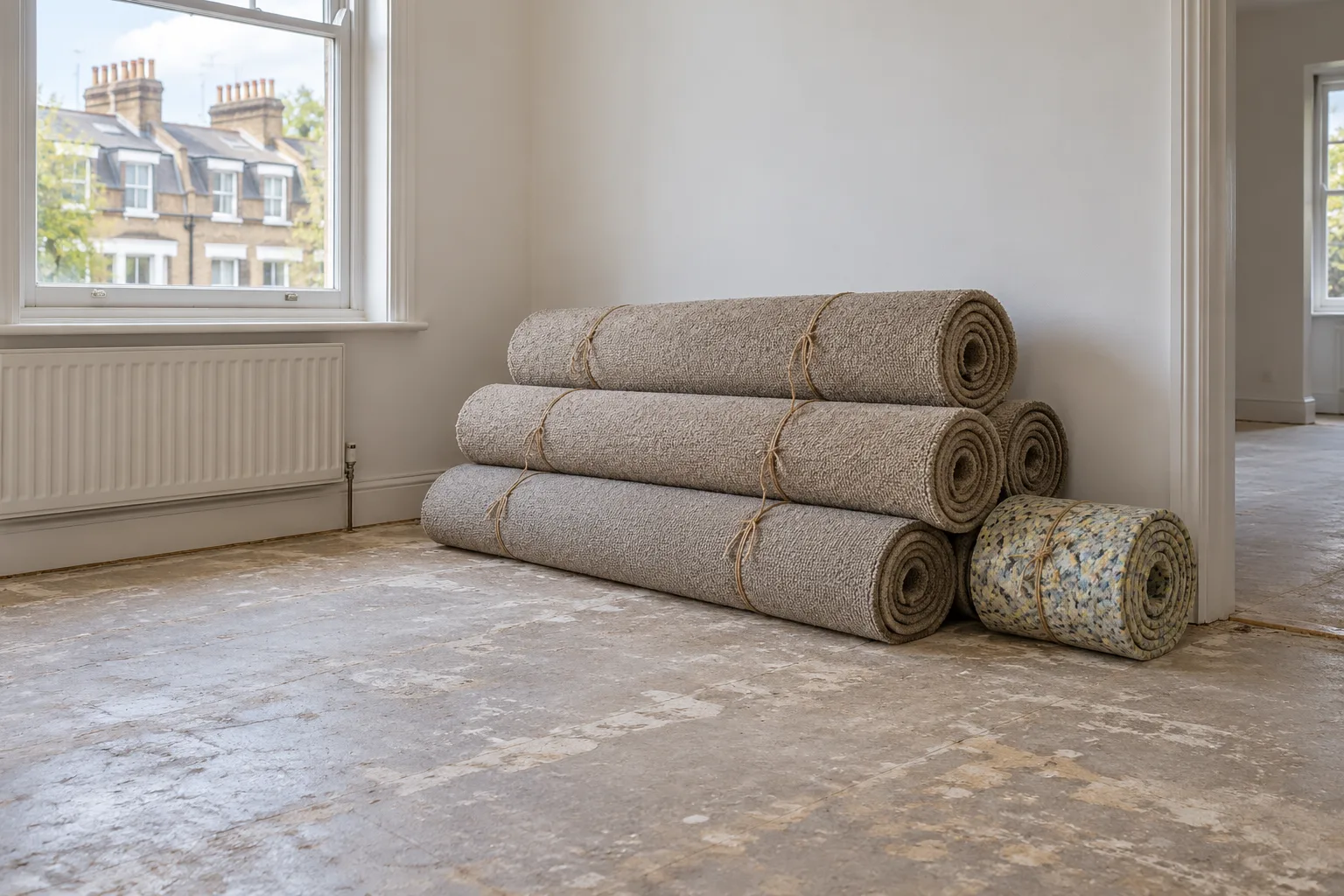
The waste from lifting a carpet is rarely just one roll. A room may produce several lengths of carpet, underlay, gripper strips, thresholds and dusty offcuts. Once rolled, the material can be surprisingly heavy and awkward through a small flat, especially if it is damp or still has fittings attached. A useful collection plan starts before the installer or householder piles everything by the front door: decide who is removing the floor covering, what will be separated and what the collector has actually agreed to take.
This article focuses on preparing removed household carpet for collection. The carpet disposal service page covers the service itself; here the aim is to make the load clear, safe to handle and accurately quoted. The advice does not assume every used carpet will be recycled. Acceptance and final treatment depend on the local authority, site or collection provider, the material's condition and the arrangements available when it is handed over.
Agree who removes the carpet and who removes the waste
Before work starts, ask the fitter, landlord or contractor whether carpet lifting, rolling, carrying and disposal are included in their scope. A new-flooring installation quote may include fitting only. Another quote may include taking away the old carpet but leave the underlay and gripper strips. Write down the division of work so the waste is not left in a hallway while two companies each assume the other will collect it. If a tradesperson creates or removes waste as part of a renovation job, discuss its disposal arrangements with them before they begin.
Count rooms and note the approximate floor area, but also record fixed wardrobes, stairs, alcoves and carpeted landings. A 20-square-metre room does not produce the same handling problem as 20 square metres spread over a narrow staircase and three small bedrooms. If only one area is being lifted, mark what stays in place. Photograph the carpet before removal and again when it is rolled. This gives a collector a more reliable view of volume than a close-up of one offcut.
Confirm access to the property and the vehicle stop. In a London flat, the route may involve a communal corridor, booked lift and a loading bay with limited hours. Our guide to rubbish collection through a shared hallway explains why a clear route and building arrangements should be settled before the crew arrives. Do not store carpet across a fire door or stair landing while waiting for a pickup.
Separate carpet from underlay and fittings
Ask the person lifting the floor to keep carpet, underlay, gripper strips and metal thresholds in distinct groups. They are different materials and can present different handling issues. Foam or felt underlay may have a different route from carpet; gripper strips and staples have sharp points. A quote for “old carpet” may not cover a sack of timber strips, metal fittings or other renovation debris unless those items were disclosed. The collector should know what is in each bundle before anyone picks it up.
Do not roll exposed gripper strips inside carpet where a handler might put a hand. Remove or contain sharp fixings through the fitter's normal safe process, using a sturdy closed container for small loose pieces. Do not leave bare strips mixed into a black bag. If you are not doing the lifting, let the person responsible for removal deal with the fixings and ask for the resulting waste to be clearly separated. The point is a visible, described load rather than a surprise hidden inside a roll.
Keep other flooring out of this carpet group. Vinyl sheet, laminate planks, tiles and adhesive residue are not carpet simply because they came from the same room. A future guide will address laminate and vinyl as distinct materials; for this collection, tell the provider exactly which floor coverings are present. If the carpet is laid over old tiles or adhesive of uncertain composition, do not scrape or break the underlying layer as part of a casual clear-out. HSE notes that older asbestos-containing floor tiles and adhesive can be hidden under carpets. Stop and obtain an appropriate assessment if suspect material is exposed.
Make each roll manageable and keep it dry
Measure the widest doorway, stair turn and lift opening before deciding how long a roll can be. A roll that fits inside a room may be impossible to turn on a narrow staircase. If the installer can cut the lifted carpet into sensible sections, ask it to do so before tightly rolling them. Secure the rolls so they cannot unwind during a carry, and keep their ends contained. Avoid making a single large roll from several rooms just because it looks tidier in a photograph.
Carpet can be bulky even when light, and wet carpet can be much heavier. HSE's manual-handling guidance for carpet work identifies the risks of moving large carpet loads. The person collecting should plan the route and crew around the actual rolls. Do not try to force a heavy roll through a doorway or down stairs by dragging it over a handrail. State whether it will be carried from the room, from a ground-floor holding point or from outside the property.
Store the removed material under cover until collection. Rain can add weight and make a reusable or potentially recoverable material harder to handle. If an old carpet is already damp, has a strong odour or has been contaminated, say so when booking. Do not hide it under clean underlay. Likewise, a small clean leftover piece from fitting a new carpet is different from a dirty whole-room removal; describe them separately if reuse is being considered.
Check whether a reuse route is realistic
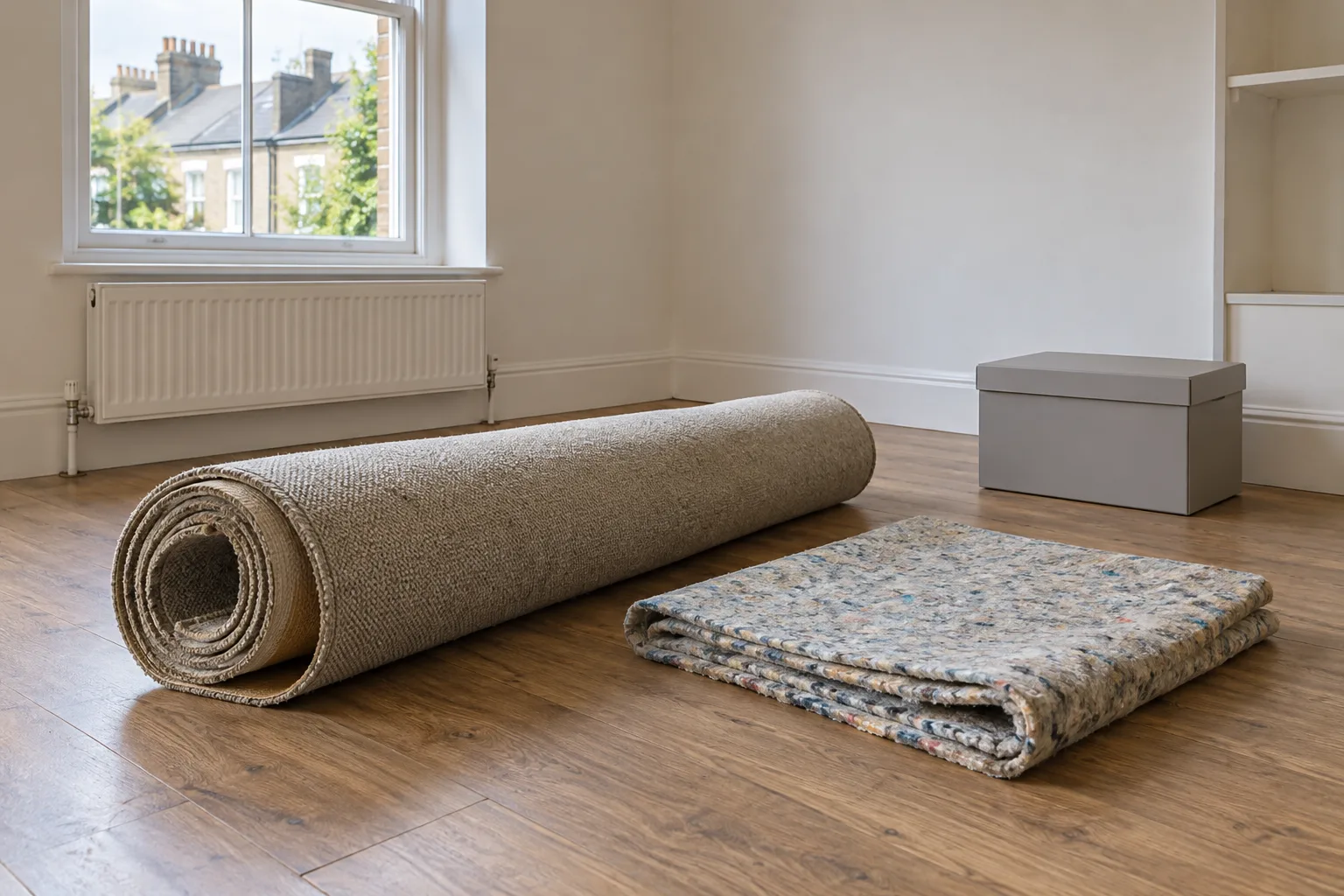
A clean, dry, undamaged rug or removable carpet piece may be wanted by a named recipient, but large fitted carpet lifted from a room often has cut edges and a shape specific to that floor. Ask a reuse organisation or recipient before promising a donation. Give dimensions, photos and condition, and confirm how and when they can collect. Do not leave a rolled carpet outside a charity shop or count an unconfirmed listing as a completed clearance.
Underlay offcuts and unused new flooring may have a better reuse prospect than old material removed after years of wear. Keep these clean pieces separate if the recipient accepts them. The broader reuse-before-removal approach starts with a confirmed destination and a clear deadline; once that deadline passes, the remainder can be quoted as waste. Reuse decisions should not cause the collection team to wait while someone decides on the doorstep.
For disposal, check the current local route rather than assuming a recycling label. North London Waste Authority says carpet can be taken to one of its reuse and recycling centres or handled through a council bulky collection. Its October 2026 update also says that, after a recycler stopped accepting the material, some carpet at its centres may temporarily go to energy recovery instead of recycling. This is a practical reminder that “accepted at a recycling centre” does not guarantee the carpet itself is recycled. Other London authorities and private operators may have different arrangements.
Give the collection provider an accurate load description
Send photographs of the laid rooms and the final grouped waste. State how many carpet rolls there are, their approximate length and diameter, the underlay volume and any gripper strips or thresholds. Mention stairs, lift rules, carrying distance, parking and whether someone must help move furniture before the crew can reach the material. The photo guide for rubbish quotes gives a useful sequence for showing scale and access.
Ask whether the price covers collection from each room, loading, transport and the disclosed accessory waste. Clarify whether the crew expects the carpet already lifted and rolled. If the load includes glued carpet tiles, mixed construction debris or materials from a commercial fit-out, state that separately; a standard household carpet quote may not fit those circumstances. Our guide to what a rubbish removal quote should include helps spot exclusions before collection day.
If you hire a private waste business, GOV.UK says householders must check that the company is registered as an upper-tier waste carrier. Keep its details and the collection confirmation. This remains worthwhile even when the waste is simply flooring. If a carpet fitter takes the old material, confirm the waste arrangement with the fitter as part of the job rather than assuming a van on site means authorised disposal is included.
Finish with a clear floor and a clear record
After collection, check every room and holding point against the original list. Look for underlay left in a cupboard, a roll behind a door, or a box of fixings that was excluded from the agreed load. Keep the access route usable until the last item has left; do not pull furniture back into place while workers are carrying rolls. If the collection differed from the quote, record what actually went and what remains before approving any change.
For an entire property being prepared for sale, tenancy or refurbishment, the carpet may be only one part of a larger house clearance. Send the flooring details separately when you request an estimate. A well-prepared carpet load is measured, divided into sensible rolls, free of hidden sharp fittings and matched to a collection route the provider has confirmed.