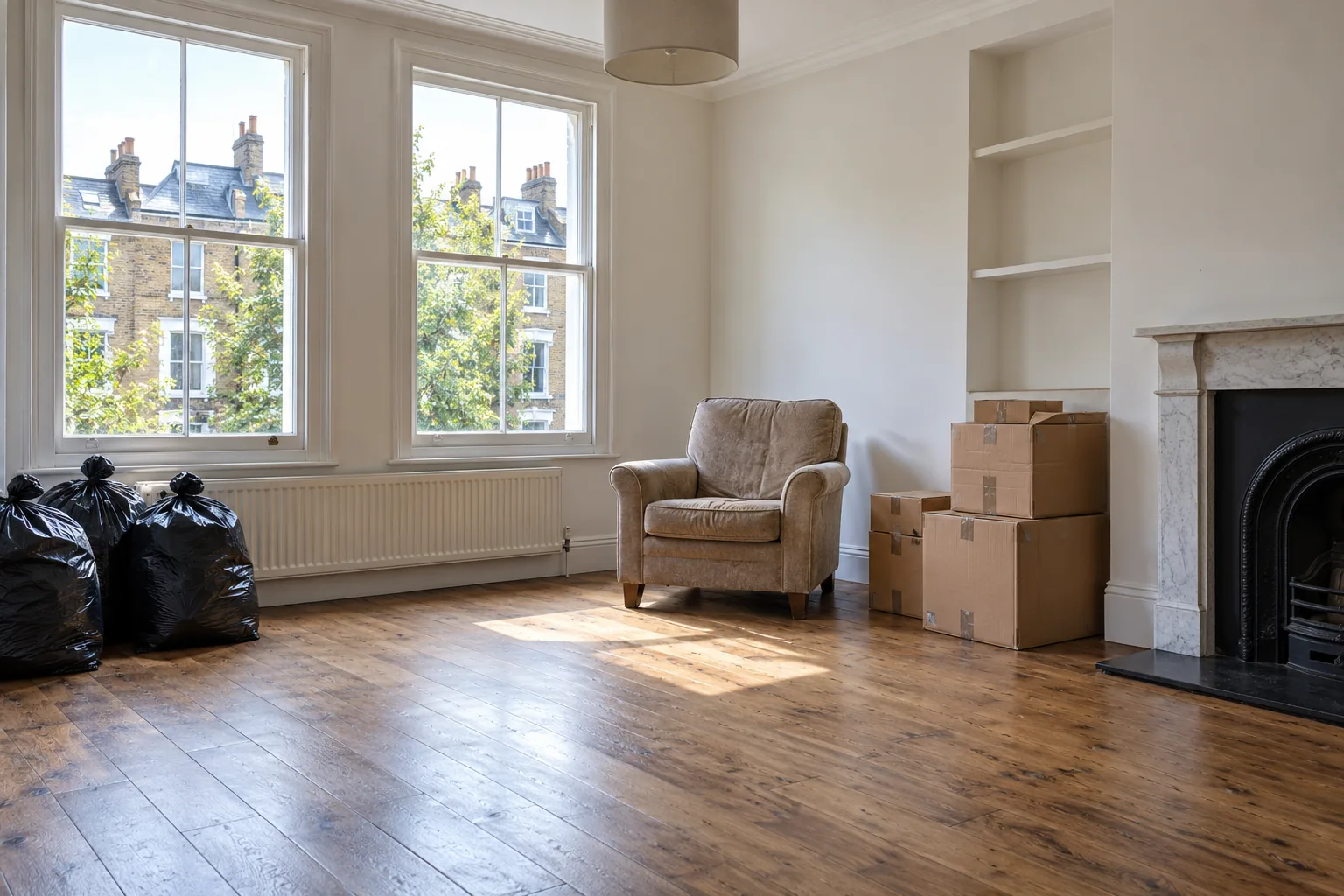
The gap between tenancies can be short, but a landlord should not treat every item left in a property as rubbish. The first tasks are to confirm the tenancy and possession position, record the condition of the rooms, and separate the landlord's furnishings from the outgoing tenant's possessions. Once the removal scope is clear, a collection can be arranged around cleaning, repairs, inventory checks and the incoming tenant's move.
This checklist is for the practical waste-removal stage at a private rental in England. It does not decide whether a tenancy has legally ended, whether abandoned belongings may be disposed of, or whether a charge can be taken from a deposit. Those questions depend on the circumstances and current rules. If there is doubt about possession or ownership, get appropriate advice before instructing anyone to clear the items.
Confirm the property can be accessed and cleared
Check the tenancy record, the agreed move-out date, key return and any written communication from the tenant. A property that looks empty may still be occupied or subject to an unresolved possession process. Do not book a clearance crew to enter merely because rent has stopped or a deadline has passed. England's private-renting rules changed in 2026, and GOV.UK's possession guidance explains the process where a landlord is seeking possession.
If personal belongings remain, do not place them straight in a general-waste load. Photograph them, keep them secure and establish how they will be returned or handled. The same GOV.UK guidance says a landlord may be responsible for keeping items left behind safe for a reasonable time. The right approach can depend on the tenancy and the nature of the goods, so obtain case-specific advice where needed. A collection booking should cover only the material you are authorised to remove.
Set one person to approve the removal list. The letting agent, landlord, inventory clerk and contractor should use the same version. An instruction such as “empty the flat” is unsafe if appliances, curtains or furniture form part of the letting, or if personal belongings are awaiting a decision.
Record each room before anyone moves items
Take dated photographs from the doorway and from additional angles in each room. Include cupboards, the loft or storage space if accessible, the garden, balcony and communal-access route. Photograph the condition of the items as well as their quantity. Then compare the scene with the check-in inventory and any agreed checkout record. This helps identify the landlord's furnishings, the tenant's belongings and existing wear or damage.
Keep the evidence separate from the collection quote. A collector needs images of the authorised waste and access route; a deposit or property-condition file may need a fuller record. Do not ask a removal team to decide who caused damage or whether a deposit deduction is justified. GOV.UK's deposit protection guidance explains the scheme framework. Any claim or dispute should follow the relevant scheme and the evidence, rather than a rough estimate made during clearance.
Make a simple room sheet with four columns: landlord item to retain, tenant item to address, authorised waste to remove, and uncertain item. Mark a built-in appliance or furnished-letting item clearly. If an item is disputed or lacks a clear owner, leave it in the uncertain column until the responsible person resolves it.
Separate ordinary waste from personal goods
Loose food packaging, damaged disposable material and bagged general rubbish may appear straightforward, but check inside bags and containers before authorising removal. Important documents, keys or valuables can be mixed with everyday waste. Do this with appropriate care and a documented process; do not open sealed personal items simply because the property is being turned around quickly.
Furniture requires an item-by-item decision. A worn chair may belong to the landlord's furnished inventory, while a similar chair in the next room may belong to the tenant. Look for inventory descriptions, purchase records and move-out correspondence. If tenant property remains, follow the agreed or advised process for contacting the tenant and safeguarding the items. Do not use the arrival of a new tenant as a reason to discard goods without addressing ownership.
Keep dangerous or restricted material apart from the ordinary clearance load. Paint, solvents, fuels, gas cylinders, sharps and unidentified containers may need specialist or local-authority handling. Electrical equipment, batteries and fridges should be declared to the collector. If the tenant left a damaged or leaking container, do not mix it into bags or attempt to identify it by opening it.
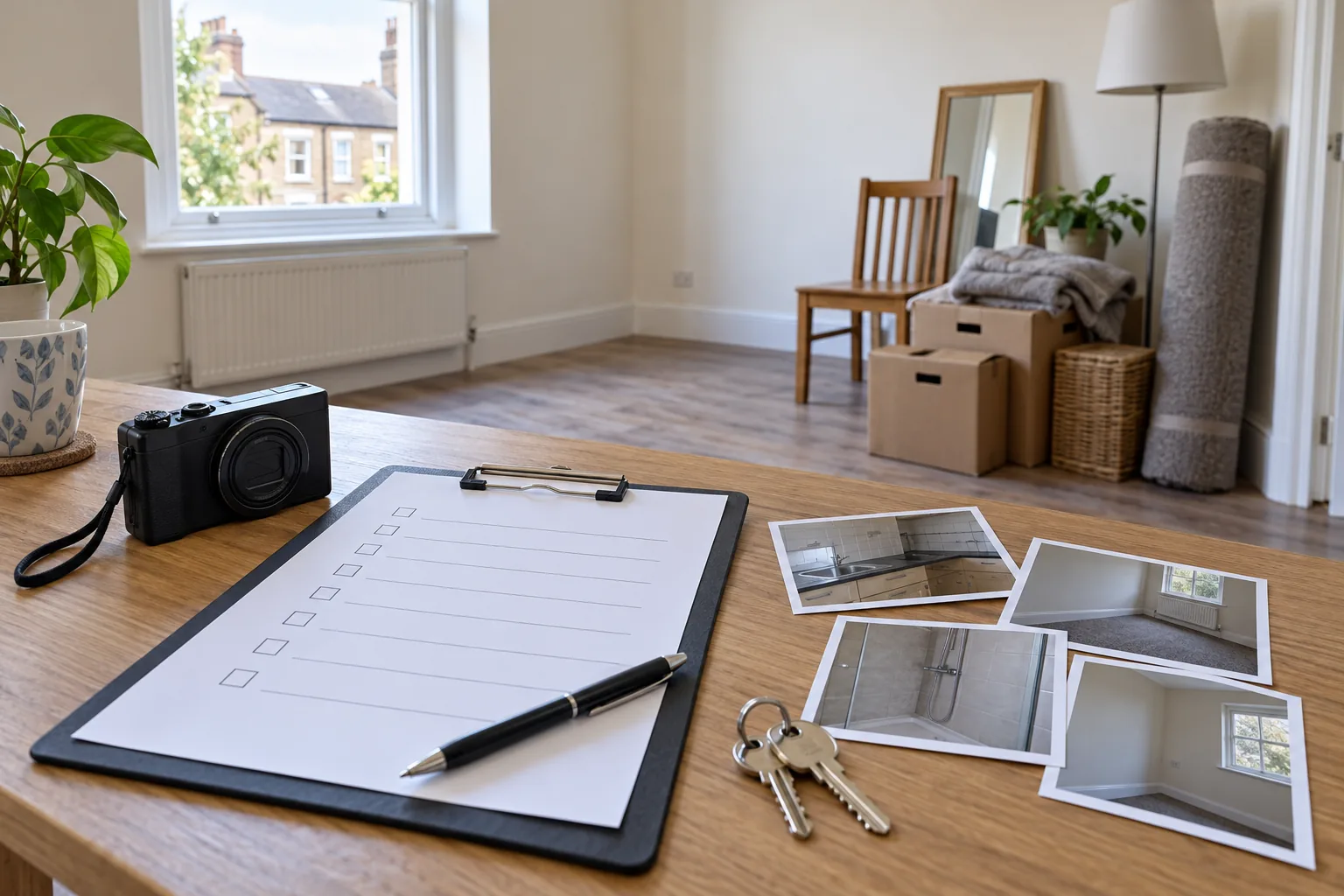
Plan the gap between checkout and the next move-in
Work backwards from the incoming tenancy or planned marketing date. Allow a visit for documentation, time to resolve uncertain goods, the authorised waste collection, cleaning, minor repairs and a final inventory check. Several trades cannot all use the same hallway and loading space at once. If a cleaner arrives before the bulky furniture is removed, the room may need cleaning again after the collection.
Prioritise material that blocks safe access: bagged rubbish in the entrance, bulky items in a communal route and waste near a fire exit. If a block has lift-booking or loading rules, check them with management. Do not leave items in shared areas while waiting for a collection. Tell the crew whether the flat is above ground level, whether there is a working lift and how far the vehicle can legally stop from the entrance.
If the property is furnished, agree where retained items will be stored while work is carried out. Moving the landlord's own furniture to a protected room may be simpler than putting it in the collection area with temporary labels. Keep keys and access codes under the control of the landlord or agent, and confirm who will meet the team on site.
Request a quote with the authorised load only
After the scope is settled, take wide photographs of the items for collection and close-ups of anything large, heavy or unusual. Count bags and boxes; describe sofas, beds, wardrobes, appliances and loose materials. A quote based on “one flat of rubbish” can differ sharply from the actual job if most furnishings are to stay or access is difficult.
Ask whether the price includes carrying from inside, dismantling furniture, loading and disposal. Tell the provider about stairs, parking restrictions, lift rules and any outbuilding. Our house clearance service covers larger removal jobs; furniture disposal may suit a few bulky items. The price guide is indicative until the actual load and access are assessed.
Send the removal list to the person who will supervise the visit. A photograph of a room does not tell the crew which of two similar chairs belongs to the landlord. Mark authorised items directly where possible and give written exclusions. If a decision changes, update the list before anyone carries the item away.
Check the property after collection
Walk through each room while the team is still present. Compare the work with the agreed list and check cupboards, storage and outdoor spaces. Note any authorised item left behind because it needs a different disposal route. Do not ask the crew to remove an uncertain possession as a last-minute favour. Confirm that communal areas have been left clear and that any lift or loading access is released as agreed.
Keep the collection receipt, provider details and the before-and-after photographs with the tenancy file. GOV.UK advises householders using a private business to check an authorised waste carrier. The record helps show who removed the waste and when. It does not by itself prove that a deposit deduction or disposal of tenant goods was lawful; those are separate decisions requiring appropriate evidence and process.
Only then move on to cleaning, repairs and the incoming inventory. If the property still contains goods whose ownership is unresolved, keep those out of the new tenant's space and handle them through the appropriate route. A tidy flat is useful, but a defensible handover depends on a clear record of what was removed, retained and left for further decision.
When the authorised waste load is documented and the access details are known, contact Rubbish Please for an estimate. Give the team the collection date that fits between checkout and the next stage, and flag any restricted materials before booking.