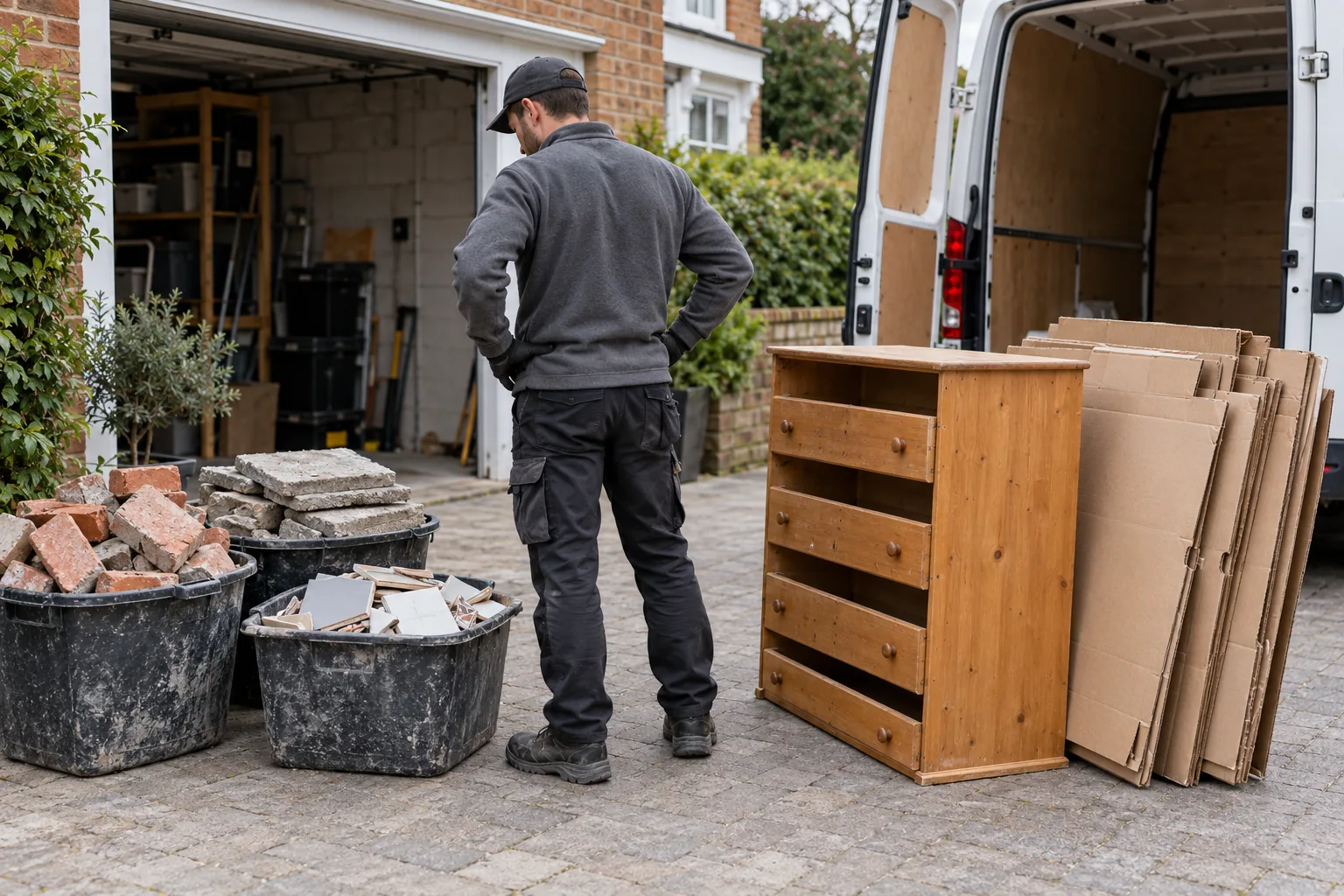
A van-load quote often begins with a simple question: how much space will the rubbish take? Space matters, but it is only one part of the job. A van carrying broken tiles, bricks and soil can reach its permitted carrying weight long before its load area looks full. The same vehicle may hold much more volume when the load consists of light packaging or empty furniture. That difference affects the vehicle plan, the number of trips, handling time and the way material is accepted for disposal.
If you are asking for a collection price, describe both the size and the substance of the load. A collector cannot estimate heavy waste reliably from a photograph of closed bags alone. This guide explains the weight-versus-volume issue, the materials that deserve an explicit mention, and the questions that make a quote easier to compare. It does not assume every provider uses the same vehicle or price structure.
Space in the van is not the whole capacity
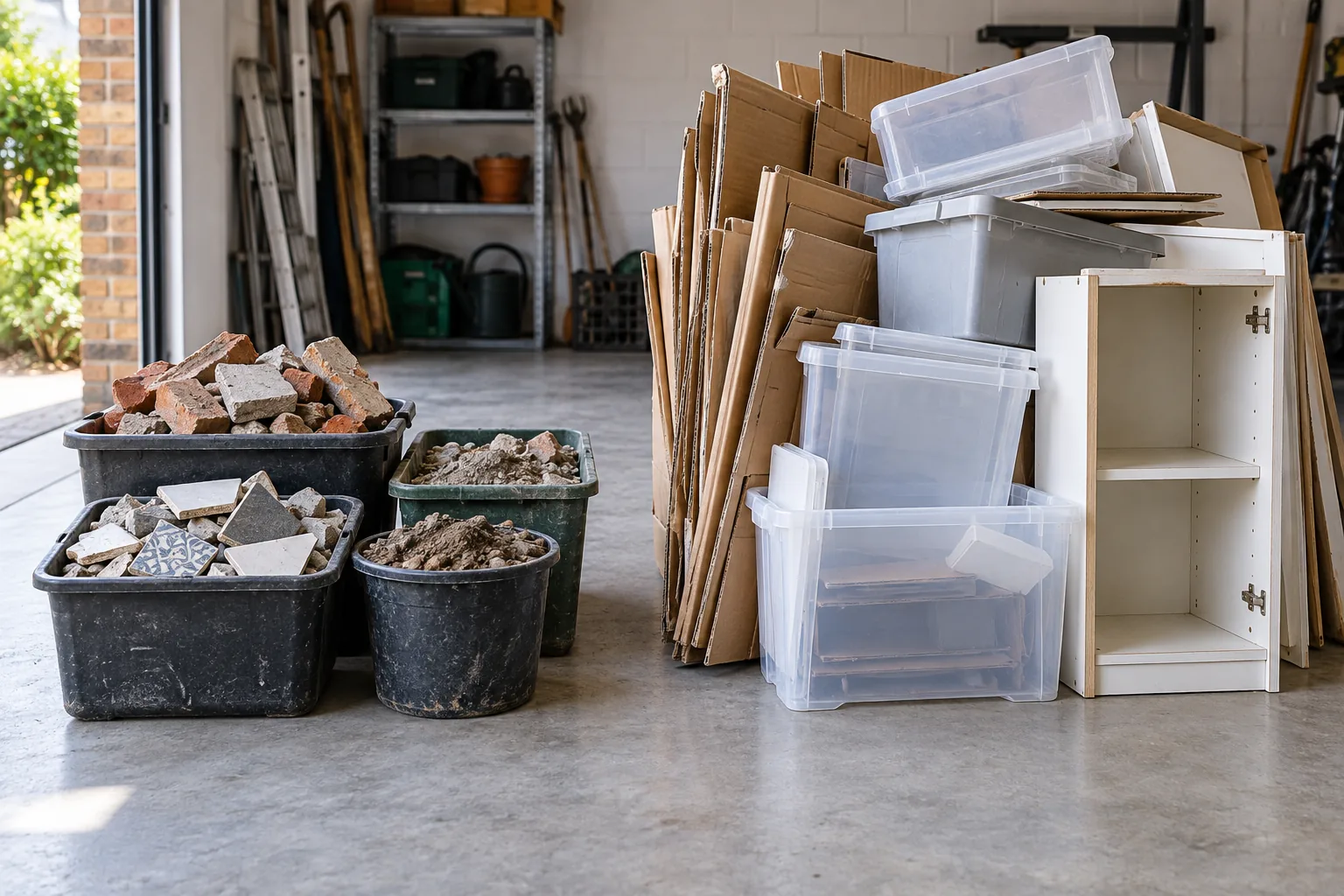
Picture two piles occupying the same corner of a garage. One is made of flattened cardboard, plastic storage boxes and an empty chest of drawers. The other is made of paving slabs, ceramic tiles and bags of damp soil. Both may take similar floor space, yet their weights can be very different. A vehicle has physical space for the load and a lawful payload limit. The crew must respect both. A quote based only on the visible fraction of the van can therefore be misleading.
The provider may need to send a different vehicle, restrict the amount taken on one visit or arrange another trip. A heavy load also takes more time to lift and secure. Even when it can fit into one van, the collector may have to distribute its weight appropriately rather than stacking it wherever a gap appears. The disposal route may differ for clean rubble, mixed household waste and materials that need specialist handling.
Avoid treating a quoted “quarter van” or “half van” as a promise that any material occupying that much space will cost the same. Ask what that volume band includes, whether it assumes ordinary household material, and what happens if the load is heavier than expected. The answer should appear in the written quote or booking confirmation, especially for renovation debris.
Know which items can make a load unexpectedly heavy
Bricks, concrete, paving slabs, roof tiles, ceramics, plaster, soil and wet timber are obvious examples, but small-looking items can also matter. A few bags of books can be harder to handle than several bags of clothes. Old carpet may become much heavier when wet. Garden waste can include dense roots and saturated soil even if the photographs show mostly leaves. A broken cabinet with stone or glass panels weighs more than a simple empty cupboard.
Builders' waste is particularly easy to underestimate when it has already been bagged. A black bag filled with rubble does not look very different in a wide photograph from one filled with lightweight offcuts. Tell the provider what each bag contains and how many bags there are. If you know that a bag is too heavy for one person to lift safely, say so; do not give an invented weight. The same applies to an appliance, safe, cast-iron bath or large stone worktop. Dimensions and a description are more useful than a guess that it is “normal”.
Keep distinct materials visible in the description. “Twelve bags of broken tiles, three timber lengths and two bags of packaging” gives a better starting point than “seventeen bags”. Where material is loose rather than bagged, provide approximate dimensions and photographs from more than one angle. The collector can then decide whether to discuss a weight allowance, separate collection or a specialist route.
Photograph the load so weight clues are visible
Start with a wide view of each pile, then take close-ups of the materials that a wide view hides. Show the contents of an already open bag if it is safe and convenient, or add a written list instead. Do not cut open an unknown bag or disturb material that might be hazardous to improve a photograph. Include a familiar object for scale, such as a doorway, and show the number of bags rather than photographing only one representative bag.
If the heavy material came from building work, explain the work in plain terms. “Bathroom floor tiles and adhesive from one small room” is more informative than “building waste”, though it is still only an estimate until the load is assessed. Say whether the material is dry or wet, separated or mixed, and whether there is timber, metal, plasterboard or insulation in the same pile. A photo can support the description, but it cannot reliably establish weight from appearance alone.
Show where the load sits and how it will reach the vehicle. Ten dense bags on the ground floor next to an accessible loading point are a different carrying job from ten bags on the fourth floor with no lift. If there are steep steps, a long garden path, a narrow stair or a distant legal parking place, include those details. Our guide to photographing rubbish for a collection quote gives a full shot list; its practical point is to show the complete job, not just the most photogenic pile.
Ask how the quote handles weight and extra trips
Providers may price by load size, material, labour, weight or a combination of those factors. Ask what has been assumed in your specific quote. Is the price for one visit and one vehicle? Does it include lifting from the stated location? Is there a weight limit or an allowance for particularly dense material? If the crew finds more material than described, how is a revised price agreed before work begins? A useful quote will make these boundaries clear enough that you can compare it with another offer.
Be careful with a price that sounds precise when the underlying information is vague. A photograph of a pile is useful, but it cannot identify every concealed material or measure exact weight. A provider can offer an estimate and explain what might change it. You can reduce uncertainty by listing item counts, approximate pile dimensions, known heavy components and access conditions. Ask the collector to confirm whether the amount will be assessed again on arrival.
If two quotes differ, compare their scope before comparing the totals. One may include two people carrying rubble from a rear garden, while another assumes bags at kerbside. One may include separated plasterboard or additional trips, while another excludes them. The Rubbish Please price guide provides indicative load sizes, but an individual estimate should reflect the material and access you actually describe.
Keep heavy materials separate where practical
Separation can make the job easier to describe and can help a provider identify an appropriate route. Keep clean rubble distinguishable from general household rubbish. Set aside timber, metal, electrical items and plasterboard if these are present and if doing so is safe. Never make a mixed pile look like clean inert waste by hiding other materials beneath the top layer. Be candid about what is in each stack or bag.
This does not mean you should lift dense objects unnecessarily. Leave unstable slabs, sharp material or very heavy pieces where they are safe, and tell the collector their location. If work is still in progress, wait until the waste list is stable before treating an estimate as final. Adding a second pile of rubble after booking can alter the trip count even if the new material takes little apparent space. Take fresh photographs when the scope changes.
Some materials need a specialist route and should be identified before booking: suspected asbestos, chemicals, gas cylinders, fuels, batteries, sharps and unidentified containers are examples. Do not mix or move them into ordinary bags to simplify the quote. Ask the provider what it can lawfully collect and use the appropriate specialist or local authority route for anything excluded. GOV.UK's household waste guidance also explains your responsibility when arranging for a private business to take household waste.
Plan safe access and realistic loading time
Weight changes the work outside the van as well. Dense bags should not be filled so heavily that they tear or cannot be handled safely. If material is loose, tell the collector whether it is already contained and whether bagging is expected as part of the service. A team that arrives expecting sealed bags may need more time and equipment when the waste is loose across a floor. The price and appointment window should reflect the work described.
Measure a bulky heavy item and any tight doorway. A stone worktop may require a different carrying plan from a sofa even if both are the same length. Tell the collector about stairs, lifts, parking, building access hours and any restriction on moving material through communal spaces. Do not place a heavy pile on a pavement or shared route before permission and collection arrangements are clear. Leave it in a safe position and describe the route honestly.
For a renovation, consider how the waste is produced over time. One collection after all work ends may be simpler to price than several uncertain partial loads, but space and safety at the property may call for stages. State your preferred timing and ask whether the provider can collect the expected material within its vehicle and handling limits. Our builders clearance service is a relevant starting point for construction debris; waste removal covers broader loads.
Give the collector a concise weight-aware brief
Before requesting a price, write down the material types, counts or rough dimensions, where each pile sits, and anything particularly dense or wet. Add a few clear photographs of the whole load, the heavy components and the carrying route. State whether the material is bagged, loose, mixed or separated. Mention large single items and any uncertain or restricted material. This gives the provider enough context to explain the vehicle, labour and disposal assumptions behind its estimate.
Ask for the quote in writing and keep the description it was based on. Confirm whether it covers collection, loading, transport, disposal and any likely extra trip. If the load changes, send an update before the visit. Check that the collector is an authorised waste carrier and retain the collection paperwork. Then contact Rubbish Please with the item list and photos. A realistic description of weight as well as volume helps the team plan a suitable collection and gives you a price you can evaluate with fewer surprises.