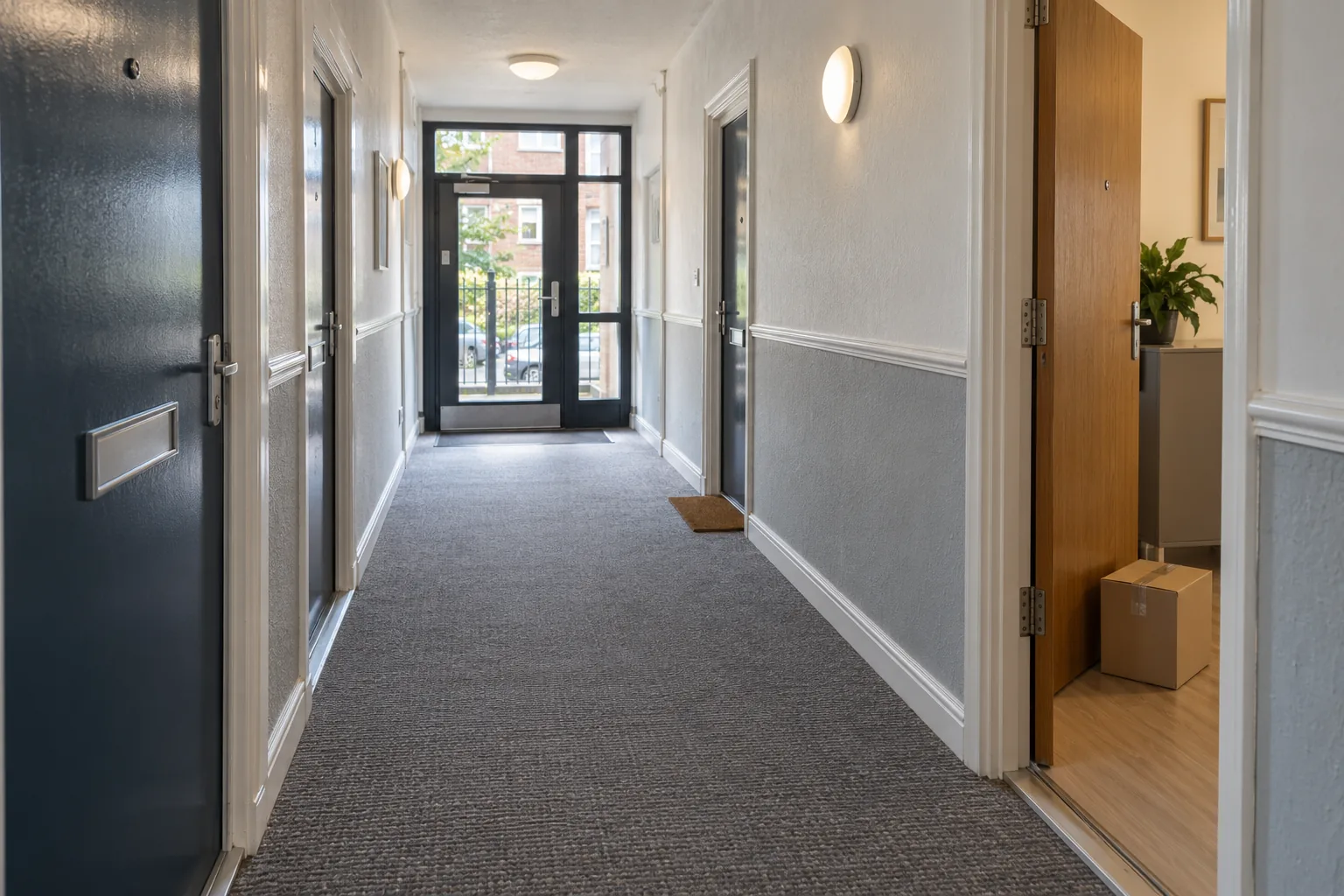
A shared hallway changes the way a rubbish collection should be planned. The items may start inside one flat, but the route belongs to other residents as well. Bags or furniture left outside a door can obstruct access, create a trip hazard or breach building rules before the collection team even arrives. A good plan keeps the material inside the property until it can move directly to the vehicle, with permissions and a clear carrying route arranged in advance.
The job is not necessarily large. One sofa may be harder to move responsibly through a narrow communal lobby than several bags collected from a private house. Before booking, establish who controls the shared area, which route is available and whether the collector will carry from the flat. This guide focuses on the communal section of the journey rather than on sorting the items themselves.
Identify who controls the common area
Check the building's rules or ask the managing agent, freeholder, landlord or concierge about bulky-item movements. There may be permitted hours, a service entrance, lift-booking procedure or a requirement to protect floors. If you rent, your landlord may know the building policy but may still need to confirm it with management. Get the practical instructions before giving a collector an arrival window.
Describe the job honestly. A few sealed bags may be treated differently from a large wardrobe or builder's waste. If the work involves a lift, loading bay or communal door that usually stays locked, ask who will release it and when. Do not plan around access you have not been granted. A contractor arriving to find a locked rear gate or a booked lift can lose the collection slot.
Keep the agreement in a message or note that the person supervising the collection can show if questions arise. A concierge on a later shift may not know what an earlier colleague said. The collection crew should receive the approved route and any time limit before the visit.
Walk the route from the item to the vehicle
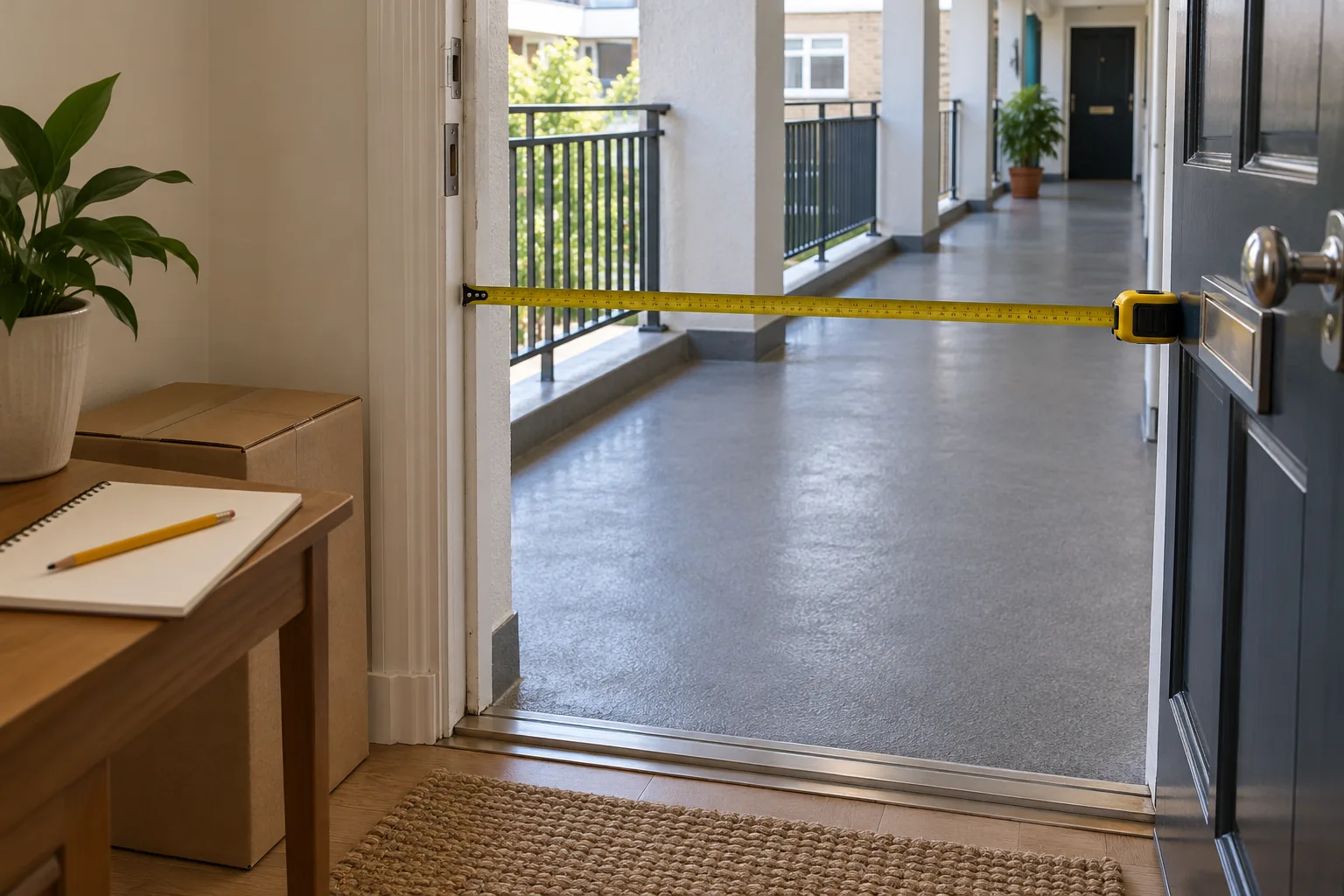
Start at the item, not at the building entrance. Measure the internal doorway, flat threshold, corridor width, lift opening or stair turns, lobby and external gate. Photograph tight corners from both directions. Check whether a handrail, radiator, fire door or mat reduces the usable space. A cabinet can fit down the corridor but still fail to turn at the lobby door.
Tell the provider if there are steps between levels, an uneven threshold or a long distance from the building door to the legal loading point. If the only route crosses a courtyard, include that. A quote for a “ground-floor flat” may be misleading when the team must carry every item a long way through shared property.
Ask whether the collector will carry from inside the flat and whether dismantling is available for awkward furniture. Do not move a heavy item into the corridor yourself simply to make the job easier to quote. The team can assess the whole route from photographs and measurements before any communal space is occupied.
Keep fire routes and neighbours' doors clear
Do not stage bags, boxes, appliances or furniture on a landing while waiting for a collection. Even a short wait can block a neighbour's door or reduce the usable route in an emergency. Keep the load inside your own property until the crew is ready to carry it through. If the building has a designated temporary area, use it only under the applicable rules and for the agreed time.
On collection day, keep one person available to open doors and direct the crew. If a communal door must stay secure, arrange a way to admit the team without propping it open unattended. Ask other residents to avoid the route briefly if a particularly large item is being carried, but do not expect them to surrender access for a long, unannounced period. A clear, short movement is easier for everyone.
If the passage becomes temporarily narrow, the crew should pause or reposition rather than force an item past someone. Children, pets and residents with mobility needs may need extra time to pass. The point of planning is to avoid making neighbours choose between waiting in their homes and squeezing around a load.
Protect surfaces without creating new hazards
Communal floors, walls and doors may be more vulnerable than the inside of a flat. Photograph existing marks at the narrow points and show the collector any fragile finish. Ask what protection the team brings for large items and whether the quoted service includes it. Building management may have its own requirements. Do not lay down loose plastic, cardboard or boards that can slide underfoot.
Remove small obstacles you control, such as a loose mat or your own delivery boxes, where permitted. Do not remove or alter communal fixtures without approval. An item that cannot pass safely with the route as it is may need dismantling or a different collection method. Tell the provider before arrival if a sofa or cabinet has sharp metal parts or loose glass that could damage walls or break during carrying.
When the load has gone, check the corridor and lift for debris, packaging and marks. Deal promptly with anything caused by the collection and tell the building manager if a problem needs attention. A short before-and-after record can help distinguish new damage from older wear without turning a routine collection into a dispute.
Coordinate the loading point outside
The shared hallway is only one part of the route. Check where the vehicle can legally stop and whether that position is close to the agreed entrance. A managed building may have a service bay that requires booking. A London street may have loading restrictions that change by time of day. Confirm the actual signs and building rules rather than assuming a brief stop will be acceptable.
Tell the collector the distance from the outer door to the vehicle, any gate code and whether someone will meet the driver. Do not promise a private parking space that you cannot reserve. If the load must cross a pavement, the team needs a clear movement plan that does not leave furniture unattended outside.
Arrange the collection time so it does not clash with another move, a delivery or building cleaning in the same narrow space. If several flats are clearing items, a coordinated booking may help, but each owner should still identify their own material and agree who is paying for what. Do not let an unlabelled communal pile replace a clear collection list.
Give the team an exact item list
Photograph each item inside your flat after deciding what stays. Count bags and boxes; identify bulky furniture, electrical equipment and anything unusually heavy. State which floor the material is on and whether there is a lift. Explain any restrictions on carrying hours, door access or floor protection. A quote based on the full route is more reliable than one based on a pile shown without context.
Our waste removal service can be discussed for mixed household material, and furniture disposal may suit a few large pieces. The price guide offers indicative load sizes, but the actual work includes the described carrying and loading conditions. Clarify whether dismantling, bagging or moving material from inside the flat is part of the quote.
Paint, chemicals, gas cylinders, asbestos-containing material, sharps and unidentified containers should not be mixed into ordinary household waste. Electrical goods and batteries may also need a dedicated route. Tell the provider what you have before the visit. An unexpected restricted item can leave material behind in the flat when the communal route has already been booked.
Finish with a clear corridor and a record
Meet the team, point out the approved route and confirm that the items in scope are inside your property. Keep the contact number for the building manager or concierge available if a gate or lift issue arises. If access turns out to differ from the information provided, discuss the new plan with the collector before moving a large item into shared space.
After the team leaves, walk the hallway, lift, lobby and outdoor path. Remove any loose debris, check doors are secure and return shared equipment or keys according to building rules. Keep the receipt and business details. GOV.UK advises checking that a private business taking household waste is an authorised waste carrier.
A collection through a shared hallway can be straightforward when it is treated as a timed movement, not as temporary storage. With the building's permission, route photographs and an exact item list, contact Rubbish Please for an estimate. Explain the communal-access rules at the outset so the team can plan for the people who share the space.