
A furnished rental rarely needs to be emptied completely between tenants. The useful job is to decide which landlord-owned pieces remain suitable, which need repair or replacement, and which can leave without disrupting cleaning or the next inventory. That requires more care than a general rubbish collection: a bed frame, dining chair or lamp may be an asset in the letting, a tenant's possession, or an item the landlord has already agreed to replace.
Start with a current inventory and a room-by-room inspection. Give every furnishing a decision before requesting a removal quote. This guide focuses on the landlord's own furniture and practical turnover work. If a departing tenant has left personal belongings, resolve ownership and the relevant process separately before including anything in a clearance load. A short vacancy window does not turn an uncertain item into waste.
Compare the room with the furnished inventory
Bring the check-in inventory, photographs and any later updates to the property. Walk through each room and identify the furnishings that belong to the letting: beds, sofas, tables, chairs, wardrobes, curtains, lamps and appliances. Note pieces that have been replaced during the tenancy. A generic phrase such as “one wardrobe” may not identify the actual item if two have occupied the room over time; use photographs, colour, size and location.
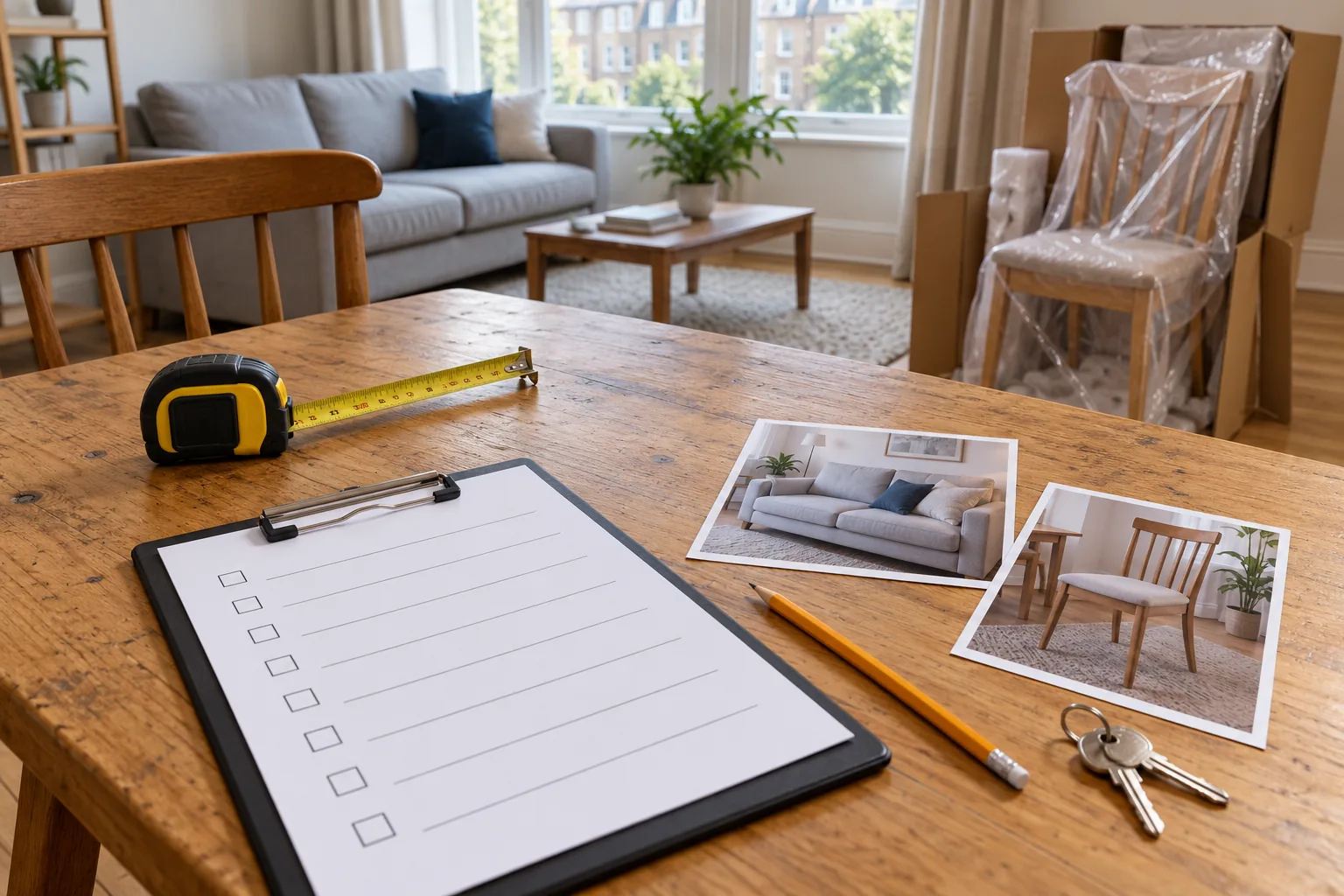
Create a fresh list with four statuses: retain, repair, replace, and decision needed. Keep tenant-owned goods and items with uncertain ownership outside this list. The retain group should be clean, safe and appropriate for the next tenancy. The repair group needs a named contractor and date. The replace group needs an approved budget and a confirmed route for the old piece. Do not rely on a new item arriving before you have checked its delivery date and dimensions.
Photograph the condition of each piece before moving it. That record helps an agent, owner and contractor work from the same information. It also prevents a usable item from being removed because it was placed next to genuinely broken furniture during a busy turnover day.
Decide whether a piece still works for the room
Condition is only part of the decision. An oversized sofa may be intact but make a small living room difficult to use. A dining table may be suitable for the next tenancy while its chairs have become unstable. Check function, fit, cleanability and whether the furniture can be moved safely through the property's access route. Do not keep a piece solely because disposing of it would take effort.
Ask the letting agent what the next inventory will include and whether prospective tenants have already been shown the property furnished. Removing a large item between viewing and move-in can create an avoidable expectation issue. If a replacement is planned, record it and update the inventory and listing information through the appropriate people.
Some items may be better repaired than replaced. A loose handle, missing shelf or worn but serviceable table could need a small job rather than a full clearance. Conversely, a broken frame or heavily damaged upholstered piece may not be suitable for reuse. Make the decision item by item; a “refresh” need not become an unnecessary full furniture replacement.
Measure replacements before scheduling removal
Measure the room, doorway, stair turn and lift before ordering replacement furniture. A new wardrobe that fits the bedroom but cannot reach it creates a second clearance problem. Confirm any assembly requirements and the space needed for delivery. Check whether the old item must leave before the new one arrives, or whether the property can safely accommodate both for a short handover.
Plan the sequence with cleaners and decorators. If an old sofa is being removed, do it before the final floor clean. If walls behind a bed need repair, clear that bed before the contractor arrives. If a new appliance requires installation, keep the old one available only as long as necessary and tell the collection provider what type it is. Avoid stacking removed furniture in a hallway or communal area while waiting for a vehicle.
Keep an updated room sheet that shows the old piece, its removal date, the replacement and who is responsible for checking it. The next inventory should describe what is actually present at handover, not what was intended when the refresh began.
Give reusable furniture a confirmed route
A piece leaving the rental may still have use elsewhere. Clean furniture in working order might be moved to another property, offered to a reuse group or donated where accepted. Confirm the recipient's condition rules and collection date before reserving space for it. Upholstered furniture and electrical goods may face additional acceptance checks; describe them honestly.
Photograph the piece and record its dimensions. If a charity or buyer must collect it from an upper-floor flat, tell them about stairs, lift rules and parking. A promising message is not a completed handover. Set a deadline before the next tenant moves in and keep a backup plan for anything uncollected.
Do not mix reusable goods with waste merely to make one large pile. A clearly separated route gives the recipient a chance to assess the item and helps the removal crew understand what is authorised to take. If the item is broken, damp or unsafe, ask about the appropriate disposal route rather than presenting it as a donation.
Build a collection list for the old furnishings
Once retain, repair and reuse decisions are complete, photograph only the items authorised for removal. Show each bulky piece and the route out of the property. Count smaller items and describe whether they are bagged, boxed or loose. A quote for “a furnished flat” is too broad if most of the furniture will stay. Tell the collector whether carrying from inside and dismantling are needed.
Our furniture disposal service may suit a small replacement programme, while house clearance is relevant where a larger part of the property must be emptied. The price guide shows indicative load sizes; the actual job depends on volume, weight, material and access. Give the team a written list of the exact pieces to take, especially when similar furniture remains in the same room.
Declare electrical appliances, batteries and unusual materials before booking. Paint, chemicals, gas cylinders, asbestos-containing material and sharps should not be hidden among furniture. Some items need a specialist or local-authority route. Keep anything whose ownership is unresolved out of the collection scope.
Protect the next tenant's access and inventory
Arrange the removal before the final cleaning and inventory inspection where possible. Make sure the crew has a safe path through the property and that the vehicle can load lawfully. If a managed building requires lift or loading approval, book it ahead of time. Keep keys and access codes with the landlord, agent or authorised contractor. Confirm who will meet the team and who can approve a change to the scope.
After collection, walk through every room against the list. Check that retained pieces are still present and that old furniture has not left marks, fixings or loose parts requiring attention. The cleaner can then work around the final furnishings, and the inventory clerk can record the actual contents. Keep before-and-after photographs and the collection receipt with the property file.
If a private business takes household waste, GOV.UK advises checking it is an authorised waste carrier. Keep the provider's details and receipt. That record is useful for the property's management; it does not replace the separate process for handling any tenant possessions or tenancy-deposit question.
Finish with a room-ready check
Walk through the flat as an incoming tenant would. Is there enough usable furniture for the tenancy as described? Are cupboards and drawers empty of old loose items? Can doors open fully, and are communal routes clear? Has the inventory been updated to match what is actually there? If a replacement has not arrived, record a realistic delivery plan rather than pretending the room is complete.
A furnished turnover works best when the removal is one step in a sequence: inspect, decide, reuse or collect, clean, install replacements and record the final contents. If you have an itemised removal list and photographs, contact Rubbish Please to discuss the collection window. The team can quote for the authorised old furnishings while the landlord keeps control of everything intended for the next tenancy.