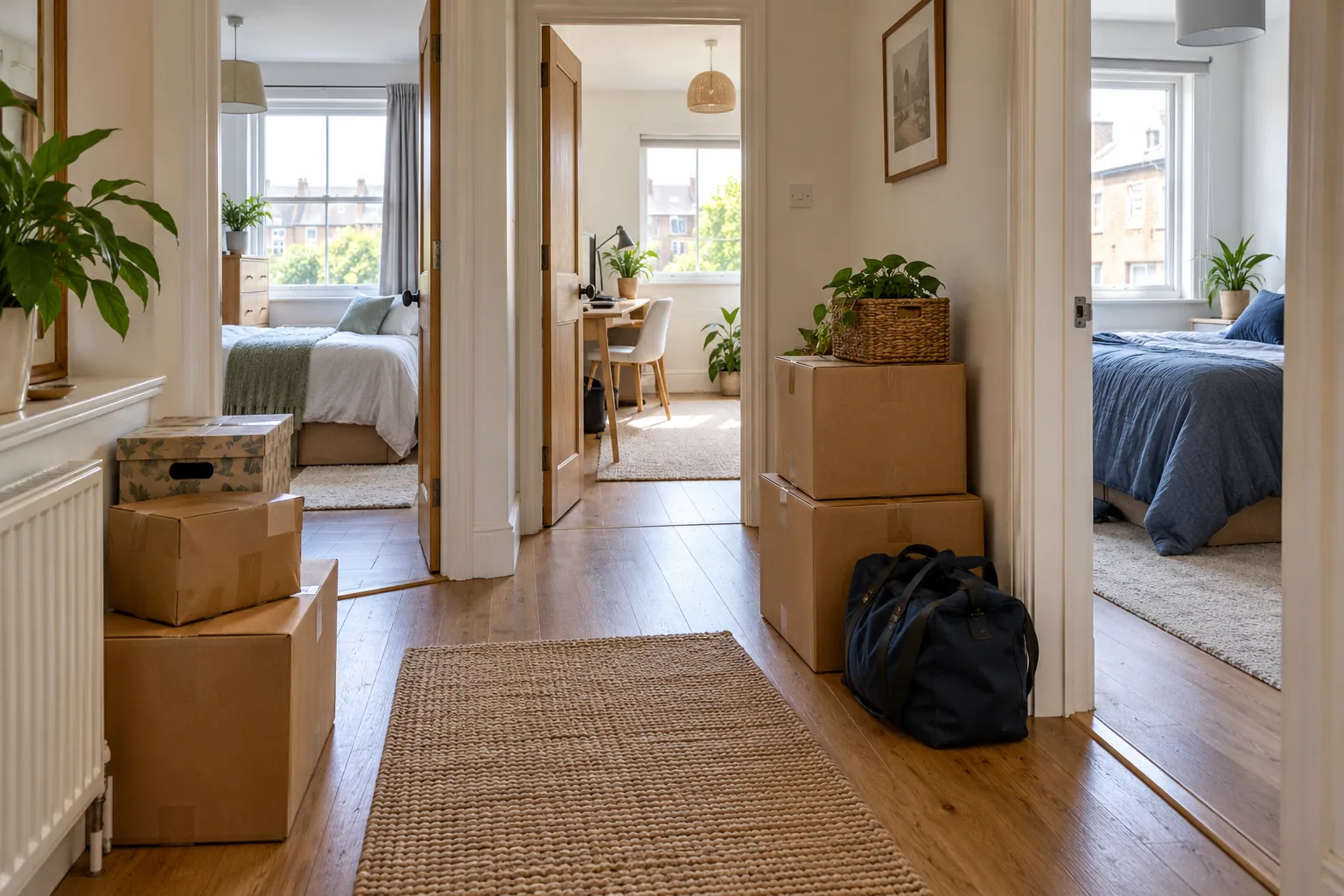
In a shared house, one person's move-out can leave a problem for everyone else. The departing tenant may remove their bedroom possessions but leave a chair in the kitchen, a bike in the shed or several bags beside the bins. When everyone leaves at once, nobody may feel responsible for shared cookware, furniture or the accumulated contents of a hallway cupboard. A written plan made before the first moving van arrives is easier than sorting it out after keys have changed hands.
This guide is about practical coordination between housemates in England. It cannot decide what a tenancy agreement says about liability or whether a landlord can claim a particular cost. Read the agreement, speak to the landlord or agent where necessary, and resolve ownership before authorising a waste collection. The simplest aim is to identify what each person will take, what will stay by agreement, and what everyone has agreed can be removed.
Put every move-out date on one calendar
Ask each housemate for their final packing day, vehicle or mover arrival time, cleaning slot and key-handover date. Someone may leave a week early while still paying rent, or retain access to collect a desk later. Write the dates down and agree who can be present for a final walkthrough. Do not assume that the last person physically in the property has accepted responsibility for everything left behind.
Add any inspection or checkout appointment. A collection scheduled after the inspection may be too late to clear a shared hallway; one scheduled too early may take furniture someone still needs for their move. Leave a buffer between the waste visit and the final clean. Carrying bulky items can reveal dust or marks that need attention after the room is emptied.
If the house has a narrow street, parking controls or shared entrance, decide when a vehicle can load without blocking neighbours. Check building rules if it is a flat or managed house. A clear arrival window helps movers and the collection crew avoid working against one another.
Give shared items a named owner
Start with the objects everyone uses: kitchen equipment, small appliances, a shared sofa, shelves, lamps, tools, garden furniture and cleaning supplies. For each item, record who owns it, who is taking it, who has permission to leave it for the next occupier, or whether it is authorised for removal. An item bought jointly is not automatically waste because one housemate is leaving.
Where ownership is uncertain, ask the group rather than guessing. Photograph the item and share its location. A message saying “Does anyone want this table?” is less useful than “Who owns this table, and who will collect it by Friday?” Give a clear reply deadline before the collection is booked. Keep uncertain items separate from the agreed waste pile.
Furniture supplied by the landlord needs particular care. Compare it with the inventory and confirm what should remain. A loose chair in the kitchen may be part of a furnished letting, while an identical-looking chair in a bedroom may belong to a tenant. Do not ask a collector to decide from appearance alone. If the group wants to leave an item for the next tenants, get the landlord or agent's agreement first and record it.
Sort each bedroom before the communal rooms
Each person should clear and check their own bedroom, including drawers, under-bed storage, wardrobes and any private storage box. Keep passports, medication, documents, devices and valuables away from the collection load. If a housemate is absent, do not empty their room on the assumption that their possessions are abandoned. Agree an authorised handover or seek advice about the tenancy and access position.
After private rooms are settled, work through the kitchen, bathroom, hall, garden and shed. Use four destinations: take, leave by agreement, offer for reuse, and remove. Label boxes or groups clearly. A “decide later” group is useful for disputed or uncertain items, but it needs a named person and a decision date so it does not simply become the final pile at checkout.
Check cupboards and appliances carefully. Food, crockery, utensils and cleaning products can accumulate over several tenancies. Do not put unknown chemicals into general rubbish or mix them with loose household waste. Ask the landlord, local authority or a specialist about materials whose disposal route is unclear.

Make a fair plan for the unwanted load
The most practical approach is to agree the removal scope and how any cost will be shared before booking. A person leaving early can photograph and list their portion, but the final quote may depend on the combined load and access. Keep the discussion concrete: number of bags, bulky pieces, who can help bag loose material, and which items need a different route. A vague promise that “someone will sort it” usually fails when each person has a moving deadline.
Do not divide a collection bill based only on who happens to be present when the crew arrives. Record any prior agreement between housemates and keep receipts. If there is a deposit question, follow the tenancy agreement and the applicable deposit scheme process. GOV.UK's tenancy deposit guidance explains how protected deposits work; a waste-collection invoice alone does not decide how a dispute should be resolved.
Reuse can reduce the load, but only if someone confirms collection. Give a charity, neighbour or buyer the item's dimensions and condition. Set a cut-off date. A sofa promised to a stranger who has not arranged transport can still be in the lounge on the morning keys are returned. Keep a backup decision for anything that remains uncollected.
Keep halls, bins and pavements usable
Avoid treating shared access as temporary storage. Bags and furniture left in a hallway can obstruct residents, movers or an emergency exit. Do not put a bulky item beside communal bins unless the collection arrangement specifically permits it. A bin area is not a substitute for booking the appropriate route for a mattress, appliance or large piece of furniture.
If the collection team must carry items from bedrooms or a rear garden, describe that in the quote. Include stairs, narrow turns, lift access and the route to the vehicle. If a housemate has already left, make sure the person meeting the crew has access to the agreed rooms and understands which doors should remain closed.
Before collection, take wide photographs of the authorised pile and close-ups of bulky or unusual items. Count bags and boxes. State whether the material includes electrical equipment, heavy books, broken glass or garden waste. The provider can then discuss vehicle space, labour and any materials it cannot take. Our waste removal service describes the general collection route, and furniture disposal may fit a few large pieces. The price guide is indicative until the job is assessed.
Check the property together before checkout
Choose a final inspection time when at least one person who knows the shared-item decisions can walk through the house. Look behind doors, in kitchen cupboards, under sinks, in the shed, loft storage and garden. Photograph the condition of shared spaces after the authorised rubbish has gone. Record any remaining item and who will deal with it; do not leave it for the landlord to discover without an agreed plan.
Collect keys and access fobs according to the landlord or agent's instructions. Keep the waste receipt and the business details. GOV.UK advises checking that a private business taking household waste is an authorised waste carrier. One housemate can make the booking on the group's behalf, but everyone should know which items were in scope and when the collection happened.
If one person is staying while others leave, arrange a separate handover of the shared items that will remain. The continuing housemate should not be forced to inherit unwanted furniture or bags without a clear agreement. The departing tenants should not remove an item the staying person owns. A short signed or shared digital list can save a much longer argument later.
When the housemates have agreed the removal list, taken photographs and confirmed access, contact Rubbish Please for an estimate. Give the team one coordinator and one collection window. A shared move-out works best when the decisions are shared in advance and the physical collection has a clear, authorised scope.