
Downsizing creates a different sort of clearance problem from an ordinary tidy-up. The furniture and belongings may be useful and in good condition; there is simply less space at the destination. Decisions made from the old house alone can lead to a removal van full of items that have nowhere to go. Start with the new home's dimensions and the way you will live there, then choose what moves. That gives the remaining belongings a clear route to family, reuse, sale or collection.
The process is easier when it happens in stages. Measure first, protect irreplaceable things, decide which large pieces will fit, and only then plan the unwanted load. A household moving after decades in one place may need more time than the moving date suggests. You do not have to settle every small decision immediately, but you do need a safe and realistic plan for anything that cannot travel to the new address.
Map the new home before packing the old one
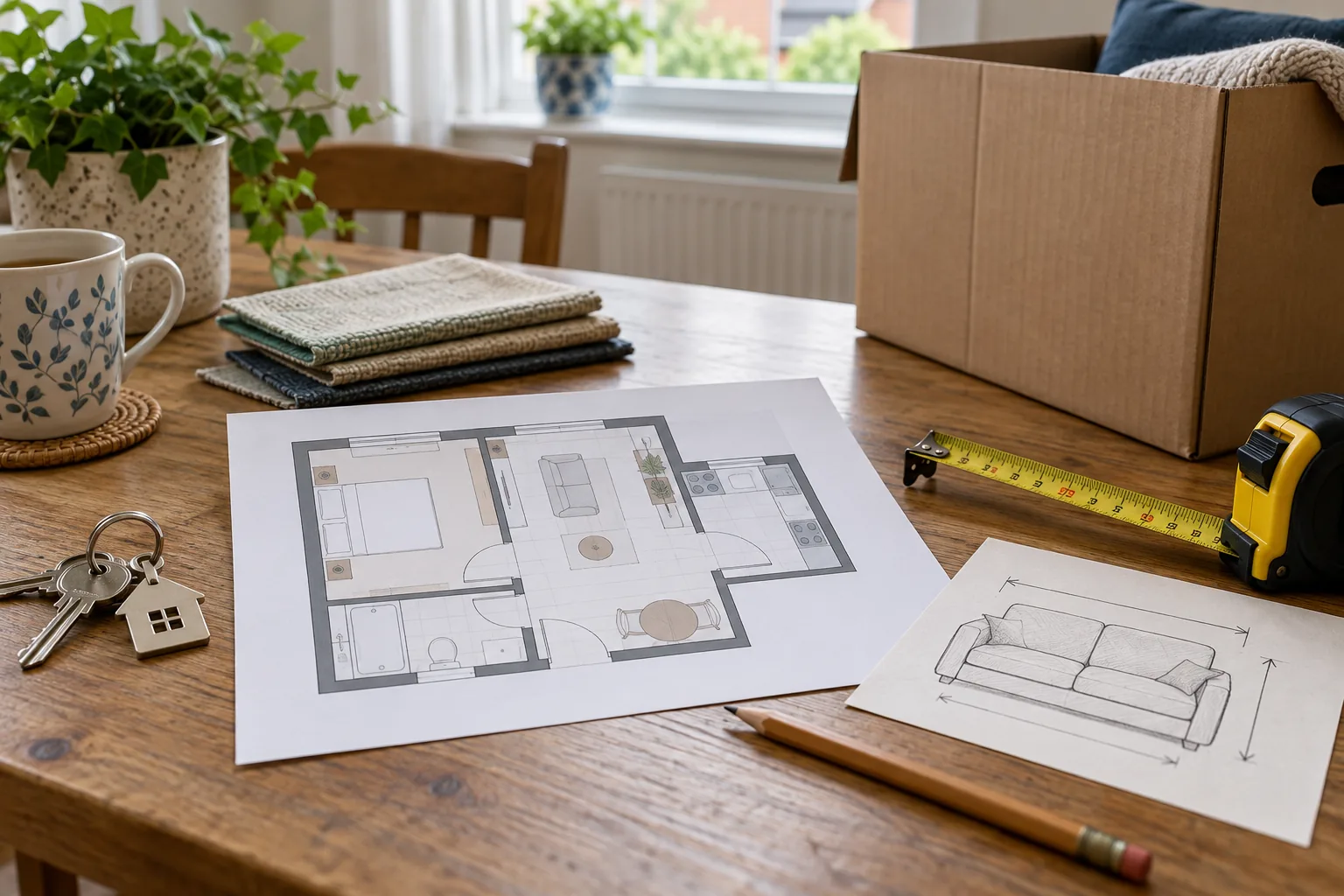
Request an accurate floor plan and measure the rooms yourself where possible. Check wall lengths, ceiling heights, alcoves, door openings and the space needed to walk around furniture. A sofa that technically fits against one wall may prevent a cupboard opening or make the main route awkward. Record the measurements of the largest pieces in the old home and compare them with the available positions in the new one.
Look beyond rooms. Measure the entrance, lift, staircase turns and internal doors at both properties. Ask the removals company to assess unusually large or heavy items. A wardrobe may fit in a bedroom but not pass through its doorway unless it is dismantled. Confirm whether dismantling and reassembly are possible for that piece before promising it a place in the new home.
Draw a simple layout with each intended piece marked. It does not need to be a polished design. The purpose is to give every large item a destination. If three bookcases are competing for one wall, decide which one has the best function and condition. The other two can then move into a reuse or collection plan well before moving day.
Choose by daily use, not only sentiment
In a family home, familiar furniture can carry memories even when it no longer works for daily life. Separate sentimental value from the item's practical role. You may keep a small object or photograph that preserves the memory without needing to move a damaged full-size unit. Equally, a modest table used every day may deserve space more than an expensive piece that rarely serves a purpose.
List the essential activities in the new home: sleeping, eating, storage, working and receiving visitors. Keep the pieces that support them safely and comfortably. Consider whether a large dining table could be replaced by a smaller one, or whether a guest bed would be better than a sofa in a room that also needs storage. Do not treat a smaller property as a challenge to fill every wall and cupboard on day one.
For disputed family items, agree a decision date and a named person to make the final call. If several relatives would like the same item, arrange that conversation outside the pressure of the removals crew arriving. Photograph the piece, note its dimensions and condition, and give each potential recipient enough information to say whether they can actually collect it.
Protect records and personal possessions early
Put passports, certificates, medical and financial records, jewellery, photographs, keys and digital devices in a clearly protected group. Keep it under your control rather than in the waste or donation pile. Check drawers, pockets and boxes before furniture is offered or removed. Long-held family homes often contain records in unlikely places, including inside books, old suitcases and the backs of cupboards.
If there is a collection of photographs, letters or children's work, consider whether it can be shared or digitised, but allow time for a proper review. Do not put irreplaceable originals in a pile awaiting a rushed final decision. A small sealed box marked for personal review can travel to the new home even if larger sentimental furniture cannot.
Keep an inventory of anything being passed to family members. A simple note saying who took which item and when prevents confusion after the move. The list also helps you distinguish a promised handover from a piece that is still physically in the house and needs a backup plan.
Give reusable items a confirmed destination
Once the new-home plan is fixed, identify pieces that are clean, safe and useful but will not fit. Offer them to relatives or friends with dimensions, photographs and a collection deadline. They may like a wardrobe in principle but have no route to transport it. Ask who will dismantle, carry and move each item. A confirmed date is more useful than an expression of interest.
Charities and reuse groups may accept some furniture and household goods, subject to their own condition, safety-label and collection rules. Contact them before relying on that route. Upholstered furniture, electrical items and large cabinets can be subject to particular requirements. Do not assume a charity can collect at short notice or accept a damaged item. Describe faults honestly and set a cut-off date for anything not collected.
Selling can work for pieces with genuine demand, but calculate the effort against the property deadline. Listing, answering messages, arranging access and dealing with cancellations can take more time than expected. If a piece remains unsold a few days before the movers arrive, decide whether it has another confirmed destination or belongs in the removal quote.
Build the collection list only after the move list
The unwanted load should be the result of a decision, not a room-based guess. Mark every large item with a removable label: moving, reuse pickup, or collection. Use different colours if several teams will visit. Keep the personal and move groups in a separate locked or clearly excluded area. A statement such as “take what is left” is risky when packing, family handovers and clearance are happening close together.
Photograph the final collection load. Show the whole room and close-ups of heavy, awkward or unusual items. Count bags and boxes, and identify appliances or electrical goods. Explain stairs, narrow doors, long carrying routes and vehicle loading restrictions. The collector can then estimate labour, space and disposal needs more accurately. Our house clearance service explains the broad process, while furniture disposal may suit a smaller number of bulky pieces.
Do not add paint, fuel, gas cylinders, asbestos-containing material, sharps or unidentified chemicals to an ordinary clearance load. These may need a specialist or local-authority route. Keep batteries and electrical goods identifiable, and tell the collector what they are. A change in the material or amount can change a quote; the price guide is indicative until the actual job is assessed.
Coordinate movers, collectors and property access
Decide which team comes first. In most downsizing moves, the removals company takes the possessions going to the new home and the collection team then removes the remaining authorised load. If the old property is too crowded for packing, a smaller early clearance of obvious waste may create safe working space. Whatever the sequence, tell each team what the other will be doing and avoid booking both for the same narrow hallway at the same time.
Make sure the people on site can answer questions. The move coordinator should know which furniture has been promised to family, which boxes contain important records and which rooms are excluded from collection. If the owners are not present, leave written instructions and a reachable phone number. A label is useful, but an authorised person should still confirm any last-minute change.
Check the old home after the movers leave and before the final collection begins. Empty drawers, loft corners, sheds and garden storage may reveal additional material. If there is more than the agreed quote covers, describe it before the team loads. Do not try to carry heavy pieces alone to save time; ask the appropriate crew about safe handling.
Leave room for the first weeks in the smaller home
The new home may reveal different needs once you are living in it. Resist filling every available space with “just in case” items from the old house. Keep a modest, clearly identified review group if you have room, with a date to decide its future. If the new property has almost no storage, make the decision before moving rather than paying to move boxes twice.
At the old property, check that promised reuse items have actually gone and that the removal list has been completed. Keep receipts or written confirmation of collections. GOV.UK advises checking that a private business removing household waste is an authorised waste carrier; retain the business details with your move paperwork.
If you have a floor plan, a settled move list and photographs of what will remain, contact Rubbish Please for a collection estimate. Explain the move date and whether you need a small early load or a final clearance after the movers. That makes the collection part of the downsizing plan rather than a last-minute scramble.