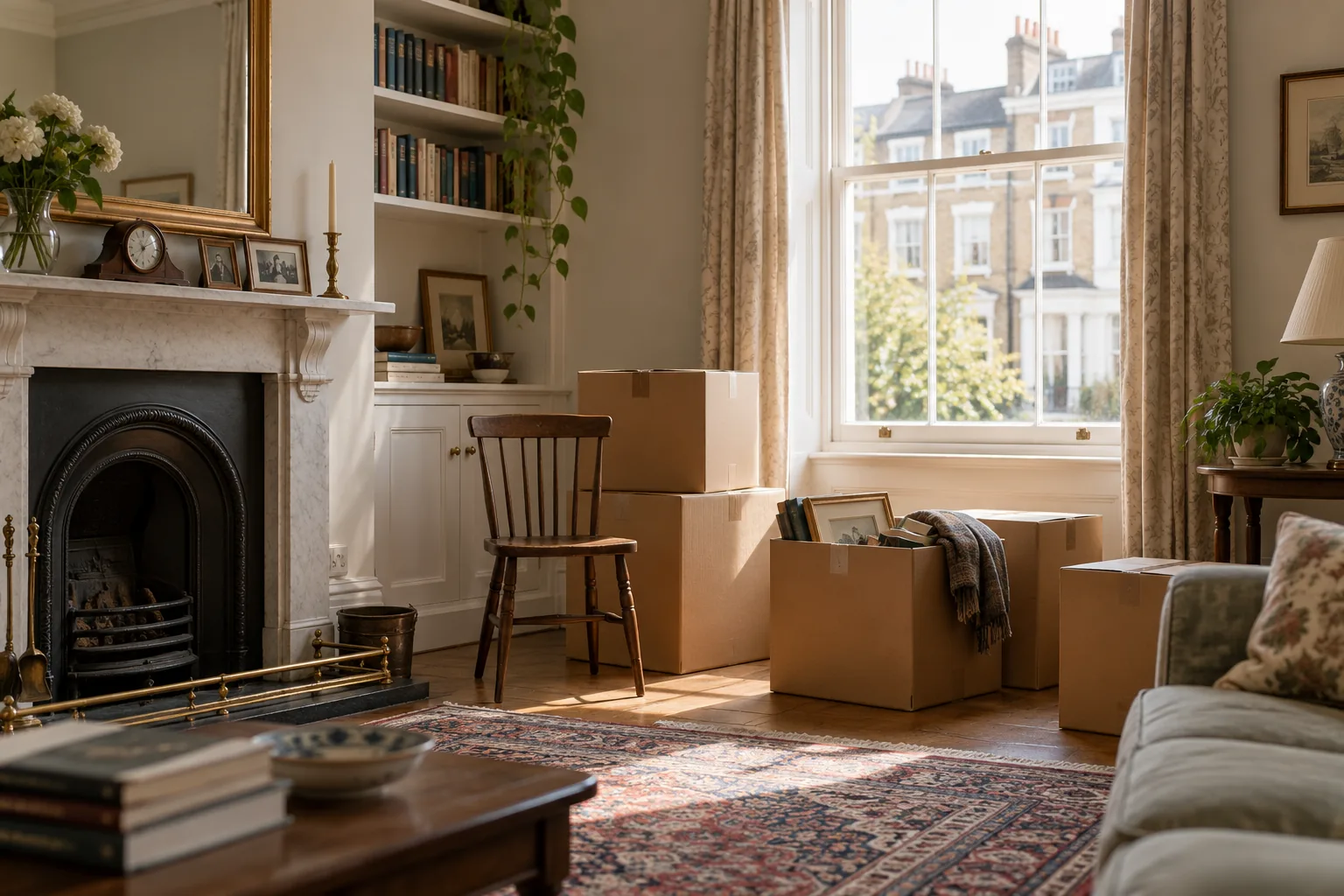
A house clearance after a bereavement is easier to manage when decisions about belongings are kept separate from the physical removal. Start by agreeing who can make decisions, setting aside documents and personal items, and marking what must stay. Only then ask a collection team to assess the remaining furniture and waste. There is no need to clear every room in one visit unless a property deadline makes that necessary.
The practical work can feel pressing, particularly when a tenancy is ending or a property is being sold. Yet rushing the sorting stage creates avoidable mistakes. A simple room-by-room plan gives family members time to identify important possessions and gives collectors a clear description of the load.
Agree the scope before moving anything
Find out who is responsible for the property and who should approve decisions about its contents. That may be an executor, administrator, landlord or another person with authority to instruct the work. If several relatives are involved, choose one person to coordinate the clearance and share the plan in writing. It prevents a collector from receiving conflicting instructions on the day.
Do not assume that an item can be given away or discarded simply because it appears unwanted. Check the will, any inventory and the wishes of the people dealing with the estate. If ownership or authority is unclear, pause on that item and seek appropriate advice. GOV.UK's guidance on dealing with an estate explains the wider administration process; a rubbish collection service cannot resolve questions about who owns an asset.
Write down the rooms and outbuildings in scope. A small flat may still contain a full loft cupboard, a packed balcony or a storage locker that was forgotten during the first visit. Conversely, you may only need the garage cleared while the main home remains untouched. A precise boundary is more useful than asking for a “whole house” quote when substantial belongings will stay.
Make a protected area for items that must stay
Before sorting for disposal, collect passports, certificates, financial papers, keys, photographs, jewellery, medication and digital devices. Keep them in a locked room or take them away from the property. Check drawers, coat pockets, books, bags and the backs of cupboards; small valuables and records are easily missed when furniture is being moved.
If you are unsure whether a document matters, keep it for review. A labelled folder takes little space, while recovering a discarded original may be difficult. Do the same with photographs and handwritten notes even if other belongings can be sorted more quickly.
Tell everyone working at the property which room or clearly marked area is off limits. A strip of tape on a box is less reliable than a closed door and a written instruction. Photograph the protected area before the collection, especially if several people will be coming and going.
Sort into decisions, not just piles
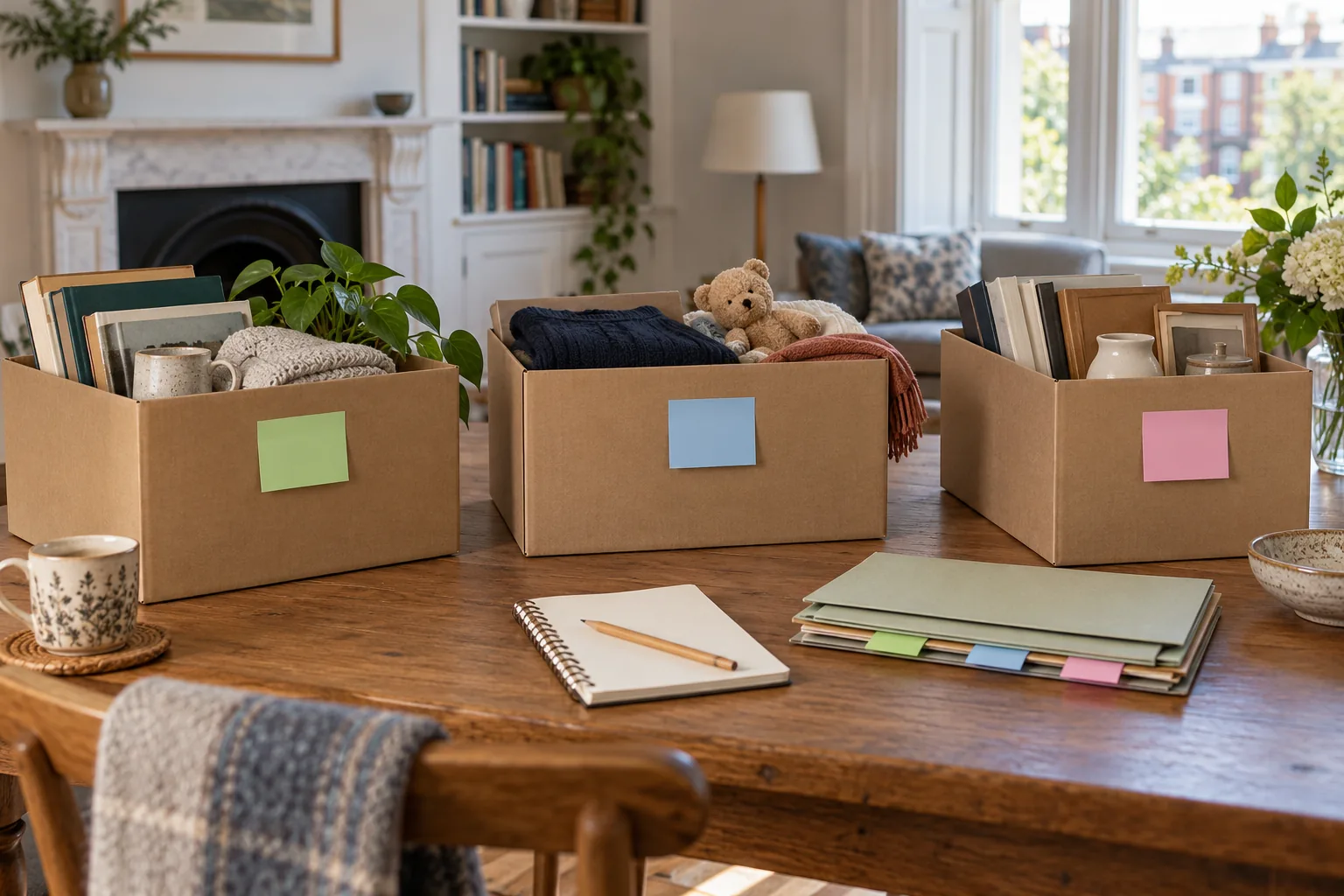
Four destinations are usually enough for an initial pass: keep, offer for reuse, needs a decision, and collection. Put a visible label on each box or group. The “needs a decision” group is important: it lets progress continue without forcing an immediate choice about sentimental or potentially valuable items.
Work one room at a time and finish the obvious decisions first. Empty packaging and broken items are often straightforward. Family photographs, collections and furniture with a personal history may need a conversation. If more than one person wants an item, set it aside rather than letting a clearance deadline settle the dispute.
For large furniture, attach a removable note directly to the item. Do not rely on a list that says “the cabinet” if there are two similar cabinets in different rooms. Photograph both the item and its label. A simple record helps the coordinator check that the agreed pieces remain in place.
Give reusable belongings a realistic route
Furniture, clothing, books and household items in good condition may be suitable for relatives, local reuse groups or charities. Contact the recipient before reserving space for them: acceptance rules, collection times and the condition required vary. Upholstered furniture can have additional safety-label requirements. A promised donation is only a practical plan when someone has agreed to take it.
Set a cut-off date for uncollected offers. Otherwise, the property can fill with items in limbo just as the clearance visit approaches. If an item is damaged, damp, heavily soiled or unsafe, describe its condition honestly and ask the collector about the appropriate disposal route rather than passing the problem to a charity.
Electrical equipment deserves a separate check. A working appliance may have reuse value, while a broken one may need an electrical-waste route. Do not remove identifying labels or attempt repairs solely to make a donation possible. Keep batteries and any loose power supplies together until the destination is confirmed.
Check the property before requesting a quote
Once the keep and reuse groups are clear, take photographs of what remains. Include a wide view of each room and close-ups of heavy, awkward or unusual items. Count large furniture pieces and estimate the number of bags or boxes. Show the route from the rooms to the likely loading point, including stairs, narrow doors, lifts and any long carrying distance.
A quote may change if the team arrives to find more waste or more difficult access than described. Be specific about a basement, a loft hatch, a rear garden reached through the house, or a block with limited lift hours. If parking is restricted, say where a vehicle can stop and whether building management must approve loading. Do not promise a parking space you cannot reserve.
Ask whether the quote includes carrying, loading, transport and disposal. Clarify whether dismantling large furniture, bagging loose material or sweeping after removal is included. Our house clearance service page explains the collection route; the price guide shows indicative load sizes. The final price depends on the actual material, volume, weight and access.
Keep restricted and hazardous items separate
Do not mix paint, fuel, chemicals, gas cylinders, asbestos-containing material, sharps or medical waste into an ordinary house-clearance pile. Some items require specialist handling or a council facility, and a normal collection team may refuse them. If a container has no label, do not open it merely to identify its contents. Keep it secure and ask the relevant specialist or local authority for advice.
Medicines should not be put into general rubbish. Ask a pharmacy how to return unwanted medicines and protect any private information on the packaging. Where an appliance has refrigerant or a battery, tell the collector what it is rather than concealing it among general furniture.
Bulky items can also contain surprises. Check wardrobes and cabinets before moving them; drain or empty appliances according to the collector's instructions; and do not try to carry heavy furniture down stairs alone. Our furniture disposal information may help if only a few large pieces remain.
Choose a responsible collector
When a private business takes household waste in England, check that it is an authorised waste carrier. GOV.UK explains the household waste disposal options and how to check a carrier's registration. Keep the business details and a receipt or written confirmation of what was collected. These records also help the estate coordinator account for the work.
Be wary of a quote that leaves the scope vague. “Everything gone” is not a substitute for agreeing which rooms, items and restricted materials are included. If someone offers to take reusable goods separately, record that arrangement too, so the person managing the property knows where they went.
Prepare for collection day
Confirm the date, arrival window, contact number and access arrangements with the collection team. Make sure someone who knows the agreed scope can answer questions, even if they cannot stay on site throughout. Give written instructions for items that must not be touched and keep the protected room closed.
Clear the walking route without blocking a communal hall, pavement or fire exit. Small loose items can be bagged where safe, but avoid overfilling bags with books, crockery or other heavy contents. Tell the team if fragile flooring, a narrow turn or a low ceiling needs particular care. Photograph the collection area before work starts and walk through the rooms afterwards while the team is still present.
Check cupboards, sheds and storage spaces against the original room list. Collect keys, remotes and any remaining paperwork. If the property is going to an agent or landlord, agree separately who will arrange cleaning or repairs; a rubbish collection removes items, but it is not a substitute for a full property clean or inventory inspection.
Give the process room to breathe
The most useful timetable separates personal decisions from removal. One visit can identify important belongings, a second can settle reuse and disposal routes, and the collection can then be booked for the material that is genuinely ready to go. A deadline may require a shorter version, but even a brief written keep list and protected area reduce the chance of an irreversible mistake.
If you have photographs of the remaining load and a clear access description, contact Rubbish Please for an estimate. Explain what has already been sorted and flag anything unusual before booking. That allows the team to discuss a suitable collection while you retain control over the belongings that matter.