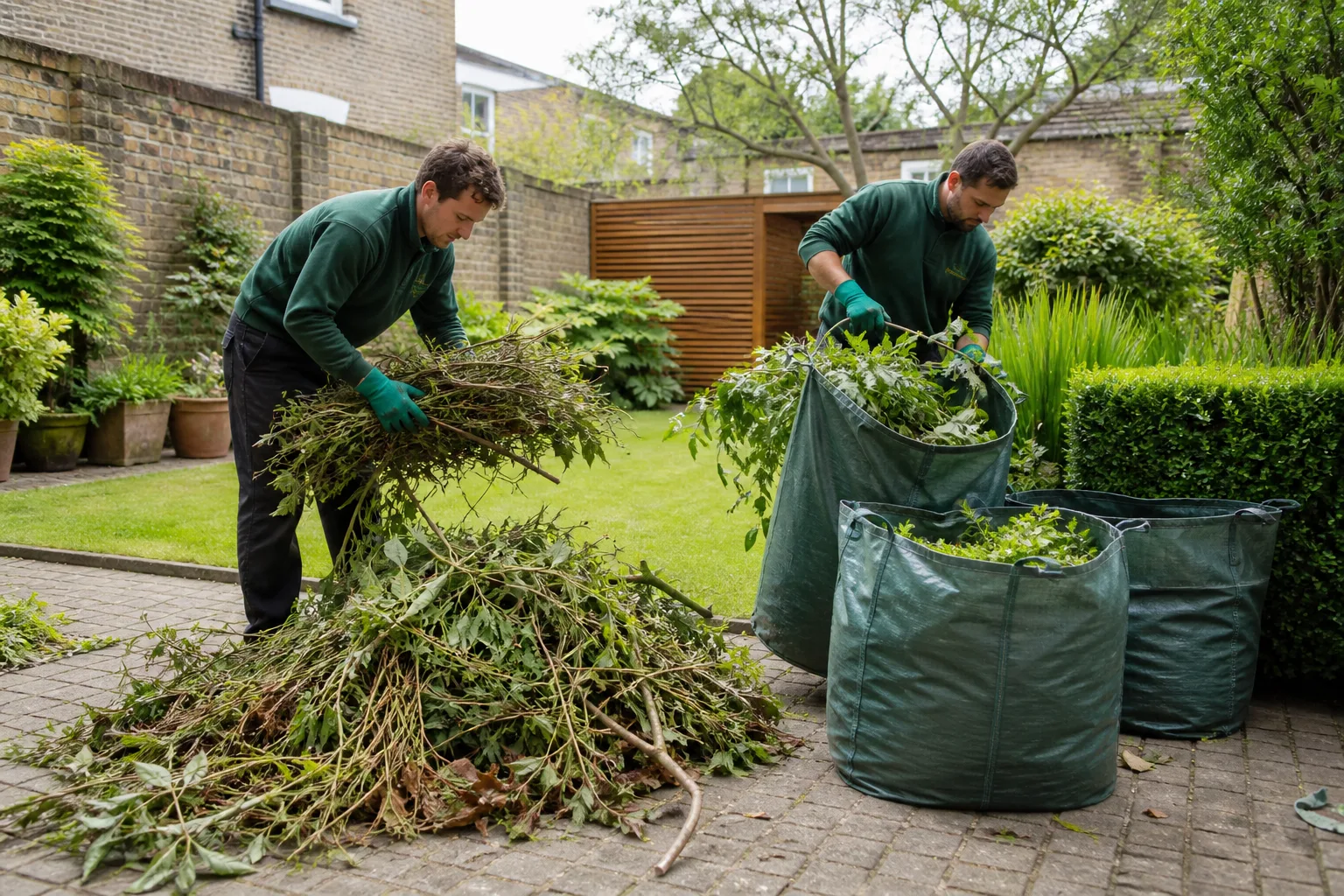
Garden waste removal in London can mean anything from a few bags of hedge trimmings to a full clearance involving branches, old planters, turf and heavy soil. Those jobs cannot sensibly share one fixed price. The cost depends on what the waste is, how much space and weight it uses, and how easily the collection team can reach it.
This guide explains the main price factors, the available disposal routes and the information that helps a collector provide an accurate quote.
What counts as garden waste?
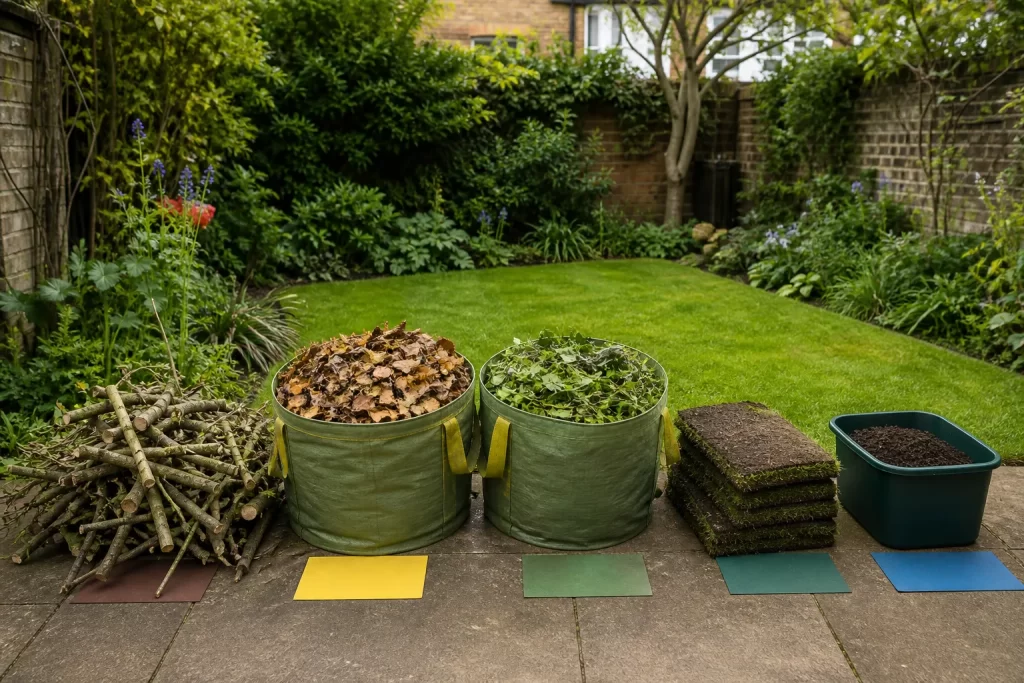
Light green waste includes leaves, grass cuttings, weeds, flowers, small prunings and branches. A garden clear-out may also contain soil, turf, logs, stones, fencing, broken tools, plant pots, furniture or shed contents. These materials have different weights and disposal routes, so separating them can make the quote clearer.
The biggest factors affecting garden-waste removal cost
Volume
Loose branches use far more vehicle space than cut, bundled material. Collectors commonly estimate volume in cubic yards or as a fraction of a van load. Photographs with a familiar object for scale are more useful than describing a pile as “small”.
Weight
Wet leaves, soil, turf, rubble and logs become heavy quickly. A pile can occupy modest space while approaching a vehicle’s safe weight limit. Heavy material is therefore not priced by volume alone.
Waste type and separation
Pure green waste may follow a composting route. Mixed loads containing plastic pots, treated timber, furniture, chemicals or rubble need more sorting and may cost more. Tell the collector about paint, pesticides, fuel or asbestos immediately; these require specialist advice and may not be accepted.
Access and carrying distance
A bagged load beside a driveway is quicker than loose waste carried through a terraced house. Steps, basement gardens, narrow side passages, parking restrictions and long distances to the vehicle add labour time.
Preparation and labour
If the job includes cutting branches, dismantling a shed, digging out roots or bagging loose material, it is more than a collection. Make clear whether gardening work is complete or whether you need a clearance team to prepare the waste.
London garden-waste disposal options
Council garden-waste subscription
Many boroughs offer a seasonal or annual collection for routine green waste. It can be good value for regular mowing and pruning, but the container size, frequency and accepted materials are fixed. Soil, turf, large branches and one-off clearances may be excluded. Check your council through the official GOV.UK household-waste page.
Household reuse and recycling centre
If you have transport and can safely load the material, a local centre may accept domestic garden waste. Booking systems, residency evidence, vehicle restrictions and limits vary. Separate green waste from rubble, timber and general rubbish before travelling.
Home composting
Leaves, grass and suitable soft prunings can become useful compost. Avoid overloading a small compost bin with woody branches, diseased plants or invasive species. Composting is a gradual solution, not a quick answer to a major clearance.
Licensed private collection
A collection team is useful for a one-off pile, heavy bags, awkward access or a mixed garden clear-out. Labour and transport are handled in the same visit. Ask for a clear description of what is included and confirm that the business is registered to carry waste.
How to get a more accurate quote
- Take wide photographs plus close-ups of heavy or mixed material.
- State the approximate pile dimensions or number and size of bags.
- List soil, turf, stones, logs and treated timber separately.
- Describe steps, gates, internal carrying routes and parking.
- Say whether the material is already cut, bundled and bagged.
- Mention anything that may be hazardous before booking.
Our rubbish-removal price guide shows how load size and weight are assessed. A photograph-based estimate can then be confirmed when the team sees the actual material and access.
Ways to keep the cost under control
Separate compostable green material from general rubbish. Cut long branches to manageable lengths, but do not create unsafe bundles. Keep soil and turf apart so their weight is obvious. Move waste closer to the collection point only if you can do so safely and without blocking a pavement or communal route.
Combining several small piles into one planned collection can be more efficient than repeated visits. However, hiding heavy material underneath branches leads to an inaccurate estimate and a revised quote on site.
Why the cheapest offer is not always the cheapest outcome
A suspiciously low cash quote may exclude labour, disposal charges or lawful treatment. Householders should take reasonable steps to check that the person receiving their waste is authorised. If material is fly-tipped and traced back, the original owner can face enforcement action.
Garden waste cost questions
Does wet garden waste cost more?
It can. Wet leaves, soil and turf weigh more and may be harder to load. If possible, keep prepared material covered without sealing it into unsuitable containers.
Can soil go with branches and leaves?
Tell the collector how much soil is present. It is dense and may need to be priced or transported separately from light green waste.
Will the team sweep up afterwards?
Do not assume every quote includes detailed garden work. Ask whether reasonable sweep-up after loading is included and whether cutting, digging or dismantling is available.
Get a quote for your London garden
Send photographs, the postcode and a short access description. We can assess whether the job is a simple green-waste pickup or a wider garden clearance and explain the likely load factors before attendance. Book a collection or find your neighbourhood on our London areas directory.