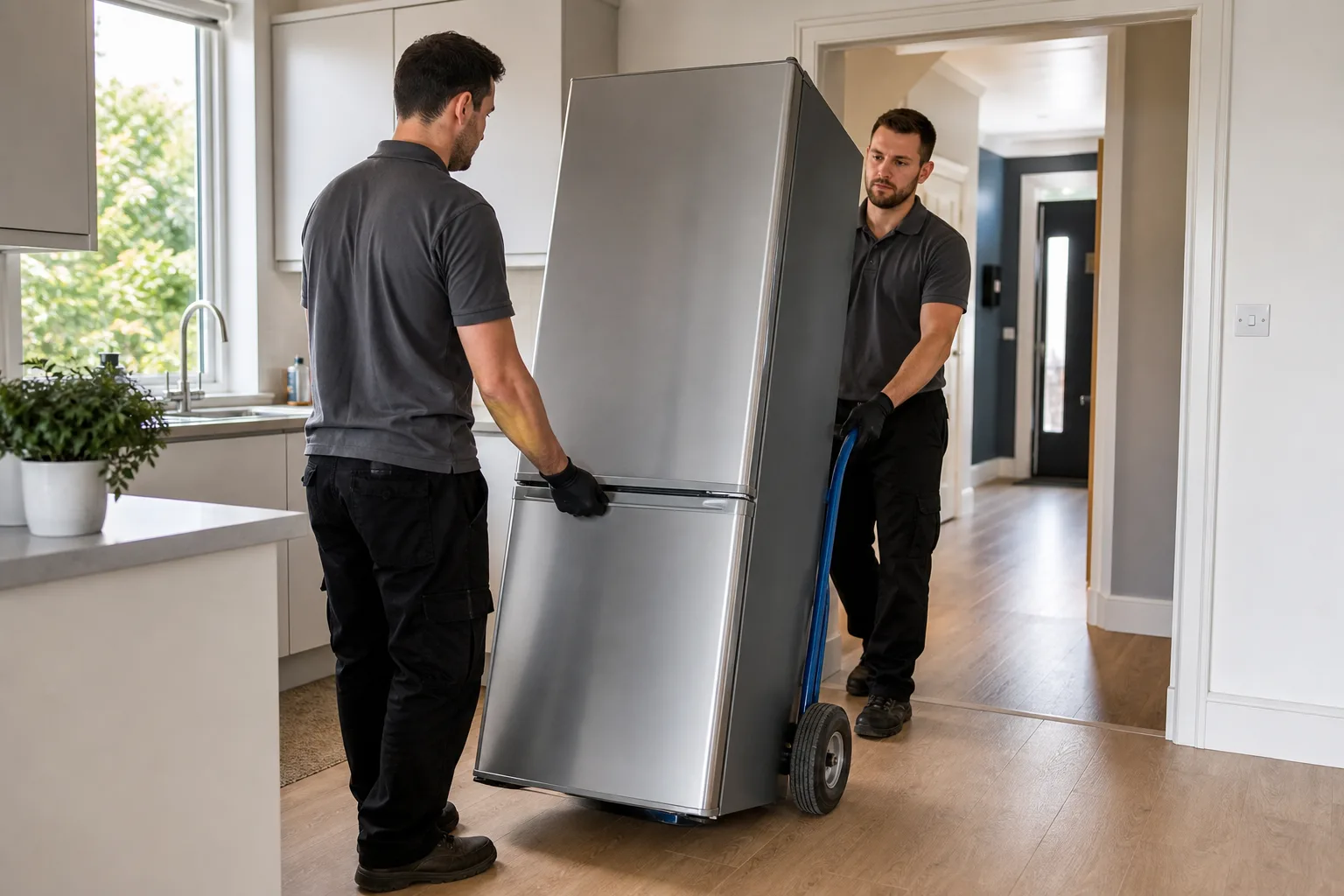
A fridge freezer cannot be treated like ordinary household rubbish. It is a large electrical appliance containing refrigerant, insulation, metals and electronic components. If it is damaged or processed incorrectly, controlled gases and oils can escape. Responsible disposal therefore means keeping the appliance intact and sending it through an appropriate electrical-waste route.
Whether the fridge still works makes a difference. A safe, efficient appliance may be suitable for reuse; a broken one needs specialist recycling. Here are the practical options available to London households.
Why fridge freezers need specialist disposal
Fridges are covered by the rules for waste electrical and electronic equipment (WEEE). Their steel, aluminium, copper, plastics and glass can be recovered, but refrigerant and insulating foam require controlled treatment. Do not puncture pipes, remove the compressor or break the cabinet apart yourself.
Five safe fridge-freezer disposal options
1. Use the retailer’s take-back service
When buying a replacement appliance, ask the retailer about collection of the old one. This is often the simplest option because the same visit covers delivery and removal. Check the charge, disconnection requirements and whether the appliance must be at the front door.
2. Arrange a council bulky-waste collection
Most London councils provide a bulky-item service, but prices, waiting times and accepted appliance sizes vary. Some crews will not enter the property. Check your borough’s rules and book the item explicitly as a fridge or fridge freezer, not simply as “furniture”. The GOV.UK household-waste guidance links residents to local services.
3. Visit a household reuse and recycling centre
Many recycling centres accept domestic fridges, provided residents meet local booking and vehicle rules. Transport the appliance upright where possible and secure it inside the vehicle. Confirm acceptance before travelling, especially for American-style models.
4. Reuse a working appliance
If it cools correctly, is clean and has no safety issue, selling or donating may extend its life. Be honest about age, energy use, condition and faults. Some charities collect working electrical items, but acceptance criteria differ. Very old or unsafe appliances are better sent for recycling.
5. Book a licensed collection service
A private collection helps when the fridge is inside, access is difficult or you cannot wait for a council slot. Confirm that the company is a registered waste carrier and that the appliance will go to an authorised facility. A fridge can often be collected with other kitchen or household items as part of a house clearance.
How to prepare a fridge freezer for collection
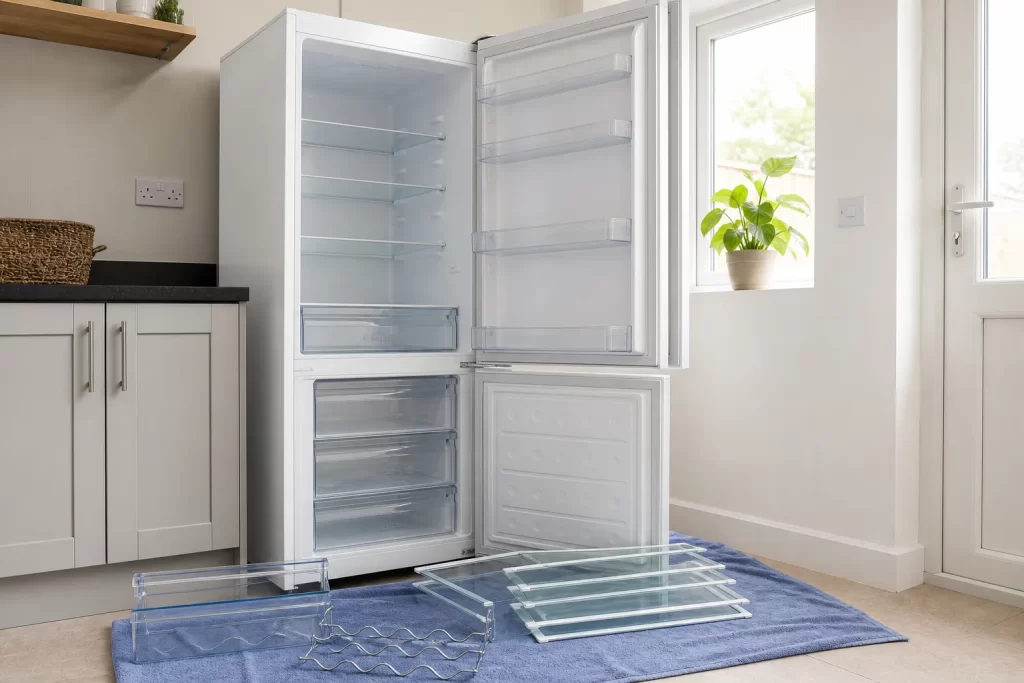
- Empty it completely. Remove all food, packaging and loose ice.
- Switch it off in advance. Follow the manufacturer’s instructions and allow enough time to defrost.
- Contain meltwater. Use trays and towels so water does not damage floors or create a slipping hazard.
- Clean and dry the interior. This prevents odours and makes the appliance safer to handle.
- Secure loose parts. Remove shelves and drawers or fasten them so they cannot move during carrying.
- Disconnect water safely. A plumbed ice maker or dispenser should be isolated correctly. Use a competent person if you are uncertain.
- Measure the route. Check doors, turns, stairs and lift dimensions before the crew arrives.
Can somebody collect a fridge for free?
Free collection is sometimes possible when a retailer includes take-back, a charity accepts a working appliance or a local reuse project has capacity. “Free scrap collection” adverts deserve caution: refrigeration appliances are not ordinary scrap metal. Ask for the carrier’s details and never agree to pipes or compressors being stripped at your property.
What affects the cost?
The appliance size is only one factor. An under-counter fridge beside a front door is simpler than an American-style model in a basement kitchen. Quotes may reflect the number of collectors, stairs, dismantling of doors, parking distance, congestion charges and other waste in the load.
Send photographs of the appliance and the access route. State whether it is integrated, freestanding, plumbed or unusually large. Our price guide explains how access, volume and waste type influence a rubbish-removal quote.
Common mistakes to avoid
- Do not put a fridge beside communal bins without a confirmed booking.
- Do not lay it in the street where it blocks pedestrians.
- Do not cut refrigerant lines or remove the compressor.
- Do not leave food inside for the collection crew.
- Do not use an unidentified collector simply because the price is low.
Fridge disposal questions
Can a fridge freezer go in a skip?
Not unless the skip company has expressly agreed to it. Many exclude fridges because they need a specialist WEEE route and may charge separately.
Must the fridge stay upright?
Upright handling is generally the safer approach for an old appliance. The collection company should plan the carrying and transport method for the specific model.
Will collectors disconnect an integrated fridge?
Do not assume so. Integrated units may need doors, fixings, water or cabinetry dealt with first. Describe the installation when requesting a quote.
Arrange a responsible London collection
Send the postcode, appliance dimensions, floor level and a photo of the route. We can confirm what preparation is needed and whether other unwanted items can travel in the same load. Request a collection or browse our local London guides.