Garage clear-out
Tools and possessions removed first; oils, batteries, paint and unknown containers identified separately.
Homes, gardens, garages and local businesses
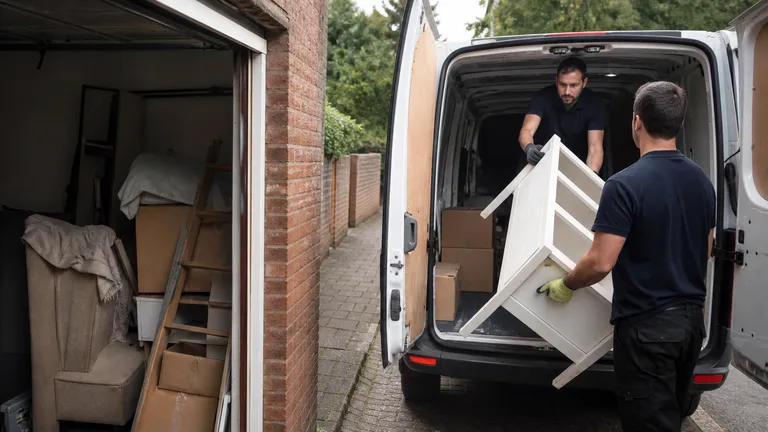
Romford collections can range from a few bulky household items to a garage, garden and several rooms cleared together. The best starting point is a simple inventory showing where each group is stored and the route the crew will use.
Local planning
A photograph of the front room will not account for bags in a loft, timber beside a shed or furniture at the back of a garage. Walk through the property and record every collection point. Keep household contents, green material and renovation debris as separate groups. Give approximate dimensions for bulky furniture and identify dense bags rather than describing everything as general rubbish.
Romford houses may offer a driveway or side passage, but neither should be assumed usable. Confirm gate widths, parked vehicles, steps and the distance to the stored items. For flats, state the floor and lift details. A clear property map helps the crew plan loading order and prevents forgotten items from appearing after the vehicle is partly filled.
Common situations
Tools and possessions removed first; oils, batteries, paint and unknown containers identified separately.
Cut branches, leaves and old garden furniture grouped without hiding soil, rubble or treated timber.
Rooms labelled carefully so items being retained are not confused with the collection.

Property access
Photograph side gates, alleys, garden steps and changes in ground level. Wet bags, loose boards and unstable piles need attention before lifting. If the vehicle can use a private drive, confirm permission and keep the area clear for the agreed window. Where the carry crosses a shared path, make sure neighbours retain safe passage.
Inside the house, empty wardrobes and cabinets of personal belongings. Measure sofas and large units against the tightest doorway. Agreed dismantling may help some pieces, but it is not a substitute for disconnection of appliances or removal of fixed fittings. Explain loft ladders, steep stairs and low headroom before a loft collection is booked.
Material check
Soil, tiles, rubble and plasterboard can reach a weight limit while occupying relatively little space. Name the material and estimate the number and size of containers. Garden cuttings, furniture and bagged household clutter should be shown separately so the vehicle and labour can be planned more accurately.
Use garage clearance for stored household contents, garden clearance for suitable green material and house clearance when several rooms are involved. Paint, fuel, gas cylinders, asbestos, chemicals, clinical waste and unidentified liquids must be declared before collection.
| Collection detail | Why it matters | What to send |
|---|---|---|
| Full load | Sets volume and vehicle space | Wide current photographs |
| Dense material | Weight may limit capacity | Contents and bag count |
| Bulky pieces | Changes handling and route | Dimensions and door turns |
| Access | Affects labour and timing | Floor, stairs, lift and carry |
Collection sequence
Send photographs of every area and list the material in each. Include the access route and the vehicle position. The guide estimate reflects the stated volume, weight, type and labour. On arrival, the crew checks the complete load and confirms the final quote before work starts.
Keep pets and children away from the carrying route. Mark anything that is not to be removed and avoid building one unstable pile merely to save space. If rain damages packaging or more waste is added, provide an update. Once accepted material is loaded, the immediate area can receive a practical sweep where possible; deep cleaning and repairs are not included.

Guide prices
From £55
From £120
From £180
From £240
These are guide prices. The final quote depends on volume, weight, waste type, access, labour, vehicle position and applicable supplementary charges. It is confirmed before loading.
Romford questions
Yes. Photograph and describe each area separately so green material, bulky items and restricted garage contents are not confused.
No. The crew can collect agreed items from their stated location, subject to safe access and an accurate carrying route.
Compatible project material may be collected when declared. Weight matters, so provide bag counts and likely contents rather than only photographs.
Keep it separate and identify it before booking. Do not place liquids or chemicals inside general waste bags.
Access must be assessed. Explain the ladder, hatch, headroom and item sizes; unsafe access may require a different arrangement.
Send updated photographs before attendance. Additional volume or weight can change the vehicle allocation and final quote.
Send a clear account of the job
Include photographs, access details and your preferred collection window.